
 Worksheets
Gravitational Physics Quiz
Total questions: 6
Worksheet time: 4mins
What are the most general coordinate transformations used in Einstein's Special Relativity theory?
Laplace transformations
Lorentz transformations
Poincare transformations
None of the above
Gravitation is considered as a fundamental physical interaction which belongs to the category of
Long-range interaction
Strong interaction
Electro-weak interaction
Short-range interaction

The orbit of Halley's comet around the Sun is a long thin ellipse. At its aphelion (point farthest from the Sun), the comet is 5.3 x 10¹² m from the Sun and moves with a speed of 10.0 km/s. What is the comet's speed at its perihelion (closest approach to the Sun) where its distance from the Sun is 8.9 x 10¹⁰ m. The mass of the Sun is 1.989 x 1030 kg.
55 km/s
11 km/s
22.5 km/s
110 km/s
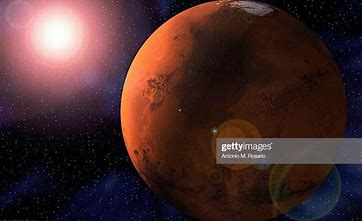
What would the gravitational force be between the Sun and Mars if they were 2.3*1011 m apart? The masses for the Sun and Jupiter are 1.99*1030 kg and 6.42*1023kg, respectively.
Fg = 3.8*1015 N
Fg = 2.8*10-42 N
Fg = 1.6*1021 N
Fg = 4.6*10-75 N
Equivalence of the gravitational mass and the inertial mass implies the validity of which of the following statements?
Matter warps geometry
Matter curves geometry
Geometry embeds matter
Matter embeds geometry

