wayground logo

Free Printable Worksheets

Font size

S
M
L
XL
Worksheets

Western Expansion - Why? Joys/Hardships? Legacies!

Total questions: 90

Worksheet time: 2hrs 30mins

Name
Class
Date
1.
The pioneers that took advantage of the Homestead Act were called...
a)
homesteaders
b)
ranchers
c)
sodbusters
d)
scalawags
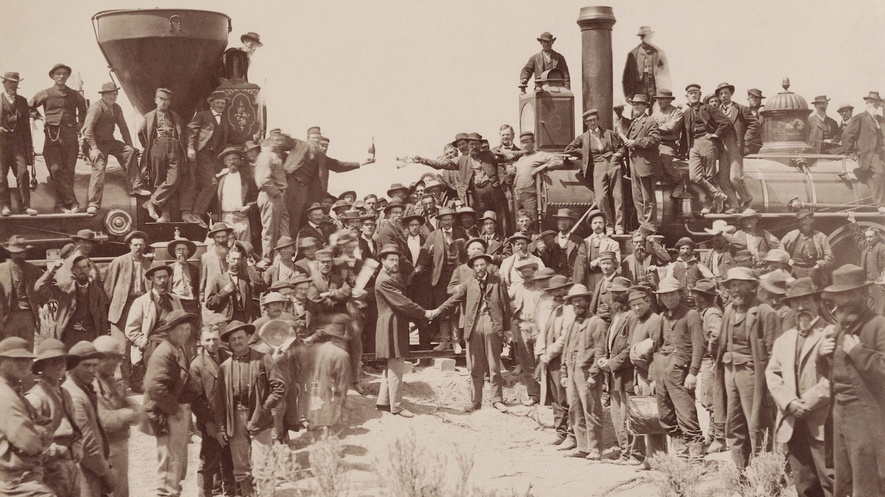
2.
The transcontinental railroad joined together where?
a)
Denver, Colorado
b)
Salt Lake City, Utah
c)
Promontory, Utah
d)
Carson City, Nevada
3.
These explorers were authorized by Thomas Jefferson to explore land west of the Mississippi River. 
a)
Fremont and Wagner
b)
Hamilton and Madison
c)
Jones and Smith
d)
Lewis and Clark
4.
Why did people travel together during the Oregon Trail?
a)
To save gas money
b)
for mutual protection
5.
These are motivations for pioneers to move West: Cheaper living, land, gold, religious freedom, new opportunities
a)
True
b)
False
6.
This president gave Lewis and Clark the specific instructions to map the land and find a water route to the Pacific Ocean.
a)
Andrew Jackson
b)
Thomas Jefferson
c)
John F. Kennedy
d)
George Washington
7.
cholera
a)
A  yummy desert eaten on the Oregon trail
b)
A song sung around the campfire
c)
A disease that was easy to cure and few people caught
d)
A common and deadly disease that pioneera caught by drinking dirty water
8.
forty-niners
a)
The best football team ever!
b)
Women who came for the free land grants and silver
c)
People who are 49 years old
d)
Gold seekers who moved tothe California territory
9.
prairie  schooner
a)
A ship with a white sail
b)
Another name for a covered wagon, or Conestoga wagon
c)
Fields of green grass
d)
A fleet of ships with sail
10.

Why did many Mormons travel west to Utah?

a)

Religious freedom

b)

More land

c)

Better food

d)

Gold

11.
The Indian Removal Act of 1830 forced Indians to move
a)
to Oklahoma
b)
to Florida
c)
to the Louisiana Purchase
d)
to Canada
12.
This man was president from 1829-1837.
a)
Thomas Jefferson
b)
Andrew Jackson
c)
George Washington
d)
Henry Clay
13.
This tribe lived mostly in Florida and were either killed or forced to leave their homes.
a)
Souix
b)
Choctaw
c)
Iroquois
d)
Seminole
14.
President Jackson sent soldiers to remove the ____ to the Indian Territory.
a)
Cherokee
b)
Iroquois
c)
Souix
d)
Red Hawks
15.
About __________________ Cherokee died on the Trail of Tears.
a)
400
b)
1500
c)
4000
d)
15000
16.
The United States government decided to move the Native Americans from their land to the
a)
North
b)
South
c)
East
d)
West
17.
Which of the following was the Cherokee’s 800 mile march to the indian territory where ¼ of the Cherokee tribe died on the march to the land?
a)
Second Seminole War
b)
Trail of Tears
c)
Blackhawk
d)
Cherokee resistance
18.

Why did the white settlers and the American Indians begin having conflicts? Choose TWO.

a)

Native Americans built fences to keep the settlers' cattle out.

b)

White settlers felt they had the right to settle on Native America land.

c)

Gold was discovered on Native American land.

d)

Native Americans attacked white settlers.

19.

Why was it called the "Trail of Tears"?

a)

harsh conditions

b)

there were many deaths

c)

people cried over the loss of their "homeland"

d)

all of the above

20.

What was the main reason for the decrease in buffalo population in the 1800's?

a)

Native American hunting

b)

Spread of a buffalo sickness

c)

Lack of food and water for the buffalo

d)

Overhunting from U.S citizens and government
21.

Cattle drives and ranching were year-round jobs for who?

a)

Buffalo Soldiers

b)

Farmers

c)

Indians

d)

Cowboys

22.

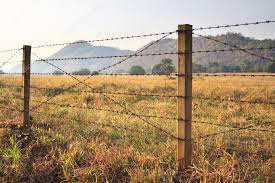
Identify the invention in the image. This invention helped to close off the open range making cattle drives dangerous and contributing to the Open Range War.

a)

Barbed Wire

b)

Wooden Fence

c)

Metal Fence

d)

Wooden Post

23.

What effect did barbed wire fences have on the closing of open land in the Texas frontier?

a)

Kept the Indians off the land

b)

Made cattle drives dangerous for Ranchers

c)

Caused too much damage to horses

d)

Ranchers loved the invention of barbed wire
24.

What two cultures helped build the railroads of the United States?

a)

Indians and Mexicans

b)

Mexicans and French

c)

Chinese and Irish

d)

English and Spanish

25.

Who created the chuckwagon to feed his hungry cowboys on the trail?

a)

George Washington

b)

Abraham Lincoln

c)

Sam Houston

d)

Charles Goodnight

26.

What inventions changed West Texas after the Civil War and encouraged settlement in the west?

a)

Cars and planes

b)

Books and water bottles

c)

cell phones and laptops

d)

Windmills, barbed wire, and railroads

27.
How were the Chinese discriminated against?
a)
They were denied water and supplies
b)
Black Codes prevented their freedoms
c)
they were objected to Jim Crow Laws
d)
they were paid less than other workers
28.
This animal was greatly affected by the building of the Transcontinental Railroad.
a)
hogs
b)
cows
c)
chickens
d)
bison (American buffalo)
29.
Which group lost the most from the building of the railroads?
a)
Settlers
b)
Western citizens
c)
The government
d)
Native Americans
30.
Which two men are famous for their expedition of the Louisiana Purchase?
a)
Thomas Jefferson and James Madison
b)
Meriwether Lewis and James Madison
c)
William Clark and Thomas Jefferson
d)
Meriwether Lewis and William Clark
31.
Where were Native Americans forced to relocate?
a)
States
b)
Towns
c)
Reservations
d)
Camps
32.
Who led the Lakota at the Battle of Little Bighorn?
a)
Crazy Horse
b)
Sitting Bull
c)
Chief Joseph
d)
Geronimo
33.
Assimilation means...
a)
To bring together
b)
social process of absorbing one cultural into another
c)
force-able removal of a cultural 
d)
the destruction of ones culture
34.
Who was the 7th U.S. cavalry commander who was killed at Little Bighorn?
a)
Geronimo
b)
Crazy Horse
c)
George Custer
d)
Chief Joseph
35.
What happened at Custer's Last Stand in the Battle of Little Bighorn?
a)
Custer killed all of the Lakota Indians.
b)
Custer and Sitting Bull made an agreement that the Native Americans Could have their land.
c)
Custer was killed, along with his entire force.
36.
The Plains Indians suffered from lost battles and broken treaties.  Even worse for them, however, was ___________.
a)
the terrible winters of 1886 and 1887
b)
the terrible summers of 1886 and 1887
c)
the destruction of the buffalo
d)
the Ghost Dance
37.

Why is the Battle of the Little Bighorn often referred to as Custer's Last Stand?

a)

Despite being outnumbered, the U.S. Army defeated the Lakota.

b)

Custer died in the battle, so this battle was his last effort to fight against the enemy.

c)

Sitting Bull had a vision of Custer standing on the hill.

d)

All of the above.

38.
What agreements gave land in the West to Native Americans?
a)
Constitution
b)
Treaty
c)
Contract
d)
Law
39.
Who led the Nez Perce as they were chased by U.S. soldiers off their land in the Pacific Northwest?
a)
Crazy Horse
b)
Sitting Bull
c)
Chief Joseph
d)
Geronimo
40.
What was the final battle of Plains Indians war?
a)
Little Bighorn
b)
Wounded Knee
c)
Ghost Dance
d)
Nez Perce
41.
What act divided up Indian reservations into plots of land to be given to the Indian families?
a)
Hayes Act
b)
Sherman Anti-Trust Act
c)
Bland-Allison Act
d)
Dawes Act
42.

The 1862 Homestead Act was passed to encourage

a)

the development of American cities.

b)

the migration of experienced farmers.

c)

the creation of an American frontier.

d)

the settlement of unpopulated areas.

43.

Which area did the 1862 Homestead Act relate to?

a)

The East Coast

b)

The West Coast

c)

The Great Plains

d)

The South

44.

The Homestead Act greatly impacted the American Indians of the Great Plains by

a)

encouraging homesteaders to take over the American Indians’ farms.

b)

creating a drain on the food, clothing, and shelter of American Indians.

c)

making new technologies available to American Indians.

d)

bringing new schools to American Indian settlements.

45.

How did the arrival of homesteaders impact the American Indians of the Great Plains?

a)

The American Indians were paid for their land and moved to urban areas.

b)

The American Indians were pushed off their land and relocated to reservations.

c)

The homesteaders hired American Indians to help them settle the land.

d)

The homesteaders gave American Indians crops in return for their buffalo.

46.

An individual who received a parcel of land under the Homestead Act had to live on that land for at least

a)

six months

b)

two years

c)

five years.

d)

10 years

47.

Under the Homestead Act, a homesteader was required to improve a parcel of land by:

a)

starting a business on it.

b)

building an area to keep livestock.

c)

creating access to a public road.

d)

building a house and bettering the land.

48.

How did the majority of homesteaders build homes on the prairie in the late 1800s?

a)

They constructed homes out of sod from the area.

b)

They bought lumber from the East to build homes.

c)

They hired immigrant workers to build their houses.

d)

They traded with American Indians to obtain tents.

49.

What challenges did homesteaders face?

a)

They did not face any challenges.

b)

Homesteaders had floods and damaged crops.

c)

Homesteaders faced enemies.

d)

Not much rain, so they used wells. Weather on the prairie was very hard and damaged crops.

50.

What did homesteaders use for fuel for fires? (p. 10)

a)

Buffalo Dung Chips

b)

Red Cedar Wood

c)

Dried Leaves

d)

Petroleum Oil

51.

Who invented the steel plow which improved farming?

a)

John Deere

b)

Cyrus McCorminck

c)

Isaac Singer

d)

Peter Cooper

52.

Who invented the mechanical reaper which improved harvesting crops?

a)

John Deere

b)

Cyrus McCormick

c)

Peter Cooper

d)

Robert Fulton

53.
A wagon or truck that carries food and cooking equipment for cowhands
a)
roundup
b)
chuckwagon
c)
galloped
54.
Animals raised for their meat
a)
cattle
b)
cowboy
c)
railroad
55.
A person who works on a cattle ranch
a)
cattle
b)
chuckwagon
c)
cowboy
56.
Describe the purpose of the cattle trails.
a)
To feed the people in Texas.
b)
To transport cattle from Kansas and Oklahoma to Texas.
c)
To help increase the population of cattle in the United States.
d)
To move cattle from the ranches in Texas to the railheads in Kansas and Oklahoma.
57.
Which of the following Black Cowboys of Texas is known for having written memoirs of his adventures on the open range?
a)
Nat Love
b)
Bose Ikard
c)
Isom Dart
d)
Bill Pickett
58.
What city and state did the Chisholm Trail end in?
a)
Houston, Texas
b)
Abilene, Kansas
c)
Atlanta, Georgia
d)
Los Angeles, California
59.

About how many cows were in a cattle drive in the 19th century?

a)

about 100

b)

about 3,000

c)

about 100,000

d)

about a million

60.

What was the MAIN purpose of many nineteenth-century cattle trails such as the Chisholm Trail?

a)

to help settlers farm new lands

b)

to provide food to eastern cities

c)

to clear wildlife from crowded areas

d)

to supply western ranches with livestock

61.

The Great Western Cattle Trail had an important role in moving goods in which direction?

a)

from Oregon toward the Midwest

b)

from Texas toward the Northeast

c)

from California toward the Atlantic coast

d)

from Oklahoma toward the Pacific coast

62.

Cattle were herded along trails and then put on ...

a)

planes

b)

trains

c)

cars

d)

boats

63.
Why was it necessary to move cattle from Texas?
a)
People in Texas didn't eat beef
b)
There was an over-supply of cattle in Texas  and the demand for beef was greater in the Northeast
c)
There was a terrible drought in Texas and the cattle couldn't get enough food
d)
Cattle never even lived in Texas
64.
What was one reason for cattle trails to begin?
a)
people in the east needed meat because soldiers ate it during the war
b)
cattle did not graze in the east
c)
no one would tend to cattle in the east
65.
Why did Mormon pioneers migrate to Utah?
a)
better climate
b)
bigger population
c)
economic opportunity
d)
religious freedom
66.
Who was Brigham Young?
a)
started the Mormon church
b)
leader of the Mormon, brought Mormons to Utah
c)
a Spanish missionary
d)
mountain man
67.
Why did the Mormons choose to settle in Utah rather than somewhere else?
a)
They wanted to live near Native Americans
b)
They wanted to map out the area
c)
They wanted to live in an isolated area
d)
They wanted to find gold
68.
What were common difficulties for pioneers along the Mormon Trail?
a)
Diseases, food shortage, poor weather
b)
Diseases, too much food, traffic, animal attacks
c)
Traffic, excess of buffalo chips, too much luggage
d)
Fighting with other travelers, overpopulation of deer, sunny weather
69.
Who were the Mormons?
a)
1848 when gold was found in California
b)
name given to members of Church of Jesus Christ of Latter day Saints
c)
Mexican General
d)
created by Congress in 1848 as an area that included present day Oregon
70.
Which group of people were persecuted, or badly treated, by their neighbors in Ohio, Missouri, and Illinois, and then decided to move to Utah?
a)
Mormon pioneers
b)
Goshute Native Americans
c)
Pioneers headed to Oregon
d)
The Donner-Reed party
71.
Who led the Mormons from Navoo to Salt Lake City?
a)
Joseph Smith
b)
Brigham Young
c)
God
72.

What was one legacy of the Californios?

a)

city names

b)

trading posts

c)

athletic events

d)

religious practices

73.

What was an important legacy of the early missionaries to Oregon?

a)

They found a cure for measles.

b)

They opened the west for settlers.

c)

They converted American Indians.

d)

They traveled to the Pacific Ocean.

74.

Which is another name for the mountain men?

a)

fur trappers

b)

gold miners

c)

cattle ranchers

d)

sheep shearers

75.

Why did Mountain Men brave this dangerous lifestyle?

a)

It was worth the money

b)

They liked the freedom and adventure if offered.

c)

They were hired by the government

d)

They were looking for land to settle,

76.
Spanish settlers in California were called what?
a)
Californians
b)
The Calis
c)
Californios
77.
U.S. citizens believed it was their God-Given fate to travel westward, which they titled what?
a)
American Expansion 
b)
Westward Ho!
c)
Manifest Destiny
78.

Who were californios?

a)

a spanish speaking person who lived in california

b)

some chef in california

c)

a indonesian citizen

d)

an immigrant

79.

During the gold rush many_________immigrants came to the US to start a new life

a)

Indian

b)

Chinese

c)

Indonesian

d)

Thai

80.

Which two men are most closely linked to the discovery of gold in California?

a)

John Sutter and John Fremont

b)

James Marshall and John Sutter

c)

John Marshall and Mariano Vallejo

d)

John Fremont and James Marshall

81.

Who were the Californios?

a)

African Americans who mined in the California gold fields.

b)

miners from China who came to California to search for gold.

c)

Californians who revolted against Mexican rule.

d)

Californians of Mexican or Spanish descent.

82.

Where did the travellers of the Oregon Trail originally set out from?

a)

Nebraska

b)

Idaho

c)

Wyoming

d)

Missouri

83.

How long was the Oregon Trail?

a)

1,500 miles

b)

3,000 miles

c)

2,500 miles

d)

2,000 miles

84.
Who were the Pioneers?
a)
A baseball team
b)
People who cut down pine trees
c)
The first people to move west (ex. using the Oregon Trail)
d)
Men who moved west without their families
85.

What livestock were the ones to pull the wagons?

a)

Buffalo and oxen

b)

buffalo, and horses

c)

Horses and oxen

d)

oxen and dogs

86.

How long did it take to travel the Oregon Trail?

a)

2 years

b)

3 months

c)

1-4 weeks

d)

6-8 months

87.

Travelers moved west using what?

a)

cars

b)

planes

c)

wagons

d)

ship

88.

How many miles did they typically travel a day?

a)

10 miles

b)

20 miles

c)

50 miles

d)

100 miles

89.

What mountain range did the Oregon Trail cross?

a)

Appalachians

b)

Sierra Nevadas

c)

Green Mountains

d)

Rocky Mountains

90.

People would travel together over the trail in

a)

wagon trains

b)

single file lines

c)

small groups of 3-4 wagons