
Font size
 Worksheets
Atoms and the Periodic Table
Total questions: 35
Worksheet time: 19mins
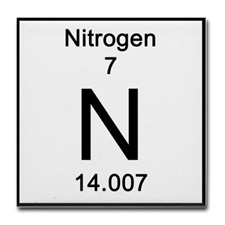
How many protons does a nitrogen atom have?

Which subatomic particle has a neutral charge?
Where are electrons located in the atom?
Inside the nucleus
In the cloud surrounding the nucleus
Inside the atomic mass
In the planetary rings


What is the atomic mass of fluorine?
How do you find the number of protons in an atom?
atomic mass + number of electrons
group number - ten


How many electrons would a neutral atom of Carbon have?
Elements in the same column of the periodic table always have the same number of _______.

Which subatomic particle has a neutral (0) charge?
proton
neutron
electron
atom

Why is the overall charge of an atom neutral (0)?
It has the same number of protons and neutrons.
It has the same number of protons and electrons.
It has the same number of electrons and neutrons.
This scientist developed the planetary model of the atom.
Atoms of the same element that have different mass than expected because they have a different number of neutrons.
Neutral Atom
Ion
Isotope
Cation
An atom that has gained or lost electrons in an attempt to become stable/bond with another atom.
Normal/Neutral Atom
Ion
Isotope
How many valence electrons does Sodium have?
1
2
3
4
5
How many valence electrons does Oxygen have?
4
5
6
7
8
How many neutrons does Manganese (Mn) have?
55
29
30
31
Why are valence electrons important? (Select ALL correct answers).
They determine chemical properties of an atom.
They determine how an atom will bond.
They determine the identity of the atom.
They give the atom most of its mass.
The element in period 6, group 10.
Nickel
Neon
Gold
Platinum
Dimitri Mendeleev was the first to be able to...
Create the Periodic Table
Predict properties of unknown elements
Arrange elements by atomic number
Discover the atom
Elements that are brittle, dull, and good insulators are usually...
Non-metals
Noble gases
Metals
Metalloids
Noble gases already have a full set of valence electrons. Thus, they tend to be
Able to form bonds easily
Violently reactive with water
Eager to share electrons with other atoms
Unreactive
If a substance is able to be pounded into thin sheets, we would say that the material is
Malleable
Ductile
Dull
Lustrous
If a substance does NOT transfer energy in the form of heat or electricity easily, the substance is said to be a
Poor insulator
Good insulator
Good conductor
Waste of time
Copper, like many other metals, is able to be formed into thin wires. Thus, we would say that copper is
Brittle
Lustrous
Ductile
Dull
After electrons become "excited" (usually by high temperatures) they release...
Energy in the form of sound
Nuclear energy
Gas
Energy in the form of light
Which of the following is NOT a typical property of metals?
High boiling points
Durable
Dull
Malleable
The metalloids are located...
In the very bottom two rows only
In the middle of the Periodic Table
Along the "stair-step" of the Periodic Table
On the right side of the Periodic Table

