
 Worksheets
Mechanical Waves
Total questions: 35
Worksheet time: 26mins
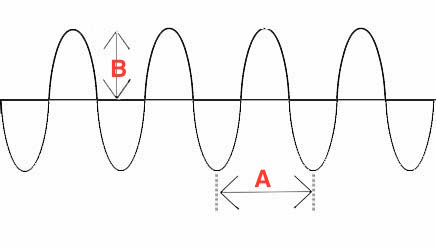
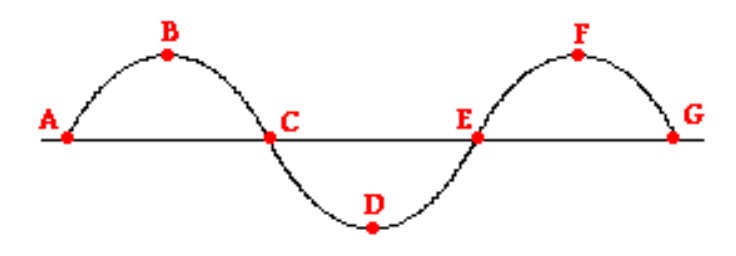
What property of this wave is represented by the letter "A"
amplitude
crest
trough
wavelength
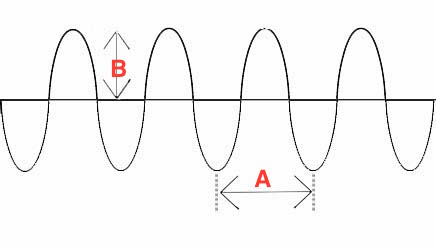
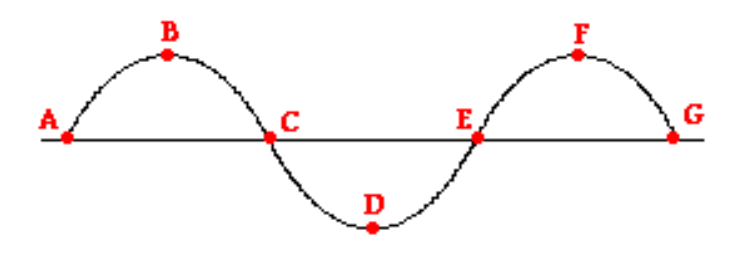
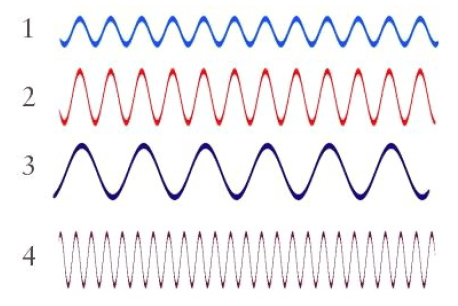


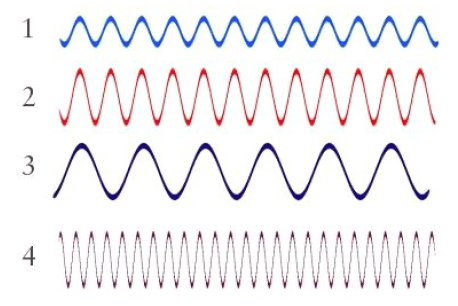
Which transverse wave has the highest frequency?
1
2
3
4
Which diagram shows the wavelength of a wave?


Waves that require a medium are known as
Medium waves
Mechanical waves
Air waves
Heat waves
What is the wavelength?
length between crest to crest or trough to trough
the height of a wave
how fast the wave goes
the amount of times a wave passes through a certain point
How do electromagnetic and mechanical waves compare?
Mechanical waves can only travel through a vacuum, but electromagnetic waves can travel through a solid, liquid, or gas.
Mechanical waves can travel through a solid, liquid, or gas, but electromagnetic waves can only travel through a gas.
Mechanical waves can only travel through a solid, liquid, or gas, but electromagnetic waves can travel through a vacuum.
Mechanical waves can travel through a solid, liquid, or gas, but electromagnetic waves can only travel through a solid.
A student asks a series of questions about a wave. The answer to which question will allow the student to determine whether the wave is electromagnetic or mechanical?
Does it require a medium in order to travel?
Can it pass through air and water?
Does it have a measurable speed?
Does it have a measurable frequency?
A student is measuring the distance between the crest and the rest position of both a mechanical wave and an electromagnetic wave. Which question is the student trying to answer?
What is the speed of the waves?
What is the amplitude of the waves?
What is the wavelength of the waves?
What is the frequency of the waves?

Which distance represents the wavelength?
W
X
Y
Z

Which distance represents the amplitude?
W
X
Y
Z

How many wavelengths separate point A and point B?
1.5
2.0
2.5
3.0

This is a _____ wave.
surface
longitudinal
transverse

This is a _____ wave.
surface
longitudinal
transverse

The part in a longitudinal wave where the particles are spread apart.
amplitude
compression
frequency
rarefaction

The part of a longitudinal wave where the particles are close together.
amplitude
compression
frequency
rarefaction
The matter (solid, liquid, or gas) through which mechanical waves travel.
medium
vibration
disturbance
energy

The unit of measure for speed (v) is
m
Hz
m/s
none of the above
The unit of measure for frequency ( f ) is
m
Hz
m/s
none of the above
The unit of measure for wavelength (λ) is
m
Hz
m/s
none of the above

Side-by-side you
add
subtract
multiply
divide

One over the other you
add
subtract
multiply
divide

Which letter represents the REST POSITION?
A
B
C
D
E

The two graphs above show the SAME wave.
What is this wave's amplitude?
0.05
0.25
0.1
2

You can't hear sounds in outer space because there is no
medium
light
energy
heat

