wayground logo

Free Printable Worksheets

NEW

Font size

S
M
L
XL
Worksheets

Circulatory System

Total questions: 30

Worksheet time: 58mins

Name
Class
Date
1.

What does your heart do?

a)

pumps blood through your body

b)

protects your body

c)

helps your exercize

2.

Your heart is about the size of your __________.

a)

mouth

b)

fist

c)

show

3.

What does circulate mean?

a)

pump blood

b)

beat quickly

c)

go around and around

4.

Your heart is a _____________.

a)

tube

b)

muscle

c)

vein

5.

Which describes all the parts of the circulatory system?

a)

heart, lungs, stomach, muscles

b)

heart, blood, arteries, and veins

c)

bones, skin, hair

6.
How many types of blood vessels are in our body?
a)
1
b)
2
c)
3
d)
4
7.
______________ are the smallest blood vessels.
a)
Arteries
b)
Veins
c)
Capillaries
8.
The circulatory system works with the ___________ system to provide our body with oxygen.
a)
respiratory
b)
digestive
c)
muscular
d)
skeletal
9.
The heart has ___ chambers.
a)
1
b)
2
c)
3
d)
4
10.
What is the Circulatory System also known as?
a)
The heart
b)
Cardiovascular System
c)
Nervous System
d)
Aorta
11.
What does blood do?
a)
Carries Water to cells
b)
Carries Oxygen to cells
c)
Carries Food to cells
d)
All of the above 
12.

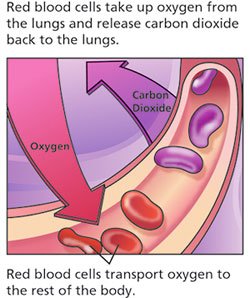
These cells, in the blood, carry oxygen and give the blood its color.

a)

white blood cells

b)

plasma

c)

platelets

d)

red blood cells

13.
What is the largest artery in the human body called?
a)
Superior Vena Cava
b)
Aorta
c)
Inferior Vena Cava
d)
Pulmonary Artery
14.
The upper chambers of the heart are known as...
a)
valves
b)
ventricles
c)
atria
d)
septum
15.
The lower chambers of the heart are known as...
a)
valves
b)
ventricles
c)
atria
d)
septum
16.
Blood high in carbon dioxide enters the heart through the superior vena cava into which atria?
a)
left
b)
right
17.
Pulmonary referrs to the lungs, blood leaving the heart through the pulmonary artery is high in which gas?
a)
nitrogen
b)
carbon dioxide
c)
oxygen
d)
helium
18.
The ___________ is the thick muscular wall that seperates the two sides of the heart.
a)
atria
b)
ventricles
c)
valve
d)
septum
19.

Oxygenated blood returning from the lungs enters the left

atrium through:

a)

The pulmonary arteries.

b)

The pulmonary veins.

c)

The coronary sinus.

d)

All of the above.

20.

Regardless of the heart chamber, contraction is called ____________ and relaxation, ____________.

a)

Diastole, systole.

b)

Systole, diastole.

c)

Fibrillation, defibrillation.

d)

Defibrillation, fibrillation.

21.

Valves in veins serve to:

a)

Release excessive pressure to protect these thin-walled vessels.

b)

Counteract the crushing force of surrounding skeletal muscles.

c)

Prevent backflow of blood in the absence of high blood pressure.

d)

Adjust blood pressure by compartmentalizing the venae cavae.

22.
______________ are the second largest blood vessel. 
a)
Arteries
b)
Veins
c)
Capillaries
23.
Where in your body can you find blood vessels?
a)
around the heart
b)
in hands & feet
c)
in your head
d)
virtually everywhere
24.
What do the arteries do?
a)
pumps blood to the heart
b)
pumps blood to and from the heart
c)
carry's blood away from the heart 
d)
a muscle 
25.
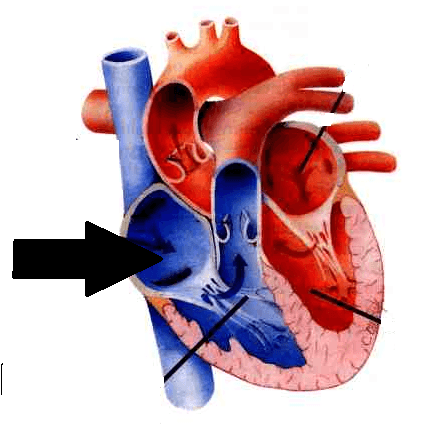
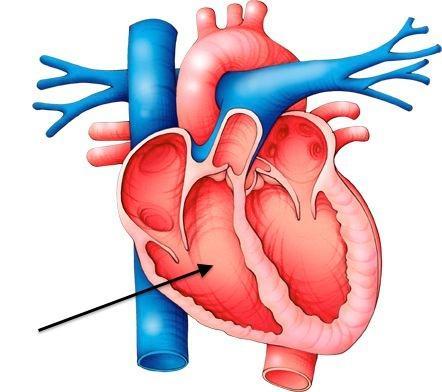
Identify
a)
Left atrium
b)
Right atrium
c)
Left ventricle
d)
Right ventricle
26.
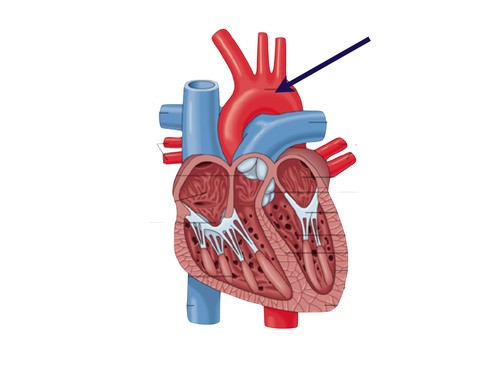
Identify
a)
Pulmonary veins
b)
Pulmonary artery
c)
Aorta
d)
Vena cava
27.
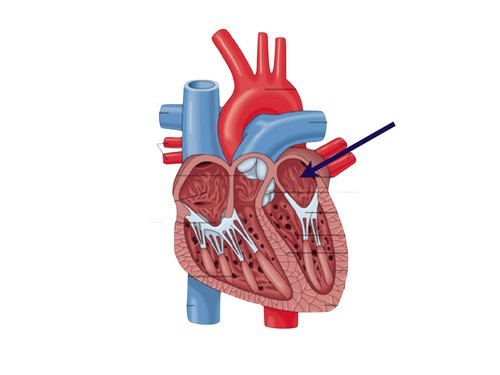
Identify
a)
Left atrium
b)
Right atrium
c)
Left ventricle
d)
Right ventricle
28.
Identify
a)
Left atrium
b)
Right atrium
c)
Left ventricle
d)
Right ventricle
29.
What is pulmonary circulation?
a)
Blood travelling to and from the lungs
b)
Blood travelling to and from the body
c)
A blood clot in the lungs
d)
The vessel that brings blood to the lungs
30.
Blood circulation from the heart to the rest of the body is called
a)
Full body
b)
Systemic
c)
pulmonary
d)
heart to lung