
 Worksheets
Just Mercy End of Novel Review
Total questions: 94
Worksheet time: 48mins
Pick the vocabulary word that fits best in the sentence
The young girl _____________ spends her time watching tv, using social media, and hanging out with friends.
Unprecedented
Heinously
Primarily
Advocate
Pick the vocabulary word that best fits the sentence
As a result of a global pandemic, teachers and students have experienced _______________ challenges which has led to creativity and unique problem solving for all that are involved.
Heinous
Unprecedented
Primarily
Mercy
Pick the vocabulary word that best fits the sentence
When my friend was upset about a breakup, I experienced ___________ and could understand why she was so upset about the situation.
Empathy
Primarily
Dehumanization
Integrity
Which answer choice best describes the relationship between mental health and the criminal justice system as described by Stevenson?
Mental health conditions make you a criminal.
The criminal justice system is aware of mental health conditions and try their best to help individuals who have mental illness.
There is no relationship between mental health and the criminal justice system.
Prisons have become a "warehouse" or a place to store people with mental health.
Based on your reading of "Just Mercy", select ALL themes that we have encountered so far.
The need for empathy and mercy for all
Working hard will get you what you want.
Role of media and public opinion in the criminal justice system
Dehumanization of the incarcerated
Violence leads to more violence
Based on your reading of "Just Mercy", select ALL themes that we have encountered so far.
Injustice in the criminal justice system
Honesty is the best policy
Systematic power and oppression
Seeing the world in a different way as you become older
Advocacy for those in need
What happened in Chapter 10 when Stevenson went to visit Avery Jenkin's in prison?
The guard was not there and Stevenson was allowed to enter without showing any proof of who he was.
The guard refused to let Stevenson enter the prison.
The guard was unnecessarily rough and required a strip search along with being extra hostile towards Stevenson.
The guard was very nice and accommodating towards Stevenson.
What was the purpose of Stevenson visiting Jenkins in prison?
To see the layout of the prison and see if that was making Jenkins mental illness worse.
To gain evidence that proves that Jenkins had a disability when he committed the murder.
To see if the rumors were true about how mean Jenkins was.
To see if the guards were actually being abusive to Jenkins
Which of the illnesses below was not something that Jenkins suffered from
Brain Damage
Bipolar
Schizophrenia
Heart condition
How many bomb threats had EJI received at the start of chapter 11?
10
100s
none
3
What was the ruling from Judge Norton on the Mcmillian case?
He denied removing the death penalty conviction.
He agreed that Walter was not guilty and removed the conviction
He agrees to another appeal to look at new evidence
He doesn't make a ruling.
Which news media decided to cover the information from Walter's case?
New York Times
60 Minutes
Atlanta Journal-Constitution
ABC
Which sentence below contains a Restrictive clause?
Her caretaker, who is responsible for her, is heartbroken.
That is the actor that I like.
The manuscript, which was formatted correctly, was submitted to the publisher.
John, who is in the army, won the lottery.
Which sentence below contains a Restrictive clause?
Greg, who works in the Finance Department, scheduled a meeting for 3 P.M.
Chocolate cake, which is my favorite dessert, goes well with vanilla icecream.
My pet dog, which is poodle, ran away last night.
The government supports people who are 60 years or older with a senior citizen discount.
Which definition is correct for nonrestrictive clause?
A clause that includes an adverb to describe the verb of the sentence
A clause that includes a relative pronoun and cannot be removed without altering the meaning of the sentence.
A clause that tells the location of an object
A clause that includes a relative pronoun and can be removed from a sentence and the sentence still has the same meaning.
Which sentence below contains a nonrestrictive clause?
We don't know the person who donated the money.
Jacob, who was a star athlete, earned a scholarship for college.
The man who lives next door won the lottery.
He went to the school that my father went to.
Who are the protagonists of Just Mercy?
Sheriff Tate and Ted Pearson
Walter McMillian and Bryan Stevenson
Ralph Myers and Sheriff Tate
Ian Manuel and Trina Garnett
How many years was Walter on death row? (Key Details)
3
4
5
6
What is the definition of "theme"?
The overall message of a book or story
The author's feelings towards a topic
The time and place a book or story takes place
The feeling the reader gets from a book or story
When District Attorney Tom Chapman is introduced in Just Mercy, he is bull-headed and close-minded. In the end, he comes around and helps release Walter. This makes him which type of character?
Round
Flat
Static
Dynamic
Which of the following is something Walter experiences after being released from death row?
Dementia
A failing business
PTSD (Post-traumatic stress disorder)
All of these
Which of the following is something Bryan Stevenson fought for?
Humane treatment of prisoners
Abolishing child incarceration for life
Wrongful imprisonment
All of these
By the end of the book, we know quite a bit about Walter. This would make him a ________ character.
round
flat
dynamic
static
(Chapter 15) What did Bryan say unites us all as humans?
We all have brokenness
We all have a beating heart
We all want to punish those who hurt us
We all can be the best version of ourselves
There were many things that were odd about Jimmy Dill's case. What was NOT one of them?
He was charged with capital murder, but they couldn't prove that he intended to kill the drug dealer
He has intellectual disabilities but still was sentenced to death
The man he shot died nine months later
He once owned a Jar Jar Binks action figure
What was the purpose of Bryan's childhood story, in which he made fun of the child who stuttered?
We don't understand others' struggles
We should always show mercy to one another
We need to be thankful for what we have
We should go to church
Which of the following is NOT a setting of Just Mercy?
80s and 90s
Alabama
Virginia
Deep South
What is the definition of "racial profiling"?
refusing to converse with or work with someone based on their race or ethnicity
creating a social media account based on your race
the use of race as grounds for suspecting someone of having committed an offense
sending someone to jail based on their race or ethnicity
Why was Walter sent to the hospital?
He had dementia and could no longer take care of himself.
He fell while cutting trees.
He broke his back while fixing cars.
He was suffering from PTSD.
How did Bryan feel about not being able to help Jimmy Dill?
He felt depressed
He felt broken
He felt frustrated
All of the above
What was Walter confused about in the hospital?
He thought that he had been hurt by some people.
He did not know how he got to the hospital in the first place.
He kept thinking that he was back on the death row.
He was unsure about who Bryan was.
What crime did Jimmy Dill commit?
He shot someone.
He murdered someone.
He got caught robbing a bank.
He broke into someone's house to rob them.
Why was Jimmy Dill put on the death row?
The man he shot died 9 months later due to medical neglect.
He did not show up to his trial on time.
He intended to murder someone.
The man he shot died on the spot.
Why was Jimmy Dill's conviction unfair & unjust?
He was disabled and was not able to afford a lawyer.
He did not mean to shoot the man.
He did not mean to kill anyone.
He was not given enough time to defend himself.
Why was Bryan so angry about Jimmy Dill's injustice?
People with disabilities were not supposed to be put on death row by law.
The lawyers neglected to mention Jimmy's disability in court.
Jimmy was being tried for a man dying because of medical neglect.
All of the above.
What is significant about the boy from Bryan's childhood?
He was blind.
He had a speech impediment.
He had intellectual disability.
He was mute.
What did Bryan's mother make him to after he laughed at the boy?
She made him apologize, hug the boy, and tell him "I love you."
She made him write an apology letter.
She yelled at him in front of everyone and embarrassed him.
She made fun of Bryan to teach him a lesson.
Why did Bryan suddenly remember the boy from his childhood?
Bryan was thinking back on his childhood to remember the good times.
Both the boy and Jimmy Dill had speech impediments.
Bryan missed his mother & friends.
The boy wrote him a letter after all these years.
What is Bryan's mood throughout the chapter?
Happy, angry, then desperate.
Hopeless, frustrated, then hopeful.
Angry, sad, then depressed.
Hopeful, relieved, then overjoyed.
What inference can we make about Bryan's future actions based on the ending of the chapter?
He will continue to fight for justice and help those who are wrongfully convicted.
He will give up his career as a lawyer.
He will become a public speaker instead.
He will no longer work at EJI.
Why did Walter have a difficult time finding a facility that will take care of him?
Walter was becoming more and more violent.
Facilities did not want to take in people with a criminal record.
Facilities wanted a large amount of money for Walter's stay.
Walter did not have the proper paperwork to be admitted into care facilities.
Make an Inference: Why did Walter develop dementia?
It is probably trauma related from his time on death row.
It is probably genetic.
He probably hurt his head when the tree fell on him.
He probably hurt his head while he was in prison.
Make an Inference: Why was Bryan crying so much when he was on the phone with Jimmy Dill?
He was probably sad because he couldn't help Jimmy get off the death row.
He was probably frustrated because of the injustice in the legal system.
He was probably reminded of his childhood friend who also had a speech impediment.
All of the above.
Make an Inference: Why do you think this chapter is titled, "Broken"?
Bryan probably wanted to show the brokenness of Jimmy Dill.
Bryan probably wanted to explain how people can be broken
Bryan probably wanted to emphasize that we are all broken in one way or another.
Bryan probably wanted to state that he felt broken from his experiences as a lawyer.
an action that goes against a law, rule, or code
marginalized
incompetent
vindicate
transgression
an action that goes against a law, rule, or code
marginalized
incompetent
vindicate
transgression
Who is the author of Just Mercy?
Walter McMillian
Bryan Stevenson
Tom Chapman
Brian McMillian
What type of book is Just Mercy
non-fiction
fiction
serious
reference
The legally authorized killing of someone as punishment for a crime
2nd degree murder
1st degree murder
manslaughter
capital punishment
The process of taking legal action; lawsuit.
mercy
litigation
coerced
recant
A system in which people or groups are ranked according to status.
Condemned
Hierarchy
Capital Punishment
Census
Depriving someone of the right to vote
Appeals Process
Hierarchy
Disenfranchisement
Litigation
an official count or survey of a population
Hierarchy
Condemned
Capital Punishment
Census
a great difference or gap in something
Condemned
Disparities
Appeals Process
Census
the process in which cases are reviewed by a higher authority
Litigation
Disenfranchisement
Appeals Process
Hierachy
Due to anti- (a) laws, interracial relationships were illegal in Alabama until 2000.
After the sentencing trial, the criminal was (a) to life in prison.
In the United States, (a) or sentenced to death by injection or eletrocution.
Due to the ruling on the case, the defendant requested that his case go through the (a) in court.
Stevenson says that he did not realize how complex the death penalty (a) was for those on trial.
After the election, both sides were accused of (a) of the voters.
In the Criminal Justice system, there is a (a) that determines the status of individuals and must be followed closely.
not having the necessary skills, lacking ability
ambivalence
transgression
mitigate
incompetent
indictment
support or active pleading on behalf of someone or something
a formal charge or accusation of a serious crime
legal action or a lawsuit
outward behavior or bearing
litigation
believability
a formal charge or accusation of a serious crime
legal action or lawsuit
outward bearing or behavior
advocacy
compassion or forgiveness for someone whom it is in your power to punish or harm
outward bearing or behavior
a formal charge or accusation of a serious crime
support or active pleading on behalf of someone or something
prosecutor
the state or federal government attorney in a criminal case
a formal charge or accusation of a serious crime
support or active pleading on behalf of someone or something
compassion or forgiveness for someone who it is within one's power to punish or harm
law
statute
capital punishment
culpability
mitigation
On page 49, Stevenson gives Myers’s account of his and McMillian’s supposed involvement in the murder of Ronda Morrison. Why was the story about McMillian making Myers drive him to murder Ronda Morrison suspicious?
McMillian didn’t own a vehicle.
Myers claims McMillian made him drive because he had an injured arm, yet McMillian supposedly drove the truck to where he picked up Myers.
Myers didn’t know how to drive.
It was well known that McMillian wouldn’t let anyone else drive his own vehicle.
McMillian knew Myers and didn’t trust him. It doesn’t make sense that he would have involved Myers in a crime.
putting in prison
incarceration
marginalized
adjudicate
mitigation
Why was McMillian and Myers’s initial placement on death row (while they were waiting for the trial) especially shocking?
No one believed that either of them had actually killed anyone.
It is illegal to hold pretrial detainees in a way that constitutes punishment because they have not been convicted of a crime yet.
It was unclear how the prosecutors were able to find them spots on death row because death row is so overcrowded.
Both McMillian and Myers were fully cooperating with the police investigation.
McMillian and Myers weren’t going to be tried for a crime that was eligible for a death row sentence.
How does jury selection impact the trials of black defendants?
It is impossible to create a jury in the South that is not mostly white because most counties are majority white. For the same reason, these majority white juries rarely sit for black defendants.
It is difficult to create juries that weren’t mostly white because minorities notoriously don’t show up for jury duty. The racial make-up of these juries doesn’t seem to impact the trials of black defendants, as the racist jurors, even the white ones, are sent home.
Juries generally mirror the racial make-up of the counties the trials are housed in, providing a mostly fair trial for the defendant regardless of race.
Juries are generally mostly black because the white people in the south believe that they are too good for jury service. Ironically, majority black juries are even harder on black defendants than majority white juries are.
Juries are generally mostly white because of the techniques prosecutors use to exclude back jurors. Majority white juries make a conviction more likely for black defendants.
In Walter’s pretrial hearing in 1987, his attorneys Chestnut and Boynton asked for the trial to be held in another county. Although such requests are not often granted, it was this time. What is significant about where the trial was moved to, and why can we infer the judge allowed it?
Baldwin County was far enough away from Monroe County to escape the press coverage. The judge knew that there was heightened press awareness of this case and wanted to make sure everyone knew he was a fair judge.
Baldwin County was a wealthy community that bribed the judge to move it there. They thought the press and spectators of the trial would boost their economy even more.
Baldwin County was a black majority county. The judge was concerned that the prosecutors would attempt to load the jury with white jurors and wanted to preempt that possibility.
Baldwin County was the only county outside of Monroe County that was able to accept a new trial. The judge wanted the verdict to stay, and Chestnut and Boynton had threatened a mistrial if the trial wasn’t moved.
Baldwin County was an affluent community with a significantly lower black population than the other counties. This racial make-up would make it easier to justify excluding black jurors
Eva Ansley and Stevenson encounter all of the following obstacles when they opened their nonprofit law center serving Alabama death row inmates EXCEPT:
They lose the funding from the state that they had expected.
The community protests and doesn’t want them to be there.
They lose the office space the University of Alabama had promised them.
They have difficulty recruiting lawyers who are willing to do this type of work for so little pay.
They are overwhelmed with the number of inmates asking for their help
Stevenson and his nonprofit take on the case of Michael Lindsey, whose execution date was impending. What is odd about the sentencing in this case, which Stevenson uses to try to get Lindsey a stay of execution?
There was evidence that the jury was tampered with, but even knowing this, the judge had refused to declare a mistrial.
The jury had declared Lindsey innocent, but the judge overrode this and declared him guilty, thereby sentencing him to death.
Lindsey was the first person sentenced to death in Alabama in over a decade.
Lindsey was mentally handicapped, and the Supreme Court had already ruled that it was a constitutional violation to execute the mentally handicapped.
The jury had actually sentenced him to life in prison, but the judge overrode this and sentenced him to death instead.
Which topics played a significant role in developing Chapter 1
Economic disadvantages living as a Black American in the South and Interracial relationships
Racism and Rape
Criminal Justice system and Jim Crow
Jim Crow and Poor Whites
Why is Walter McMillan on death row?
He is accused of raping a white woman
He is being framed for the murder of two white women
He had an affair with a white woman
What type of lawyer is Bryan Stevenson?
Criminal defense
Public defense
Civil Rights Attorney
Walter's plight impacted his entire community.
joy
work ethic
unfortunate situation
accusations
The funeral was a somber event.
joyful
entertaining
boisterous
serious
The country with the highest incarceration rate is
North Korea
Russia
United States
Mexico
When Bryan was listening to his car radio near his Atlanta apartment...
he was arrested for disturbing the peace.
his car stopped, and he had to walk home.
Atlanta SWAT pulled him over and told him about a robbery.
police pulled their guns on him
What did the man at church tell Bryan he was beating the drum for?
the system
man
justice
prisoners
Why was Walter McMillian arrested?
He killed Ronda Morrison
Ralph Myers lied and gave false witness
He had an affair with a white woman
Bill Hooks said he robbed the store.
Which is not an internal conflict that either Bryan or Walter felt?
Walter feeling guilty for leaving the other death row inmates behind
media crowding them when Walter was released from prison
Bryan feeling "strangely agitated."
Bryan struggling with disappointment when he can't help Herbert.
Which of these is NOT a purpose of the criminal justice system
prevent crimes
rehabilitate offenders
put people in prison
support victims
Someone who stands up for a cause and publicly supports it is an ______________.
defender
advocate
opportunist
Looking worried and upset means___
Angry
careless
Distraught
upset or shock someone, causing emotional and mental pain
rupture
gauge
traumatize
antibiotic
Bringing people of different groups together in society or in an organization.
integration
nonviolent protest
civil rights movement
affirmative action
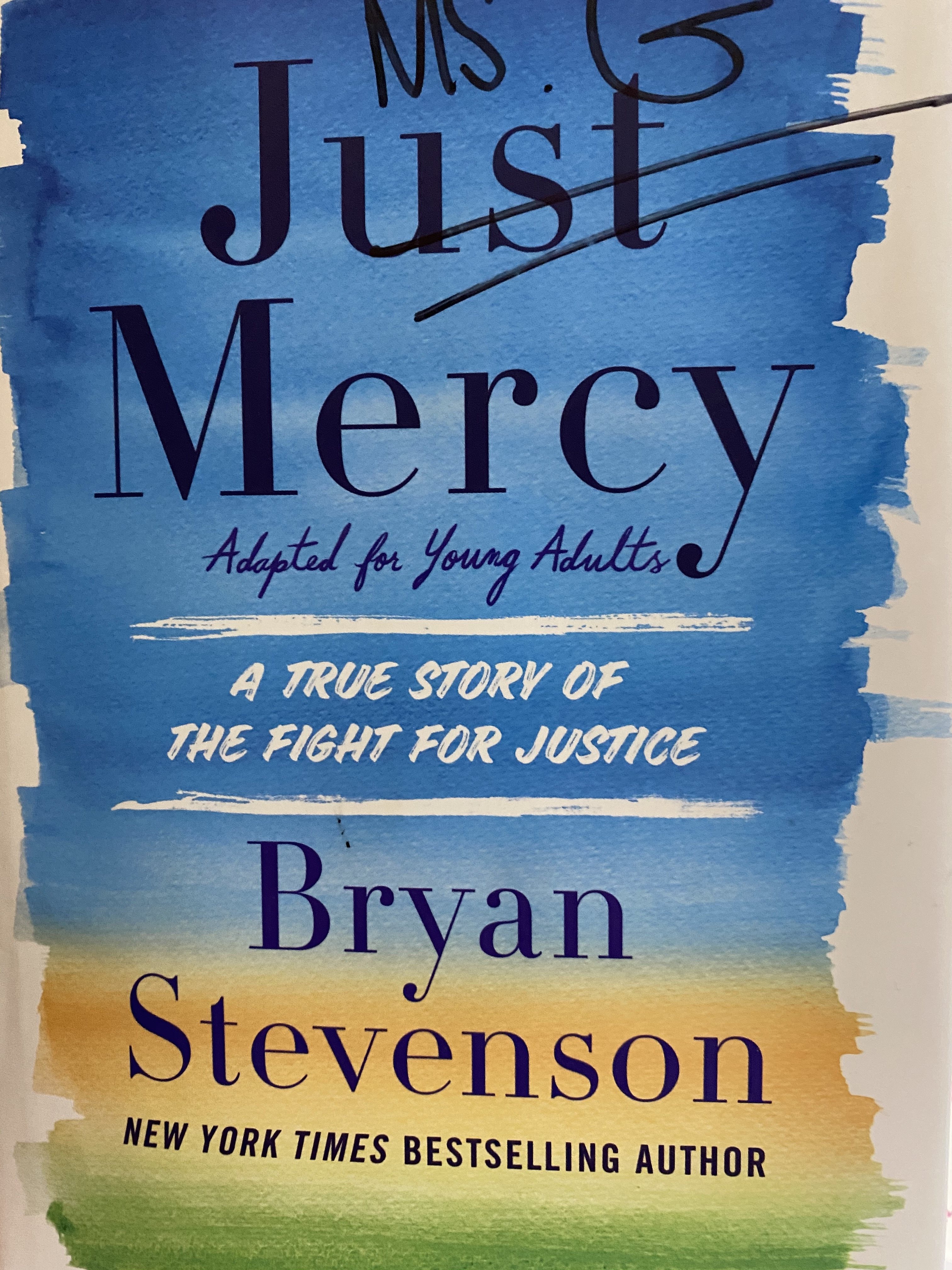
"Superpredators" define what kind of people?
Elementary aged kids who people believe will be dangerous enough to lock up early in life.
People who have been convicted of more than three crimes.
All people on death row
People who commit heinous crimes.
credibility
location
believability
terrible
legal action or a lawsuit
horrific
terrible
location
believability
outward bearing or behavior

