Wayground logo

Free Printable Worksheets

Font size

S
M
L
XL
Worksheets

7th Grade TEKS Mock STAAR Review

Total questions: 39

Worksheet time: 2hrs 57mins

Name
Class
Date
1.

The breakdown of food into small molecules, which are then absorbed into the body is the main function of which body system.

a)

integumentary system

b)

digestive system

c)

excretory system

d)

endocrine system

2.

This system provides the structural support for the human body and protects our organs.

a)

digestive system

b)

respiratory system

c)

skeletal system

d)

muscular system

3.
What body system is for support, protection, and creates new blood cells?
a)
skeletal system
b)
muscular system
c)
circulatory system
d)
integumentary system
4.

The main function of this system is to-

a)

support the body and protect internal organs

b)

body movement

c)

fights bacteria and viruses

d)

transports oxygen and nutrients

5.

The breakdown of food into small molecules, which are then absorbed into the body is the main function of which body system.

a)

integumentary system

b)

digestive system

c)

excretory system

d)

endocrine system

6.
Chewing food is an example of _____________.
a)
chemical digestion
b)
mechanical digestion
7.
The chewing and grinding of food into smaller pieces is an example of...
a)
Mechanical Digestion
b)
Chemical Digestion
8.
Gastric juices in the stomach digest food into a thick liquid.  This is...
a)
Mechanical digestion
b)
Chemical digestion
9.
Enzymes (chemicals) in your saliva help break down food while chewing.  This is...
a)
Mechanical digestion
b)
Chemical digestion
10.
The crushing and mashing of food is what type of digestion?
a)
Chemical
b)
Mechanical
11.
During chemical digestion 
a)
only changes in size and shape occur
b)
a new substance is formed
12.
Acids and enzymes are used in 
a)
physical digestion
b)
chemical digestion
13.
The stomach releases hydrochloric acid and enzymes that break down the protein in meats and turn the protein into amino acids. This change is
a)
Physical
b)
Chemical
14.
Changes the size, shape, or color of food:
a)
Physical digestion
b)
Chemical Digestion
15.
The stomach pushing and churning food is...
a)
physical/mechanical
b)
chemical
16.

What does an ENZYME do?

a)

Speed up the chemical break up of food

b)

produce bile

c)

churn food

d)

absorb nutrients

17.

What do you call the first organism to inhabit an area during a succession event?

a)

Pioneer Species

b)

Climax Community

c)

Equilibrium

d)

Shrubs

18.

The type of succession that happens when new land is formed and there is only bare rock on the ground is..

a)

Primary Succession

b)

Secondary Succession

c)

Tertiary Succession

d)

Producer Succession

19.

The type of succession that occurs after a disruption such as a natural disaster wipes out a previously existing ecosystem?

a)

Primary Succession

b)

Secondary Succession

c)

Tertiary Succession

d)

Producer Succession

20.

How is secondary succession different from primary succession?

a)

Primary already has soil

b)

Secondary already has soil

c)

Secondary starts on bare rock

d)

Primary starts after a disturbance

21.

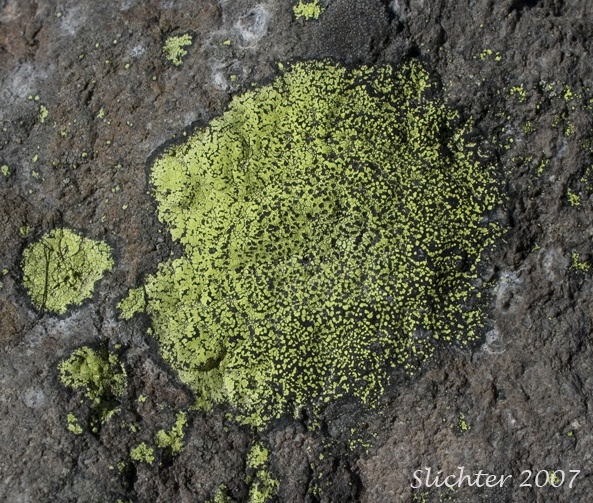
What are the pioneer species for primary succession?

a)

Lichens and Moss

b)

Grasses and weeds

c)

Shrubs

d)

Trees

22.
succession that occurs in an area with no soil
a)
ecological succession 
b)
primary succession 
c)
secondary succession
d)
pioneer speciles
23.
succession that occurs in an area where soil is already present
a)
ecological succession 
b)
primary succession 
c)
secondary succession
d)
pioneer speciles
24.
The first organisms that appear in an ecological community
a)
ecological succession 
b)
primary succession 
c)
secondary succession
d)
pioneer speciles
25.
How do lichens contribute to primary succession?
a)
Lichens decompose organic matter from animals and plants
b)
Lichens begin to break down rock to form soil
c)
Lichens are nitrogen fixing bacteria
26.

Primary succession starts with

a)

Bare Rock

b)

lichens and moss

c)

Soil

d)

Grass

27.

The first group of organisms like lichens and moss to colonize an area are called

a)

Pioneer Species

b)

organisms

c)

niche

d)

microhabitat

28.

The first organisms to appear in an ecological community

a)

climax community

b)

primary succession

c)

secondary succession

d)

pioneer species

29.
What is the name given to lichen or algae after a primary succession?
a)
pioneer species
b)
volunteer species
c)
founder species
d)
conqueror species
30.

What are examples of pioneer species in a primary succession?

a)

Bushes and Shrubs

b)

Oak trees

c)

Mossess and Lichens

d)

A rose Bush

31.

Starts with BARE ROCK followed by lichen

a)

primary succession

b)

secondary succession

c)

both types of succession

32.
An illustration and a dichotomous key are given. What is the correct classification for this organism?
a)
Class Insecta
b)
Order Amblygygi
c)
Order Araneae
d)
Order Scorpiones
33.
A dichotomous key for trees is provided. Hikers found a tree that has large brown cones and single sharp needles. What species of tree have the hikers found?
a)
Juniper
b)
Pine
c)
Spruce
d)
Fir
34.
A dichotomous key for insects is given. To what order does an insect with two pairs of scaly wings belong?
a)
Coleoptera
b)
Heteroptera
c)
Diptera
d)
Lepidoptera
35.
Using this dichotomous key, identify the name of the circled Fish, J.
a)
peacock flounder
b)
band-tail puffer
c)
trumpet fish
d)
spotted goat fish
36.

Which leaf is shown in the drawing?

a)

Magnolia

b)

Redbud

c)

Sweetgum

d)

None of the above

37.

Which items would have this energy transformation: mechanical energy -> electrical energy?

a)

turning on a flashlight

b)

nuclear power plant

c)

wind turbine turning

d)

tanning bed

38.
Wind turbines and windmills convert what energy to another?
a)
Kinetic to electric
b)
Gravitational potential to electric
c)
Mechanical to potential
d)
Thermal to sound
39.
Solar Energy is transferred to _____ Energy.
a)
Mechanical
b)
Solar
c)
Sound
d)
Electrical