
NEW
Font size
 Worksheets
4.4.2 ESS1.2
Total questions: 20
Worksheet time: 33mins

How long does it take for the Earth to make one full Revolution (orbit) around the Sun?
one day
one week
one month
one year


What looks to be the motion of the Sun in the sky is really caused by the motion of _____
the Earth's rotation
the stars
the planets
the Earth's axis

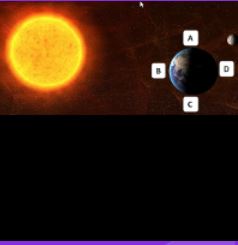

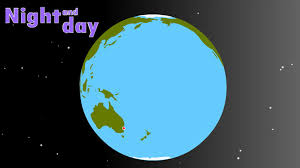

What causes day and night cycles?
Mars
seasons
Earth's rotation
moon phases

At night stars appear to move across the sky. We know we see different constellations each month due to the Earth's revolution (orbit) around the sun. Why do stars seem to move across the sky each night?
The Earth's rotation causes us to see stars moving across the sky each night.
The Earth's revolution causes us to see different constellations.
Which statement correctly describes the sun's apparent movement across the sky?
As Earth spins on its axis, it makes the sun appear to move across the sky.
As the sun spins around Earth, it moves across the sky.
Earth rotates around the sun every 24 hours, making the sun appear to move across the sky
The sun rotates around Earth every 12 hours, making the sun appear to move across the sky.
A student looks outside and observes the sun in the western sky. Which of the following times could it be?
Sunrise
Sunset
Noon
Midnight

In an activity, students make a sundial. the sundial uses the sun to tell the approximate time of day.
How is the possible?
The sun moves across the sky each day because it spins around Earth.
The sundial measures the distance from Earth to the sun as it moves across the sky.
Earth moves around the sun each day, causing the sun to appear to move across the sky.
The position of the sun appears to change during the day because Earth rotates.

This photograph shows the night sky over a period of many hours.
Why does the night sky appear to move in a circular pattern?
Earth rotates on its axis once a day.
The night sky rotates over Earth.
Stars travel in a circular direction around the Earth.
Earth rotates on its axis once every 12 hours.

Which position shows where the sun would most likely be at 12:00 P.M. ?
Position A
Position B
Position C
Answer is not here

Shadow casts by objects change throughout the day. The picture below shows the shadow cast by a tree at 3:00 p.m. Which picture shows how the tree's shadow most likely looked at 9:00 a.m. ?


A student is looking for evidence that Earth is always rotating on its axis. Which of the following would provide the best evidence?
The different amount of rain that falls each day
The appearance of shadows changing throughout the day
The presence of other planets in the night sky
The different phases of the moon in a month
Why does the Moon seem to move across the sky?
rotation of the Earth
revolution or orbit of the Moon
rotation of the moon
orbit of the Sun

