
NEW
Font size
 Worksheets
Alkenes, Alkynes and Aromatics
Total questions: 27
Worksheet time: 16mins

The name for this compound is
propene
propane
propyne
ethylene

this is
alkene
alkyne
aromatic hydrocarbon

this is
aromatic hydrocarbon
alkyne
alkene
hard to say
An alkene is:
a hydrocarbon with a double bond
a hydrocarbon with a triple bond
a hydrocarbon with one or more benzene rings
organic compound with single bonds

are these isomers?
N
Y

are these isomers?
Y
N

cis or trans?
cis
trans
not applicable

What is the structure of 2-methyl pent-2-ene ?
a
b
c
d
Which is the structures with IUPAC nomenclature
2,2,4-trimethylpentane
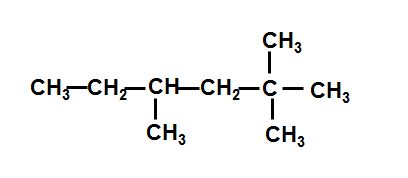
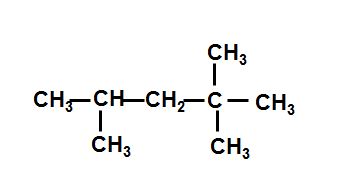
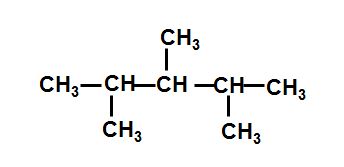
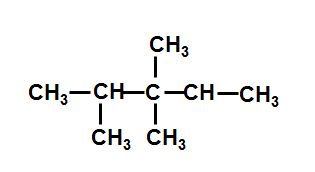
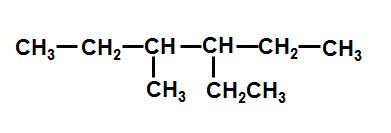
Give the IUPAC name for this compound
3-methyl-4-ethylhexane
3-ethyl-4-methylhexane
3-methyl-4-ethylheptane
3-ethyl-4-methylheptane

Because they have aromas, compounds with a ring of resonance bonds are called ___
fragrent compounds
pungent molecules
aromatic compounds
scented structures

Using the structural diagram, name this compound.
3-ethyl-1-methylcyclopentene
1-ethyl-3-methylcyclopentene
2-ethyl-5-methylcyclopentene
5-ethyl-2-methylcyclopentene

Because they substitute for hydrogen atoms, all of the identifying parts of an organic molecule are called ___
replacements
substituents
surrogates
equivalents

The simplest, and one of the most common, aromatic hydrocarbons is ___
toluene, C7H8
benzyne, C6H4
naphthalene, C10H8
benzene, C6H6

In bond line notation, the vertices and the ends of the lines represent ___
resonance stuctures
substituents
carbon atoms
hydrogen atoms

In benzene, to show that the double bonds aren't in any specific place it's often drawn ___
with a faint inner hexagon
with squiggly lines
with dashed lines
with a circle in the middle

Technically the number of bonds between each pair of carbons in benzene is defined as ___
indeterminate
1
1.5
2

When benzene is used as an attachment, we call it ___
a benzyl group
a phenyl group
a fenzyl group
a cyclohexane

Name the following compound
Benzene
Benzol
Phenyl
Phenol

Name the following
2,4,6-Trinitrotoluene
Trinitro benzene
1,3,5-Trinitrotoluene

Name the compound
Methane benzene
Toluene
Benzene methane
methane phenyl

The correct name for this is?
1-chloro-3-bromobenzene
3-bromo-1-chlorobenzene
1-bromo-3-chlorobenzene
1-bromo-5-chlorobenzne
1-chloro-5-bromobenzene
For addition polymers to form...
alkene molecules break apart.
the carbon to carbon double bond breaks.
additive molecules must be added.
water must be eliminated.
Which polymer is tough and slippery?
Poly(ethene)
Poly(propene)
Poly(chloroethene)
Poly(tetrafluoroethene)

This pictured compound is
cis - chloro-fluorethene
trans-chlorofluroethene
cis-1-chloro-2-fluoroethene
trans-1-fluoro-2-chloroethene

