wayground logo

Free Printable Worksheets

Font size

S
M
L
XL
Worksheets

Homeostasis

Total questions: 15

Worksheet time: 8mins

Name
Class
Date
1.
The maintenance of an organism’s internal environment is called:
a)
compensating
b)
homeostasis
c)
balancing
d)
routine
2.

Which body system controls the body to maintain homeostasis?

a)

excretory

b)

nervous

c)

circulatory

d)

skeletal

3.
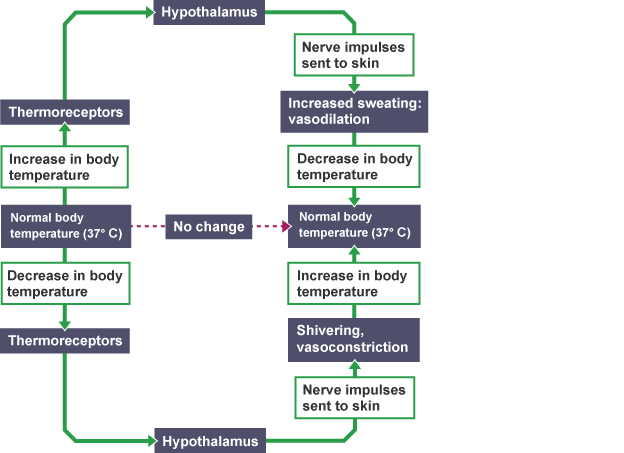
What type of feedback loop is shown?
a)
Positive
b)
Neutral
c)
Negative
4.
Name the levels of organization in the human body in order from smallest to largest:
a)
Tissue, organ, organ system
b)
Organ system, tissue, organs, cells
c)
Cells, tissue, organs, organ system
d)
Cells , organs, tissue, organ system
5.

What is the point of a feedback loop?

a)

To provide the body with more energy

b)

To provide the body with more food

c)

To make sure the conditions in the body are always changing

d)

To make sure the conditions in the body remain stable

6.

The "cause" for something to happen is called...

a)

response

b)

effector

c)

control center

d)

stimulus

7.

Which part of the feedback loop is a body part that makes a change to bring the system back to homeostasis?

a)

Effector

b)

control center

c)

response

d)

receptor

8.
Negative Feedback Loops:
a)
amplify processes
b)
prevent small changes from getting larger
c)
are initiated during childbirth
d)
are found only in plants
9.
Failure to maintain homeostasis could result in:
a)
lack of internal balance
b)
eventual death
c)
difficulty carrying on metabolism 
d)
all three
10.

The body part that senses the change inside the organism ...

a)

receptor

b)

control center

c)

effector

d)

response

11.

What detects a signal from another body part that the system is outside of homeostasis and adjustments need to be made?

a)

effector

b)

response

c)

control center

d)

stimulus

12.
If the environment gets cold, we will often shiver in order to:
a)
keep body temperature the same as the external temperature
b)
decrease body temperature
c)
increase body temperature
d)
regulate blood pressure
13.
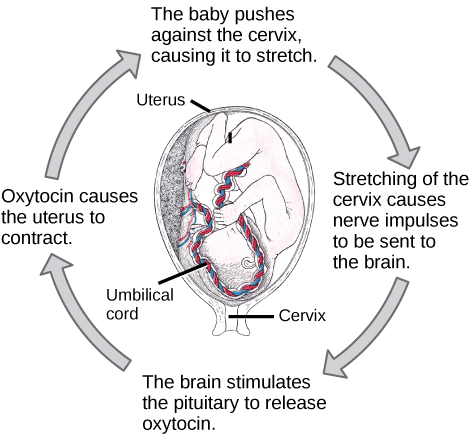
What type of feedback loop is shown?
a)
negative
b)
neutral 
c)
positive
14.
Maintaining body temperature is an example of a:
a)
negative feedback loop
b)
positive feedback loop
15.
When you get cut, your skin cells release hormones that signal platelets to come and stop the bleeding. Platelets then release more hormones that signal even more platelets to help stop bleeding. The hormone signals continue until the cut is closed.
a)
Positive Feedback Response
b)
Negative Feedback Loop