Wayground logo

Free Printable Worksheets

Font size

S
M
L
XL
Worksheets

Structure of Atoms and Molecules

Total questions: 25

Worksheet time: 13mins
Name
Class
Date
1.
Which of these items is made up of one or more molecules?
a)
Gold
b)
Hydrogen
c)
Salt 
d)
Neon 
2.
Elements are made of 
a)
many types of atoms 
b)
the periodic table
c)
one type of atom 
d)
molecules 
3.
All matter is made of 
a)
energy 
b)
atoms 
c)
electrons 
d)
compounds 
4.
What are the 3 particles that make-up the atom?
a)
protons, neutrons, and isotopes
b)
neutrons, isotopes, and electrons
c)
positives, negatives, and electrons
d)
protons, neutrons, and electrons
5.
How many atoms are there in a molecule?
a)
no atoms
b)
1 or more atoms
c)
2 to thousands of atoms
d)
exactly 18 atoms
6.
Two or more atoms chemically bonded together are called a
a)
atom
b)
element
c)
molecule
d)
mixture
7.
How many hydrogen atoms are there in a water molecule? 
a)
0
b)
1
c)
2
d)
3
8.
What is the total number of atoms in an ammonia (NH3) molecule?
a)
1
b)
2
c)
3
d)
4
9.
Carbon dioxide (CO2) contains how many atoms of oxygen?
a)
0
b)
1
c)
2
d)
3
10.
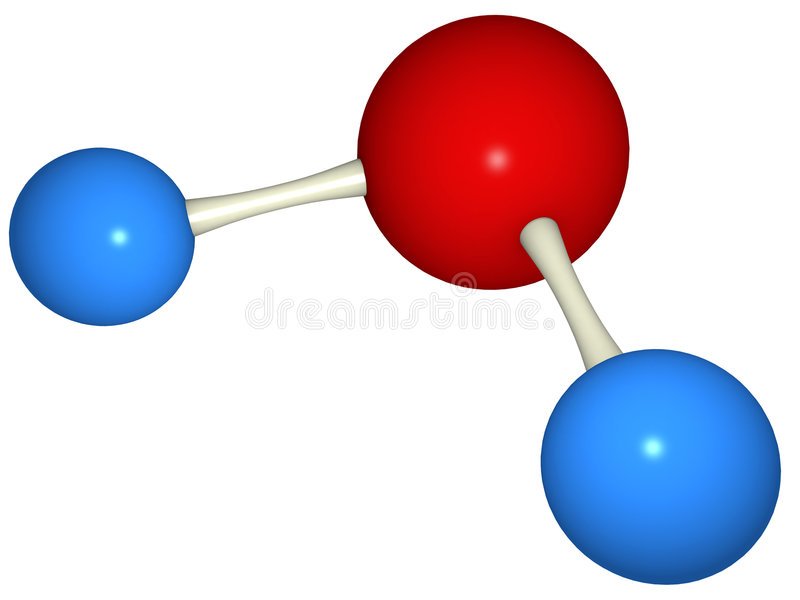
What type of molecule does this picture show?
a)
hydrogen peroxide
b)
water
c)
carbon monoxide
d)
sugar
11.
When there is no subscript after an element's symbol, it means there are how many atoms of that element?
a)
0
b)
1
c)
2
d)
unknown
12.
How many hydrogen atoms are in a molecule of glucose/sugar (C6H12O6)?
a)
6
b)
12
c)
18
d)
24
13.
What holds atoms together to make a molecule?
a)
Glue
b)
Bonds
c)
Magnetism
d)
Cement
14.
What determines what element an atom is?
a)
The number of electrons
b)
The number of neutrons
c)
The number of protons
d)
The formula of the atom
15.
What particle in the atom has no charge?
a)
Neutron
b)
Proton
c)
Electron
d)
Nucleus
16.

The plums represent the electrons scattered throughout the positive muffin. Who is the person credited with the formation of the "plum pudding" model?

a)

Thomson

b)

Rutherford

c)

Bohr

d)

Dalton

17.

Chadwick is credited with discovering which part of the atom?

a)

nucleus

b)

protons

c)

electrons

d)

neutrons

18.

Dalton's model of the atom is represented by which letter?

a)

A

b)

B

c)

C

d)

D

e)

E

19.

Who discovered the nucleus of the atom?

a)

Dalton

b)

Thomson

c)

Rutherford

d)

Bohr

20.

Which of the following statements are true about the nucleus? (choose two)

a)

It is neutrally charged

b)

It is positively charged

c)

It contains most of the mass of the atom

d)

It is almost empty space

21.

Who established that "electrons move around the nucleus at fixed distances called orbitals"?

a)

Dalton

b)

Thomson

c)

Rutherford

d)

Bohr

22.

What is the meaning of the greek word "atomos"?

a)

Invencible

b)

Invisible

c)

Indivisible

d)

Independent

23.

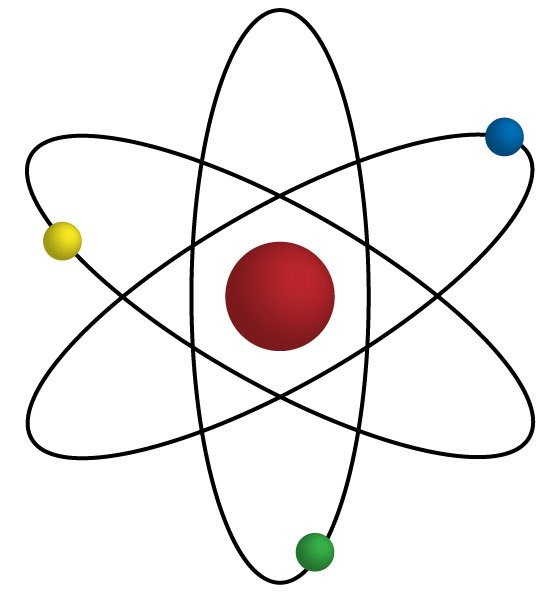
Who's model does this picture represent?

a)

Dalton 1803-1808

b)

Rutherford 1911

c)

Bohr 1913

d)

modern model 1920 to the present

24.
Which subatomic particle causes the nucleus to have a positive charge?
a)
Neutron
b)
Electrons
c)
Protons
d)
Valence electrons
25.

What is the charge of the electron?

a)

positive

b)

no charge

c)

negative

d)

neutral