
 Worksheets
Phase Change Mastery Check
Total questions: 50
Worksheet time: 33mins
Suppose you pour a glass of ice water and set it on the kitchen table. After a few minutes, the outside of the glass will be covered with drops of water. Why did this happen?
Oxygen in the air cooled and condensed onto the cold glass.
Water vapor in the air cooled and condensed onto the cold glass.
Water vapor in the air cooled and evaporated onto the cold glass.
Water seeped through pores in the glass.
A substance is able to flow freely within a container. What state of matter is the substance in?
Liquid
Gas
Solid
Plasma
What are the characteristics of a solid?
Solids do not have a definite shape but have a definite volume
Solids have a definite shape and no definite volume
Solids do not have a definite shape and no definite volume
Solids have a definite shape and definite volume
When heat is added to a liquid, what occurs?
Liquid molecules begin to condense to form a solid.
Liquid molecules are being slowed down to become a gas.
Liquid molecules speed up and begin to spread out to become a gas.
Liquid molecules begin to slow down to become a solid.
What happens to molecules as temperature and energy increase?
Matter condenses
Substances expand when heated
Atoms become less active
Phase change slows down
When heat energy and temperature are at their lowest, what state of matter is a substance in?
Gas
Vapor
Solid
Liquid
When a gas begins to condense through condensation, what happens to the heat in the particles.
The heat leaves the gas as it condenses.
The heat goes into the gas as it condenses.
The heat stays the same as it condenses.
None of the above.
When a gas begins to condense through condensation, what happens to the heat in the particles.
The heat leaves the gas as it condenses.
The heat goes into the gas as it condenses.
The heat stays the same as it condenses.
None of the above.
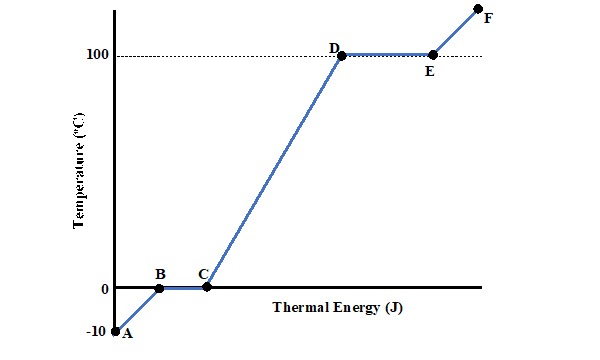
Between which two points is the solid cooling?
A <---- B
B <----> C
C <---- D
D <----> E
E <---- F
Between which two points is the gas heating up?
A ----> B
B <---- C
C ----> D
D ----> E
E ----> F
Between which two points is the gas condensing?
A <---- B
B <---- C
C <---- D
D <---- E
E <---- F
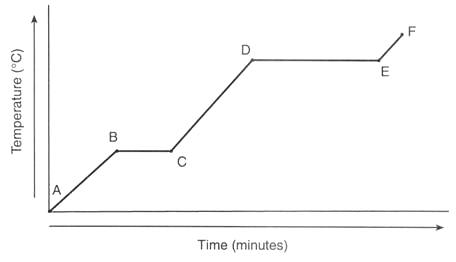


What is happening to the particles in the substance between points A and B?
Melting
Freezing
Speeding Up
Slowing Down

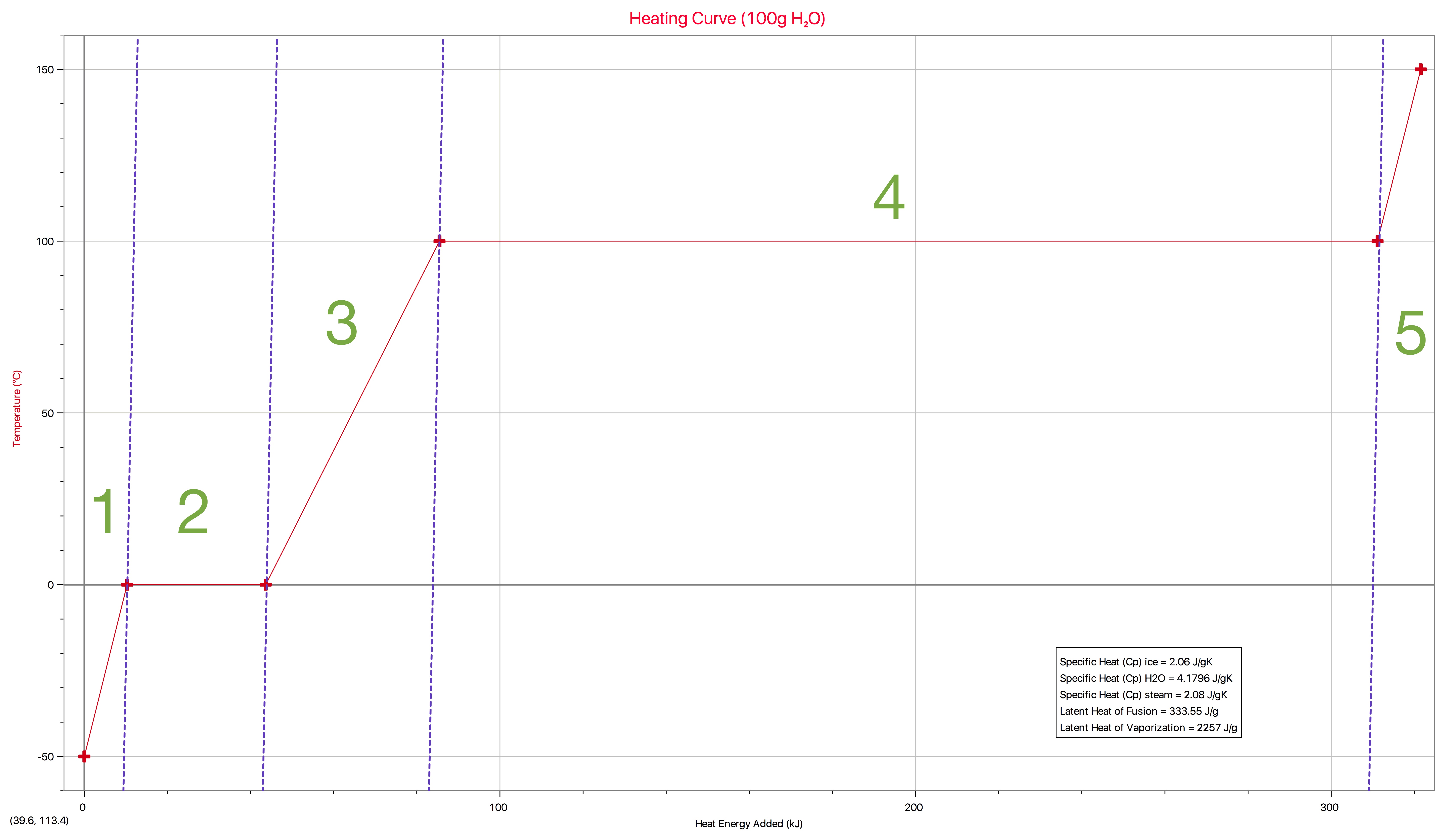
Where on the graph are phase changes taking place?
1
2
3
4
5

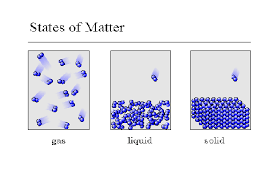
Is the substance gaining or losing energy?
Gaining
Losing
Are the particles moving faster or slower as time goes on?
Faster
Slower
What state/phase is the object likely from points A to B?
Solid
Liquid
Gas
Plasma
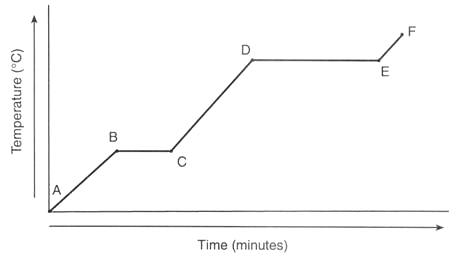
What is happening to the particles in the substance between points A and B?
Melting
Freezing
Speeding Up
Slowing Down
What is happening to the particles in the substance between points D and E?
Melting
Freezing
Vaporizing
Sublimating

Is the substance gaining or losing energy?
Gaining
Losing

The drops of water that appear on the outside of a glass of cold juice on a warm day are an example of?
sublimation
condensation
evaporation

Your teacher asks your group to discuss molecule MOVEMENT and molecule ARRANGEMENT in a SOLID. Each of your group members shares their answer. Decide who has the BEST answer.
Betsy says molecule MOVEMENT in a SOLID is SLOW and the molecule ARRANGEMENT is FAR APART.
Yazmin says molecules DO NOT MOVE in a SOLID and the molecule ARRANGEMENT is CLOSE.
Leila says molecule MOVEMENT in a SOLID is SLOW and the molecule ARRANGEMENT is CLOSE.

Your teacher asks your group to discuss HOW molecule MOVEMENT and molecule ARRANGEMENT in a LIQUID is DIFFERENT than in a SOLID. Each of your group members shares their answer. Decide who has the BEST answer.
Zachary says molecule MOVEMENT in a LIQUID is SLOWER and the molecule ARRANGEMENT is FARTHER APART than a SOLID.
Miguel says molecule MOVEMENT in a LIQUID is SLOWER and the molecule ARRANGEMENT is CLOSER than a SOLID.
Julian says molecule MOVEMENT in a LIQUID is FASTER and the molecule ARRANGEMENT is FARTHER APART than a SOLID.

Your teacher asks your group to discuss HOW molecule MOVEMENT and molecule ARRANGEMENT in a GAS is DIFFERENT than in a LIQUID. Each of your group members shares their answer. Decide who has the BEST answer.
Villette says molecule MOVEMENT in a GAS is FASTER and the molecule ARRANGEMENT is FARTHER APART than a LIQUID.
Vivian says molecule MOVEMENT in a GAS is SLOWER and the molecule ARRANGEMENT is FARTHER APART than a LIQUID.
Griselda says molecule MOVEMENT in a GAS is FASTER and the molecule ARRANGEMENT is CLOSER than a LIQUID.

What happens at the vaporization point (boiling point) of a substance?
a substance changes from liquid to gas
a substance changes from gas to solid
a substance changes from solid to gas
In this state of matter, the particles of the substance are closely packed together and they don't move around freely.
gas
solid
liquid


A plasma can be made in a laboratory by
cooling a gas to very low temperatures
cooling a gas and reducing the pressure
heating a gas to extremely hot temperatures
heating a liquid to the point it turns into a gas

Is Lightning a Solid, Liquid, Gas, or Plasma?
Solid
Liquid
Gas
Plasma

