Wayground logo

Free Printable Worksheets

Font size

S
M
L
XL
Worksheets

CLMS Physical Science Unit 2 Changes in Matter Review

Total questions: 46

Worksheet time: 2hrs 32mins
Name
Class
Date
1.
Is wood burning a physical or chemical change?
a)
Physical 
b)
Chemical
2.
Is milk going sour a physical or chemical change?
a)
Physical 
b)
Chemical
3.
Is Gatorade powder dissolving in water physical or chemical change?
a)
Physical 
b)
Chemical
4.
Is copper tarnishing a physical or chemical change?
a)
Physical 
b)
Chemical
5.
Is the formation of the grand canyon a physical or chemical change?
a)
Physical 
b)
Chemical
6.
Which of the following IS a clue that a chemical change has occurred? 
a)
State of matter change
b)
Size Change
c)
Change in temperature
d)
Shape change
7.

Which of the following is not a clue that a chemical reaction has taken place?

a)

Changing size

b)

Changing color

c)

A gas being formed

d)

Formation of a precipitate

8.
Fizzing, foaming, and burning are all examples of
a)
Chemical change
b)
Physical change
9.

Why do all bonds form?

a)

so the number of protons equals the number of electrons

b)

so an atom can become unstable

c)

to fill the outermost energy level

10.
Ionic bonds are between...
a)
Metal and Non-metal
b)
Non-metal and Non-metal
c)
Metal and Metal
11.
How are ionic bonds formed?
a)
Transfer of electrons
b)
Sharing of electrons
12.
Why do elements bond?
a)
To be friends
b)
To create a new element
c)
To become stable
13.

Why are sodium and chlorine attracted to each other?

a)

they have opposite charges

b)

they both have negative charges

c)

they both have positive charges

14.

Valence electrons are found

a)

in the innermost energy level of an atom

b)

in the middle energy levels of an atom

c)

in the outermost energy levels of an atom
15.
How do covalent bonds form?
a)
Donating & receiving valence e- between atoms.
b)
Opposite slight charges attract each other between compounds.
c)
Scientists are still not sure how they form.
d)
Sharing valence e- between atoms.
16.
What two types of atoms make a covalent bond?
a)
2 Nonmetals
b)
1 Nonmetal and 1 Metal
c)
2 Metals
d)
2 Noble Gases
17.
A mixture that appears to be evenly mixed throughout:
a)
an atom
b)
a compound
c)
a homogeneous mixture
d)
a heterogeneous mixture
18.
A pure substance...
a)
is an element or a compound
b)
is an element or a mixture
c)
is a compound or a mixture
d)
is a mixture
19.
1 A substance made up of two or more chemically combinedelements is —
a)
an element
b)
mixture
c)
compound
d)
solution
20.
 A substance that cannot be broken down into any other substance by ordinarychemical means is called —
a)
molecule
b)
mixture
c)
element
d)
compound
21.
Two or more physically combined substances form —
a)
a compoud
b)
an acid
c)
an element
d)
a mixture
22.
What is an example of a mixture?
a)
Table salt
b)
Salt water
c)
Oxygen
d)
Air
23.
A substance made of only one type of atom is called —
a)
an element
b)
a mixture
c)
a compound
d)
a salt
24.
Which of these substances is an example of a solution?
a)
milk
b)
sweet tea
c)
mercury
d)
concrete
25.

The smallest part of an element that retains the properties of the element is the

a)

nucleus.

b)

electron

c)

atom

d)

neutron

26.

What kind of substance is composed of two or more elements that are chemically combined?

a)

element

b)

mixture

c)

solution

d)

compound

27.

A combination of substances that are not chemically combined is called a

a)

mixture

b)

compound

c)

element

28.
Measure of the amount of matter 
a)
mass
b)
volume
c)
weight
d)
density
29.
Number placed in front of a chemical formula
a)
product
b)
coefficient
c)
reactant
d)
subscript
30.
Number written below & to the right of a chemical symbol
a)
subscript
b)
reactant
c)
product
d)
coefficient
31.
Electrons in the outermost orbit or shell
a)
quarks
b)
molecules
c)
valence
d)
compounds
32.
If reaction starts with 20g of reactants it should produce 
a)
a total of 40g of products
b)
a total of 10g of products
c)
a total of 80 g of products
d)
a total of 20g of products
33.

In a chemical reaction, 4 grams of sodium must combine with how many grams of chlorine to produce 10 grams of table salt?

a)

4 grams

b)

6 grams

c)

8 grams

d)

10 grams

34.

What do we call the chemicals that result from a chemical reaction?

a)

reactants

b)

products

c)

subscripts

d)

coefficients

35.

The Law of Conservation of Mass says that matter can neither be __________ or __________.

a)

created; destroyed

b)

recycled; renewed

c)

subtracted; added

d)

joined; separated

36.
Substances present at the start of a chemical reaction
a)
subscripts
b)
coefficients
c)
reactants
d)
products
37.
Is this equation balanced or unbalanced? 
H2 + O2 --> H2O
a)
balanced
b)
unbalanced
38.

How many Hydrogen atoms are in 4H2O?

a)

6

b)

8

c)

2

d)

4

39.

In an endothermic reaction, energy is _________.

a)

absorbed

b)

released

40.
If a chemical reaction is EXOTHERMIC, the temperature would....
a)
Stay the same
b)
Increase
c)
Decrease
41.
Surrounding temperature gets cold
a)
Endothermic
b)
Exothermic
42.

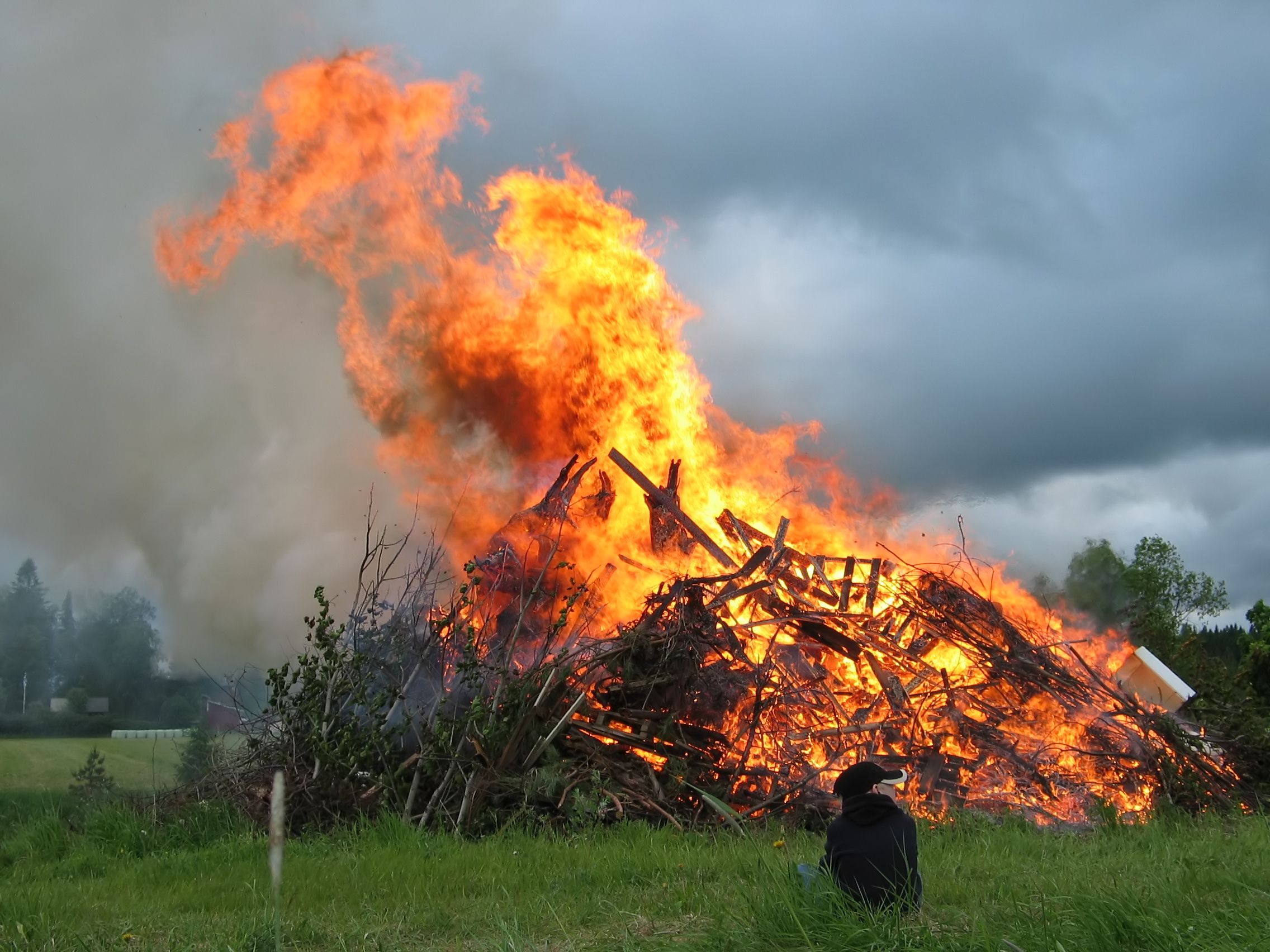
The chemical reaction shown is ___ because it produces heat.

a)

endothermic

b)

exothermic

43.
Which one of the following would you use to separate sand from iron filings?
a)
a bar magnet
b)
filter paper
c)
chromatography paper
d)
alum
44.
Separating mixtures based on boiling points.
a)
Desalination
b)
Distillation
c)
Decantation
d)
Condensation
45.

Which tools are best for separating a mixtures of sand, iron filings, and water?

a)

Hot plate and filter

b)

Tweezers and filter

c)

Filter and magnet

d)

Magnet and hot plate

46.

A cup of orange juice with pulp is poured into a glass. Which of these procedures could be done to separate the juice from the pulp?

a)

pour the juice through a coffee filter

b)

heat the juice in a pot until boiling

c)

pour the juice in another cup

d)

allow the mixture to settle, leaving the pulp at the bottom of the glass