wayground logo

Free Printable Worksheets

Font size

S
M
L
XL
Worksheets

Benchmark Review

Total questions: 40

Worksheet time: 20mins

Name
Class
Date
1.
Plants need what to do photosynthesis?
a)
Food absorbed from ground
b)
Sun's energy
c)
Food broken down
d)
Minerals from the soil
2.
What gas goes into the plant before photosynthesis?
a)
Carbon Dioxide
b)
Carbon Monoxide
c)
Oxygen
d)
Nitrogen
3.
What three things are needed for a plant to do photosynthesis?
a)
Glucose, Oxygen, Sunlight
b)
CO2, Oxygen, Sunlight
c)
CO2, Water, Sunlight
d)
Oxygen, Water, Sunlight
4.
What two products does a plant make during photosynthesis?
a)
Water and Glucose
b)
Oxygen and Glucose
c)
Oxygen and Water
d)
CO2 and Glucose
5.
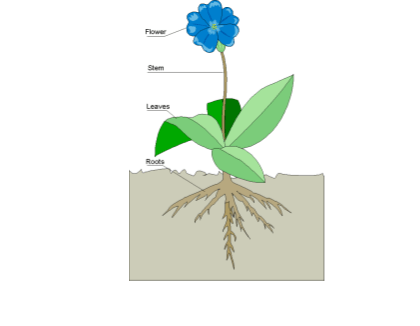
Which plant part absorbs water and nutrients?
a)
Leaf
b)
Stem
c)
Roots
d)
Flower
6.
Which plant part collects the sun's energy and makes food?
a)
Leaf
b)
Stem
c)
Roots
d)
Flower
7.
What are the reactants of cellular respiration?
a)
glucose & carbon dioxide
b)
glucose & oxygen
c)
water & oxygen
d)
water & carbon dioxide
8.
The purpose of cellular respiration is to 
a)
make water
b)
make ATP
c)
make glucose
d)
make  oxygen
9.

Which organism go through cellular respiration?

a)

animals

b)

plants

c)

both animals and plants

d)

none

10.

Cellular Respiration occurs in what cell organelle?

a)

chloroplast

b)

cytoplasm

c)

mitochondria

d)

animal

11.

What are the reactants (taken into) of cellular respiration? (Mark all of them!)

a)

oxygen

b)

glucose

c)

carbon dioxide

d)

water

e)

energy

12.
Sodium has an atomic number of 11, how many protons does this atom have?
a)
22
b)
11
c)
12
d)
2
13.
What number on the element key tells you how many protons an element has?
a)
Atomic Mass
b)
Element name
c)
Atomic number
d)
Element Symbol
14.
The following element key shows how many protons?
a)
16
b)
15.999
c)
Oxygen
d)
8
15.
Matter can not be created nor destroyed: it can only be
a)
Destroyed a little bit
b)
Invisible
c)
Transformed, changed
d)
None of the above
16.
Which of these is not a chemical reaction?
a)
Burning of wood
b)
Milk going bad
c)
Mixing vinegar and baking soda
d)
Melting of ice
17.
If reaction starts with 20g of reactants it should produce 
a)
a total of 40g of products
b)
a total of 10g of products
c)
a total of 80 g of products
d)
a total of 20g of products
18.
In a reaction A + B ----> C,  reactant A has 5g and product  C has 9g. How many grams does reactant B should have? 
a)
4g
b)
5g
c)
9g
d)
14g
19.
What will weigh more when a chemical change is complete?  The reactants before the chemical reaction, or the product after the reaction is complete?
a)
They both will weigh the same
b)
The product always weighs more than the reactant
c)
The reactant will weigh more than the product
d)
They both will loose mass after the reaction
20.

Two plates come together or collide at what boundary?

a)

Convergent

b)

Divergent

c)

Transform

21.

Two plates spread or move apart at what boundary?

a)

Convergent

b)

Divergent

c)

Transform

22.

Two plates slide past each other at what boundary?

a)

Covergent

b)

Divergent

c)

Transform

23.

New oceanic crust (sea floor) is created at this boundary.

a)

Divergent Oceanic

b)

Divergent Continental

c)

Convergent Oceanic

d)

Transform

24.

Oceanic crust (sea floor) is destroyed at this boundary.

a)

Convergent Oceanic

b)

Divergent Oceanic

c)

Convergent Continental-Continental

d)

Divergent Continental

25.

The process where oceanic crust slides under another plate and is melted is called ___________.

a)

seafloor spreading

b)

subduction

c)

continental drift

d)

recycling

26.

A divergent boundary on land creates what feature?

a)

Mid Ocean Ridge

b)

Rift Valley

c)

Subduction Zone

d)

Deep Ocean Trench

27.

A divergent boundary in the ocean creates what feature?

a)

Mid Ocean Ridge

b)

Rift Valley

c)

Deep Ocean Trench

d)

Subduction Zone

28.

The process that occurs at a divergent oceanic boundary that creates new crust (sea floor) is called?

a)

Subduction

b)

Seafloor Spreading

c)

Continental Drift

d)

Volcanism

29.
What evidence did Wegener use in his theory?
a)
Continents and fossils fitting together/matching-up like puzzle pieces 
b)
glacier scars and evidence from temperature
c)
mountain ranges and coal deposits line up across continents
d)
all of the above
30.

The layer of rock beneath the soil.

a)

transported soil

b)

bedrock

c)

soil

d)

parent rock

31.

Which layer of soil is solid rock?

a)

topsoil

b)

subsoil

c)

bedrock

32.

When a rock gets broken down into soil, this process is called ______.

a)

topsoil

b)

water capacity

c)

weathering

d)

erosion

33.

The movement of water over land and taking particles with it is called

a)

Deposition

b)

Runoff

c)

Erosion

d)

Weathering

34.

If heat and pressure inside Earth cause the texture and crystal structure of a rock to change, what new material is formed?

a)

sedimentary rock

b)

metamorphic rock

c)

igneous rock

d)

chemical rock

35.
This rock was formed when molten rock cooled into a solid. What type of rock is it?
a)
Igneous Rock
b)
Metamorphic Rock
c)
Sedimentary Rock
36.
Which type of rock is made by small bits of rock, mud, or sand compacted and cemented together?
a)
Coal
b)
igneous
c)
metamorphic
d)
sedimentary
37.

According to most scientists, what is the ultimate cause of most mass extinctions?

a)

overhunting

b)

evolution of new species to replace old ones

c)

major change in environment

d)

asteroid impact

38.

Which of the following is the primary reason for using the geologic time scale?

a)

An explanation of how the dinosaurs disappeared

b)

Explain how Earth was formed 4.6 billion years ago

c)

Measure how long North America has existed

d)

Recognize major events that have occurred on earth.

39.

What two methods are used for determining the age of rocks and fossils?

a)

Relative and Absolute Dating

b)

Carbon and Water Dating

c)

Sedimentary and Igneous Rocks

d)

Spatial and Layered Dating

40.
The geologic time scale is a record of....
a)
the history of fossils only
b)
the history of rocks
c)
the history of rock layers and fossils
d)
geologist notes