
 Worksheets
Osmosis and Diffusion
Total questions: 20
Worksheet time: 20mins
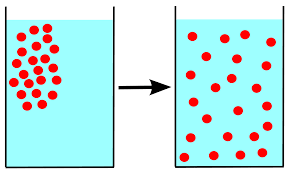
The picture below is an example of _________________.
osmosis
passive transport
diffusion
active transport
Osmosis is the movement of _____ across a membrane.
solid
liquid
gas
water
When both inside and outside of a cell have the same amount of water it is said that the cell has reached a state of
Osmosis
Diffusion
Equilibrium
Isotonic
A person would never have pure water put into their veins in a hospital because their cells would...
Crenate
Burst
Flaccid
Plasmolysed
A person should never drink salty water because their cells would
Crenate
Plasmolysed
Flaccid
Turgid
What is DIFFUSION?


What is diffusion?
When molecules move from a low concentration to a high concentration
When molecules move from a high concentration to a low concentration.
When there is no movement of molecules
When molecules move everywhere regardless of concentration

Which gummy bear was left overnight in salt water?
Larger bear
Smaller bear
Both bears
None of the bears

Movement of solute, NOT WATER, through the cell membrane from high to low concentration.
diffusion
active transport
facilitated diffusion
osmosis

If you are stranded at sea why is it safer to drink urine than sea water?
One cup of sea water has enough sodium to poison you.
Sea water has much lower water potential than your cells and will only further dehydrate you.
Sea water has the same water potential as your cells and you will absorb too much water.
The salt will cause high blood pressure and you will die from a stroke.

Osmosis is
the movement of water molecules through a partially-permeable membrane from an area of low water potential to an area of high water potential
the movement of particles from an area of high water potential to an area of low water potential
the movement of water molecules through a partially-permeable membrane from an area of high water potential to an area of low water potential
the movement of particles from an area of low water potential to an area of high water potential

Which cell is placed into a solution with high water potential as compared to the cell? The dots in the diagram represent sugar molecules.
A
B
C
D

If there is 5% salt solution inside a cell and 5% salt solution outside a cell, then
more water will move inside the cell
more water will move outside the cell
There will be no net movement of water cells
There will be no movement of water cells
During diffusion, when the concentration of molecules on both sides of a cell membrane is THE SAME, the molecules will
move across the membrane to outside of the cell
completely stop moving across the membrane
continue to move equally across the membrane in both directions
move across the membrane to the inside of the cell
Diffusion occurs because
molecules are attracted to one another
molecules are constantly moving in and out
cellular energy forces the molecules to collide with each other
cellular energy pumps molecules across the membrane

