
 Worksheets
Solar System Vocabulary
Total questions: 70
Worksheet time: 35mins
Asteroids
A small rock or rocky grain that strikes Earth's surface.
Bodies in space made of ice, dust and small gritty particles.
An irregularly shaped rocky object in space (like a space potato).
Sometimes called a "shooting star"
Comets
While in space a meteorite is called this.
An irregularly shaped rocky object in space (like a space potato).
Sometimes called a "shooting star"
Bodies in space made up of ice, dust and small gritty particles.
Meteor
A small rock or rocky grain that strikes Earth's surface.
While in space a meteorite is called this.
Sometimes called a "shooting star"
Bodies in space made up of ice, dust and small gritty particles.
Orbit
An imaginary line about which a body rotates.
The action of rotating around an axis or center.
The movement of an object in a circular or elliptical course around another or about an axis or center.
The curved path of a celestial object or spacecraft around a star, planet, or moon.
Axis
An imaginary line about which a body rotates.
The curved path of a celestial object or spacecraft around a star, planet or moon.
The action of rotating around an axis or center.
The force that attracts a body towards the center of the earth, or towards any other physical body having mass.
Rotation
An imaginary line about which a body rotates.
The action of rotating around an axis or center.
The movement of an object in a circular or elliptical course around another or about an axis or center.
The force that attracts a body toward the center of the earth, or towards any other physical body having mass.
Revolution
The curved path of a celestial object or spacecraft around a star, planet or moon.
An imaginary line about which a body rotates.
The action of rotating around an axis or center.
The movement of an object in a circular or elliptical course around another or about an axis or center.
Gravity
The action of rotating around an axis or center.
The force that attracts a body toward the center of the earth, or toward any other physical body having mass.
The movement of an object in a circular or elliptical course around another or about an axis or center.
The curved path of a celestial object or spacecraft around a star, planet or moon.
Constellation
A very large group of stars and planets surrounded by dust and gas.
A ball of burning gases in space.
A group of stars that forms a pattern or a shape.
A rocky metallic object that travels around the sun.
Galaxy
A very large group of stars and planets surrounded by dust and gas.
A ball of ice and rock with a tail of light that moves around the sun.
A small asteroid that forms a streak of light as it travels through Earth's atmosphere.
A rocky metallic object that travels around the Sun.
Star
A group of stars that forms a patter or shape.
A ball of burning gases in space.
A ball of ice and rock with a tail of light that moves around the Sun.
Sometimes called a "shooting star"
A natural body that revolves around a planet
Moon
Phase
Solar System
Planet
A star and all the planets and other
objects that revolve around it
Moon
Phase
Solar System
Planet
A large body that revolves around a star
Moon
Phase
Solar System
Planet
A huge ball of superheated gases
Comet
Star
Sun
Constellation
The star at the center of our solar system
Comet
Star
Sun
Constellation
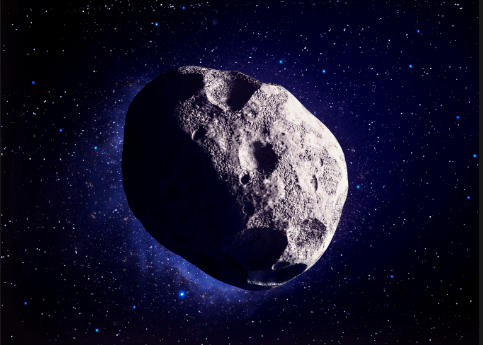
A rock that orbits the sun.
asteroid
meteorite
crater
gas giant
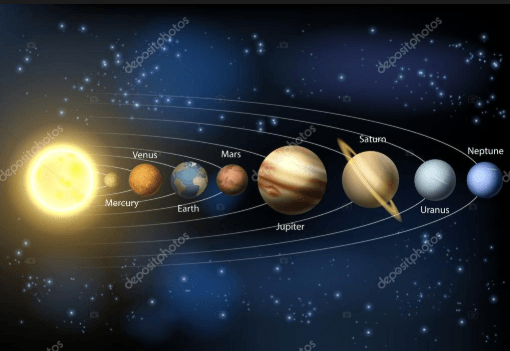
A large, round object in space that travels around the sun
planet
asteroid
axis
rotation
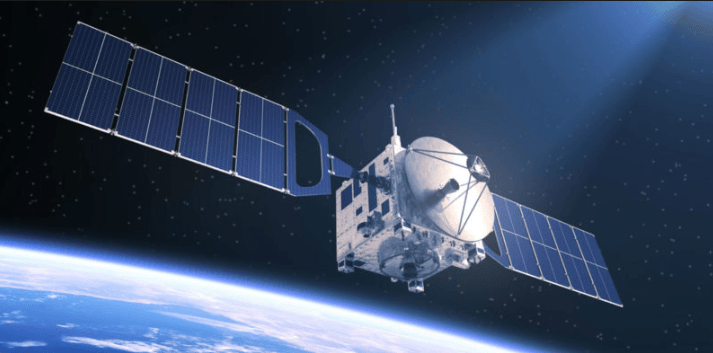
A man made object or vehicle intended to orbit the earth, the moon
satellite
rocket
asteroid belt
meteorite
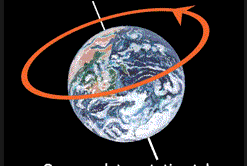
a planet spins on its axis
rotation
axis
sphere
terrestrial
The study of objects and matter outside of Earth's atmosphere
astronomy
asteroid
constellation
satellite
Galaxy that our solar system is located in
Andromeda Galaxy
Milky Way Galaxy
Mars Galaxy
The sun along with all of the planets, moons, asteroids, comets, and other frozen worlds
solar system
galaxy
satellite
asteroid
Planets in order from the sun
Mercury, Venus, Earth, Mars, Jupiter, Saturn, Uranus, Neptune
Mercury, Earth, Venus, Mars, Jupiter, Saturn, Neptune, Uranus
Mercury, Earth, Venus, Mars, Jupiter, Saturn, Neptune, Uranus
Mars, Venus, Earth, Mercury, Jupiter, Saturn, Uranus, Neptune
Rocky planets
Mercury, Venus, Earth, Mars
Earth, Mars, Jupiter, Saturn
Jupiter, Saturn, Uranus, Neptune
Mercury, Mars, Jupiter, Saturn
Gaseous planets
Mercury, Venus, Earth, Mars
Earth, Mars, Jupiter, Saturn
Jupiter, Saturn, Uranus, Neptune
Mercury, Mars, Jupiter, Saturn
Why does the sun seem to be so big?
It is the largest star.
It is the brightest star.
It is the star closest to us.
It is smaller than other stars.
Space Probe
A spacecraft carrying instruments intended for use in exploration of the physical properties of outer space or celestial bodies other than Earth.
The natural force of attraction exerted by a celestial body, such as Earth, upon objects or near its surface, tending to draw them toward the center off the body.
An arrangement of lenses or mirrors or both that gathers visible light, permitting direct observation or photographic recording of distant objects.
A celestial body that orbits a planet. The moon is an example.
The tendency of a body to resist acceleration; the tendency of a body at rest to remain at rest or of a body in motion to stay in motion.
Telescope
A spacecraft carrying instruments intended for use in exploration of the physical properties of outer space or celestial bodies other than Earth.
The natural force of attraction exerted by a celestial body, such as Earth, upon objects or near its surface, tending to draw them toward the center off the body.
An arrangement of lenses or mirrors or both that gathers visible light, permitting direct observation or photographic recording of distant objects.
A celestial body that orbits a planet. The moon is an example.
The tendency of a body to resist acceleration; the tendency of a body at rest to remain at rest or of a body in motion to stay in motion.
A device shaped like a long tube that you look through in order to see things that are far away.
Hubble
Telescope
Microscope
Magnifying Glass
any one of the objects in space that are made of burning gas and that look like points of light in the night sky
Moon
Planet
Sun
Star
a large, round object in space (such as the Earth) that travels around a star (such as the sun)
Moon
Earth
Planet
Sun
the large round object that circles the Earth and that shines at night by reflecting light from the sun
Sun
Asteroid
Planet
Moon
Everything that exists in space.
Galaxy
Solar System
Universe
Constellation

An area between Mars and Jupiter where most of asteroids are found.
asteroid belt
crater
methane
atmosphere

the air around a planet
atmosphere
satellite
gravity
terrestrial

A big hole made by something crashing into an object
crater
gas giant
meteorite
planet

A type of gas
methane
gas giant
terrestrial
sphere
A man made object or vehicle intended to orbit the earth, the moon
satellite
rocket
asteroid belt
meteorite

Earthly planets
terrestrial
gas gaints
axis
sphere

large planets made up of gases
gas giants
terrestrial planets
asteroid
gravity

Someone who goes to the moon or space
astronaut
rocket
gravity
sphere
Astronomical Unit
a unit that is astronomical
a unit of measurement equal to the average distance between Earth and the sun; about 150 million km
a unit of measurement that is equivalent to the speed of light
a unit of measure used to measure distances on Earth
hemispheres
the two halves of the Earth (northern and southern) that are created by the equator
the imaginary lines that the Earth spins around
the orbital planes the Earth travels on in its orbit around the sun
the angles of the Sun that hit the Earth's surface
Which planet's average temperature make it the hottest planet in the solar system?
Mercury
Venus
Earth
Mars
Which planet has the greatest range in daytime and night time temperatures?
Mercury
Earth
Jupieter
Neptune
The "Great Red Spot" is a storm on which planet?
Earth
Mars
Jupiter
Saturn
Which planet rotates on its side?
Venus
Earth
Saturn
Uranus
Which of the following are true of all "planets"? Select ALL that apply.
Cleared its orbit of similar-sized objects
Has moons
Orbits a star
Solid, rocky surface
Spherical shape (due to significant mass / gravity)
The Earth revolves around the sun in _____________.
24 hours or 1 day
365 days or one year
7 days or 1 week
28 days or about 1 month
The Earth rotates once on its axis in _________________.
24 hours of 1 day
365 days or 1 year
7 days or 1 week
28 days or about 1 month
Which is the fourth planet from the Sun?
Mercury
Mars
Earth
Jupiter
All of the outer planets have ________________.
one moon each
very dense, solid rocky cores
rings
no moons
Some stars look bigger and brighter than other stars because ____________________.
they are very far away
they revolve around the Earth
they are constantly moving closer to Earth
they are closer to the Earth.
What does a "light year" measure?
Age / time
Brightness
Distance light travels in a year
Velocity
The length of time that it takes for a planet to go completely around the sun (one year.)
rotation
revolution
solar eclipse
lunar eclipse
This causes the Earth and other planets to turn and create day and night.
rotation
plate tectonics
revolution
nebula

