wayground logo

Free Printable Worksheets

Font size

S
M
L
XL
Worksheets

Transport in plants

Total questions: 30

Worksheet time: 16mins
Name
Class
Date
1.
The plant tissue that carries food materials DOWNWARD from the leaves to the rest of the pant is the ______.
a)
Phloem
b)
Stomata
c)
Chlorophyll
d)
Xylem
2.
Vascular tissue that transports water and minerals UPWARDS from a plant's roots is know as ______.
a)
Chlorophyll
b)
Phloem
c)
Stomata
d)
Xylem
3.
How do water enter the roots from the soil?
a)
diffusion
b)
osmosis
c)
transpiration
d)
active transport
4.
Water vapour exits a plant leaf by
a)
the stomata
b)
the epidermis
c)
the palisade cells
d)
the spongy mesophyll
5.
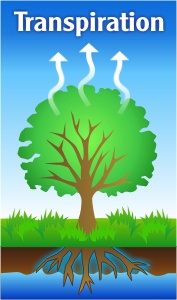
Transpiration is
a)
the movement of water through a plant from the roots up the stem
b)
the loss of water from the leaves of a plant by the process of evaporation
c)
the flow of water into plant roots by osmosis from the soil
d)
the process of minerals and sugars moving through plant veins
6.
This is the definition for which word:The movement of particles down a concentration gradient (from a high concentration to a low concentration)
a)
Osmosis
b)
Diffusion
c)
Active transport
d)
Transpiration
7.
This is the definition for which word:The movement of water molecules from a high concentration of water to a low concentration of water across a partially permeable membrane.
a)
Osmosis
b)
Diffusion
c)
Active transport
d)
Transpiration
8.
Why is the evaporation of water from leaves important?
a)
It cools leaves and helps move water up the plant.
b)
It makes the plant wilt
c)
It helps the plant to respire
9.

Water and minerals move in which direction within the plant

a)

Upward

b)

Down

10.
Plant transports food made in the leaves to __________. 
a)
roots 
b)
stem
c)
flowers 
d)
all of the above
11.
How will lowered humidity affect the rate of transpiration?
a)
decrease it
b)
increase it
c)
no change
d)
it depends
12.

These are made up of group of specialised cells that conduct water, dissolved salts and food up or down the stem.

a)

phloem

b)

xylem

c)

vascular bundles

d)

vessels

13.

This is a substance that makes the cell wall very strong and impermeable.

a)

starch

b)

lignin

c)

fibres

d)

cellulose

14.

A leafy shoot was placed in the apparatus shown. The rate of movement of the air bubble was measured.


Which change would make the air bubble move faster?

a)

blowing dry air over the shoot

b)

decreasing the air temperature around the shoot

c)

increasing the humidity around the shoot

d)

removing some leaves from the shoot

15.
Why might some plants have thorns?
a)
to stay safe from animals that want to eat the plant
b)
to attract insects that spread pollen to other plants
c)
to take in nutrients from the air
d)
to provide shade for the plant
16.

Why don't STEMS of aquatic plants get damage by water?

a)

Because they are woody

b)

Because they are flexible and light weight

c)

Because they have thorns

d)

Because they have cones

17.

An adaptation that helps a cactus live in the desert is its

a)

wide, flat leaves to catch water

b)

bright green color

c)

thin, spiny needles

d)

tall stems

18.
Deserts are hot and dry so an example of a plant adaptation here is... 
a)
long and deep root systems to absorb ground water 
b)
plants grow on each other to reach sunlight 
c)
dark in color to absorb sunlight 
d)
grow on each other to protect from wind 
19.

Which of these is an example of a plant adaptation.

a)

A plant needs sunlight to survive.

b)

Vines that can stick to walls and grow up trees or buildings to get their leaves closer to the sun.

c)

Roots soak up water and nutrients from the soil.

d)

People cut down trees to make lumber for houses.

20.
The leaf has a shiny, waxy cuticle around it to
a)
increase the rate of photosynthesis
b)
attract more light
c)
control water loss
d)
stop carbon dioxide and oxygen gases escaping
21.

Which part of the onion do we eat?

a)

root

b)

stem

c)

leaves

d)

flower

e)

fruit

22.

Potato and ginger are the examples of

a)

Seeds

b)

stems of the plants that store food

c)

Fruits

d)

Roots

23.

Carrot - the food we eat is from what part of the plant

a)

Root

b)

Leaves

c)

Stem

d)

Flower

24.
Rhizomes have swellings that develop buds that turn into new plants. These are called
a)
eyes
b)
buds
c)
nodes
d)
cats
25.
an underground stem that has fleshy, colorless leaves
a)
tuber
b)
bulb
c)
root
d)
gourd
26.
A tuber bud is known as a ...
a)
node
b)
flower
c)
eye
d)
root
27.

What is this an example of?

a)

Bulb

b)

Tuber

c)

Spore

d)

sprout

28.

Ginger is a best example of ;

a)

bulb

b)

tuber

c)

seeds

d)

rhizome

29.

Bulbs and Tubers are grown

a)

over the ground

b)

under the ground

c)

creepers

d)

on the trees

30.

Potatoes and yams are _________

a)

Tubers

b)

Runners

c)

Rhizomes

d)

Cuttings