
 Worksheets
5th Grade Science Review!
Total questions: 41
Worksheet time: 30mins

What is matter made up of?
particles that are too large to be seen
energy
particles that are too small to be seen
gravity
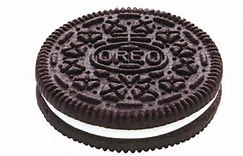
An oreo cookie has a mass of 20 grams. It gets crushed into crumbs for a recipe. What is the mass of the crumbs?
15 grams
25 grams
20 grams

If reaction starts with 10g of matter, it will produce ---
a total of 40g of matter
a total of 10g of matter
a total of 80 g of matter
a total of 20g of matter

How many of each type of atom are in the formula NH3?
1 nitrogen, 3 hydrogen
3 nitrogen, 3 hydrogen
1 nitrogen, 1 hydrogen
3 nitrogen, 1 hydrogen

The Law of Conservation of Matter states that the total amount of matter _____ after it undergoes change.
disappears
stays the same
weighs less
weighs more

Which is a PURE substance composed of the SAME type of atom
atom
compound
element
molecule

A characteristic that can ONLY be observed or measured when atoms of matter rearrange during a CHEMICAL change.
Physical Property
Chemical Property
Molecules
Substance

Which is a characteristic that can be OBSERVED or MEASURED without changing the substance (such as color, melting point, or conductivity)?
Physical Property
Chemical Property
Molecules
Substance

A substance made of TWO or more types of atoms that are CHEMICALLY combined ...
Substance
Element
Compound
Energy


What force holds the Earth's atmosphere in place?
magnetic
gravity
electric
friction

The farther from Earth you are, the ________ gravity you have.
more
less

The _________ an object has, the more gravitational force it has.
less mass
more mass
less volume
more speed

Gravity pulls everything towards the...
Sun
You
Ground
Sky

All the energy on the Earth originally comes from the ________.
heat inside the Earth
ocean currents
Sun
plants

The sun is a _______.
satellite
planet
star
meteor

The sun appears to move across the sky each day. What causes this?
The tilt of the Earth
The sun moves around the Earth
Nuclear energy in the sun
The spinning of the Earth

Which best identifies what plants receive from sunlight?
Energy
Nitrogen
Oxygen
Sugars

How do plants get their energy?
A reaction called chlorophyll
by absorbing mineral nutrients from the soil
A process called photosynthesis
by eating other organisms

Wy do some stars shine brighter than others?
Internal temperature
Distance from Earth
Size of star
Color of star

True or False: The sun is the biggest star.
True
False

Constellations are stars that appear to be in a pattern.

All stars are the same color and same size.
True
False

When PLANTS use their roots to get WATER, which 2 spheres are interacting? (choose 2)
Geosphere
Hydrosphere
Atmosphere
Biosphere

When ocean WATER evaporates into the AIR, which 2 spheres are interacting? (choose 2)
Geosphere
Hydrosphere
Atmosphere
Biosphere

What is the biosphere?
air, gas
living things
rocks, soil, sand
water

What is the geosphere?
air, gas
living things
soil, rocks, sand
water

What is the hydrosphere?
air, gas
living things
soil, rocks, sand
water

What is the atmosphere?
air, gas
living things
soil, rocks, sand
water

Where is most of the freshwater found on Earth?
oceans
lakes
groundwater
glaciers

The Earth has about ______% of freshwater.
97
71
3
10

The Earth has about ______% of ocean.
97
71
3
10

Which is an example of a decomposer?
a hawk
a mouse
a flower
a mushroom

Movement of energy within an ecosystem based on what organisms eat or the food they make.
food chain
decomposer
producer
prey


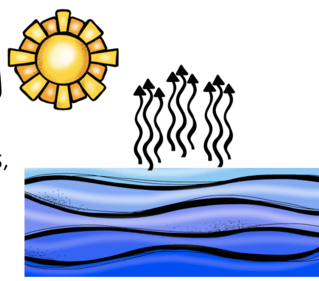
What part of the water cycle does this picture show?
condensation
precipitation
evaporation
transpiration

What is it called when plants give off water vapor as a waste product?
condensation
evaporation
precipitation
transpiration

What is the energy source for the water cycle?
the sun
the earth
water
the moon

When water vapor is cooled and forms liquid droplets
Condensation
Evaportation
Transpiration
Run-off

More evaporation occurs
at night
during the day

