
 Worksheets
Ancient Greece Review
Total questions: 150
Worksheet time: 59mins
The Athenian style of government (direct democracy) is closest to which modern day country?
United States of America
France
North Korea
England
A government system where only a few people hold power.
Ephor
Democracy
Oligarchy
Tyranny
What did the Spartans use to control its citizens?
the helots
the military
forced physical punishments
the government
Which statement correctly describes a boys life in Athens and Sparta.
Athenians went to school; Spartans served in the military
Athenians studies combat; Spartans played sports
Athenian boys lived in barracks; Spartans lived at home
Athenian boys became citizens at 30; Spartans never became citizens.
Which type of government allows the citizens to vote for laws?
Oligarchy
Democracy
Dictatorship

Communities in ancient Greece were separated by
rivers and deserts
rugged mountains and valleys
rivers and forests
deserts and mountains
The Greeks developed the modern concept of citizenship.
True
False
Greeks used mythology
as a way to explain the practices and beliefs of their people
for fun
to use in plays and performances
as a ritual
What category of drama would the play Romeo and Juliet fit into?
Comedy
Tragedy
Romantic Comedy
Action
Which would be an example of Greek architecture?
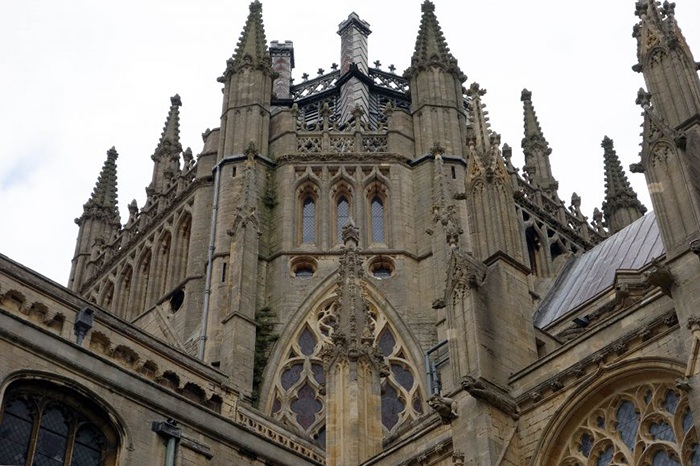
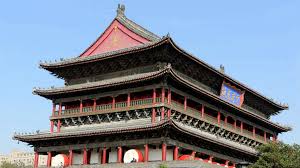
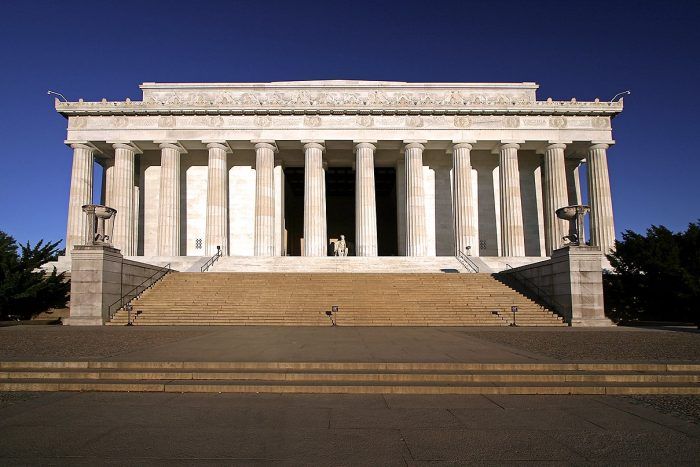
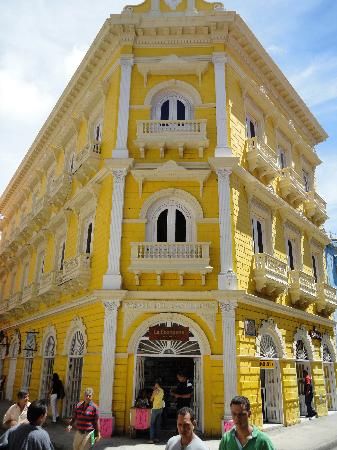
Who is the Greek god of the seas?
Zeus
Hades
Poseidon
Hermes
What is an agora?
a Greek goddess
a type of instrument
A Greek gathering place
a serpent
What is another name for a Greek city-state?
pantheon
ziggurat
town
Polis
Which continent is Greece part of?
Africa
North America
Europe
Asia

Which continent is Europe?
1
5
6
4


The ancient Greeks were excellent sailors.


What is a sea that surrounded Greece?
Ionian Sea
Mediterranean Sea
The Aegean Sea
All the above
What kind of government was Athens famous for?
Oligarchy
Monarchy
Democracy
Direct Democracy
Women had ________ freedom than their Spartan counterpart.
More
Less
Women in Sparta could own their own property, travel. And inherit goods and property but still not treated as equals to men.
True
False
An effect of the Peloponnesian War is that Sparta would rule over Greece for a short time as victors of the war
True
False
Sparta and Athens formed an alliance in hopes of defeating the mighty Persian Empire.
True
False
_____________________ was an important aspect of Greek culture. Men acted out the parts of a play. They performed dramas, tragedies, and comedies.
Farming
Music
Theater
The ancient Olympic games, for example, tested the strength of athletes around Greece as they competed in events to please ___________ (the king of the gods.)
Zeus
Apollo
Hermes
Poseidon
What best describes Athens’ “way of life?”
Military and Strength
Smarts and Strength
Arts and Education
Strength and Honor
What was the name of the first tribe known to inhabit Greece?
The Spartans
The Mycenaeans
The Minoans
The Athenians
What was the name of the first writing system used in Ancient Greece?
Linear B
English
Cursive
Times New Roman
a story expressing a culture's beliefs
myth
shrine
oracle
epic
a play with an unhappy ending
tragedy
comedy
agora
philosophy
an amusing play
comedy
tragedy
agora
philosophy
Oath taken by medical students swearing to practice medicine in an ethical way
Hippocratic Oath
Hypothesis
Medical Oath
Athletic competition held every four years in ancient Greece in honor of Zeus
Summer Olympics
Winter Olympics
Para Olympics
Olympic Games
A military alliance led by Athens promising to protect one another from Persia, providing money or ships for defense
Delian League
Peloponnesian League
Persian League
A military alliance led by Sparta because some city-states feared heroes
Delian League
Peloponnesian League
Persian League
Greek victory over the Persian army during the second Persian War, victory on water
Battle of Salamis
Battle of Marathon
Battle of Thermopolaye
Greek victory over the Persian army that ended the first Persian War, victory on land
Battle of Marathon
Battle of Salamis
Battle of Thermopolaye
This military leader set out to conquer the world!
Xerses
Leonidas
Alexander the Great
Pericles
A democratic Greek polis who accomplished many cultural achievements, and who were constantly at war with Sparta.
Athens
Sparta
Thebes
Corinth
A series of wars between the Greeks (mainly Athens) and the Persians in which the Greeks were usually victorious.
Peloponnesian Wars
Persian Wars
A Greek island in the Mediterranean Sea, southeast of Greece
Crete
Sicily
Persia
Sparta
A Greek Philosopher, taught Alexander the Great, started a famous school, studied with Plato
Plato
Socrates
Aristotle
Darius I
Greek culture spread across western Asia and northeastern Africa after the conquests of Alexander the Great. The period ended with the fall of the last major Hellenistic kingdom to Rome, but Greek cultural influence persisted until the spread of Islam.
Peloponnesian Wars
Persian Wars
Hellenistic Age
Golden Age
(431-404 BCE) The war between Athens and Sparta that in which Sparta won, but left Greece as a whole weak and ready to fall to its neighbors to the north.
Peloponnesian War
Persian War
son of Darius; became Persian king. He vowed revenge on the Athenians. He invaded Greece with 180,000 troops in 480 B.C.
Xerxes
Alexander the Great
Cyrus the Great
Homer
the peninsula forming the southern part of the mainland of Greece
Crete
Sicily
Peloponnesus
Persia
Who was the god of war?
Zeus
Poseidon
Ares
Apollo
Which of the following was the wife of Zeus?
Athena
Aphrodite
Demeter
Hera
Who was the god of the underworld?
Hades
Dionysus
Hermes
Hephaestus
Which god used winged-sandals to travel around?
Aphrodite
Hermes
Poseidon
Hestia
Which god or goddess threw Hephaestus out of Olympus?
Hera
Zeus
Hades
Apollo
Who was the goddess of victory?
Hypnos
Nike
Janus
Iris
What was the name of Hades' three-headed dog?
Cerebrus
Iris
Cerberus
Periphas
How many gods and goddesses lived on Mount Olympus?
11
12
13
14


The Greek mountains impacted communication by ...
Isolating communities
Promoting roads being built
People writing letters
Inventing the cell phone

The Parthenon (Athens)
Doric
Ionic
Corinthian

Temple of Athena Nike (Athens)
Doric
Ionic
Corinthian

U.S. Supreme Court
Doric
Ionic
Corinthian

The White House
Doric
Ionic
Corinthian

Lincoln Memorial (outside)
Doric
Ionic
Corinthian

The word "philosophy" comes from the ancient Greek words for "love" and "wisdom."
true
false
Sparta was an oligarchy ruled by two kings.
true
false
Which civilization was located on the Greek mainland
Minoans
Myceneans
Who wrote The Iliad and The Odyssey?
Hector
Odysseus
Homer
Socrates


Alliance between Athens and many of its allied cities following the first attempted invasion of Perisa into Greece.
Delian League
Peloponnesian League
Rule of the Thirty
The King's Peace
Alliance created and led by Sparta that consisted of Spartan and their allies
Peloponnesian League
Delian League
Rule of the Thirty
The King's Peace
leader of Macedonia, he built a strong military and invaded Greece and took control of Greek city-states
King Philip II
Piraeus
Pericles
Thucydides
What is a result of the Peloponnesian War?
Greece gained a lot of land
Greeks lost their sense of community
Athens got richer.
Sparta gained soldiers from Persia.
What were the results of the Peloponnesian War? (choose all that apply)
Sparta was victorious
Athens was victorious
All of Greece was devastated.
Greece was now vunerable to invasion.

Ethnic group that settled in what is now Iran. They were rivals for control of Mesopotamia with the Greeks, and later the Arabs.
Persians
Triremes
Themistocles
Herodotus
Cyrus the Great
king of Persia and founder of the Persian empire (559-529 BCE)
Greek Historian, considered the father of History.
Athenian politician and military leader who persuaded Athens to build a navy and then led it to victory over the Persians
priestess who would deliver advice from the gods in the form of a riddle
Greek city-states in Asia Minor rebelled against Persian Rule, helped by Athens. Event which began the Persian Wars
Ionian Revolt
Battle of Marathon
Battle of Thermopylae
Battle of Salamis
Greek Historian, considered the father of History.
Herodotus
Satrap
Themistocles
Cyrus the Great
Greek victory over the Persian army in the first land battle of the Persian Wars
Battle of Marathon
Ionian Revolt
Battle of Thermopylae
Battle of Salamis
Greek warships that had three levels of rowers on each side.
Triremes
Satraps
Persians
Barbarians
the long, narrow body of water between Europe and Asia in present-day Turkey
Hellespont
Persian
Barbarian
Satrap
Battle during the Persian Wars in which 300 Spartan troops fought to the death against a much larger Persian force. Considered the most "glorious" defeat in Greek history.
Battle of Thermopylae
Battle of Salamis
Battle of Marathon
Ionian Revolt
The naval battle that effectively ended the Persian war. The Greek fleet, although vastly outnumbered, defeated the Persian fleet. This helped end the Persian war, freeing Greece.
Battle of Salamis
Battle of Thermopylae
Battle of Marathon
Ionian Revolt
priestess who would deliver advice from the gods in the form of a riddle
Oracle
Barbarian
Satrap
Persian
How might Alexander have described his approach to unifying empire?
"I respect the beliefs of many different peoples."
"I am a great leader who has conquered the world."
"I make sure everyone practices the same religion."
"I have gold for everyone."


Why did Macedonia conquer Greece so easily?
They had a great army with high tech weapons and armor
Their military leadership was superior to the rest of the world
Sparta and Athens were very weak from fighting each other in the Peloponnesian War
Sparta was very corrupt at the time and allowed them to conquer
Who was Alexander the Great's tutor/mentor?
Plato
Socrates
Confucius
Aristotle
Alexander the Great...
Came closer than anyone at conquering the whole world at the time.
Conquered Egypt, India, and parts of Asia.
Took the tools that his tutor taught him to succeed.
All of the above.
What was Alexander's plan to build his empire?
Spread Greek culture and ideas.
Use religion to inspire loyalty.
Adopt ideas or customs from other civilizations.
All of the above.
What is Alexander's lasting impact as a great leader?
Later leaders worshipped Alexander and tried to replicate his success.
Greek culture and ideas was spread throughout the world.
He built one of the best empires in all of history in a short period of time.
All of the above.

