
 Worksheets
Applied Chemistry/Ice Cream Review
Total questions: 44
Worksheet time: 25mins
The atom is the smallest unit of a(n) _________________.
element
compound
fraction
none of these
The molecule is the smallest unit of a(n) _________________ .
compound
element
mixture
none of these
Each element has its own unique number of __________________.
protons
neutrons
electrons
nuclei
What charge does a neutron have?
positive
negative
neutral

What two particles are in the nucleus of an atom?
protons and electrons
electrons and neutrons
protons and neutrons

When adding a solute to water, the freezing point will
increase
decrease
stay the same
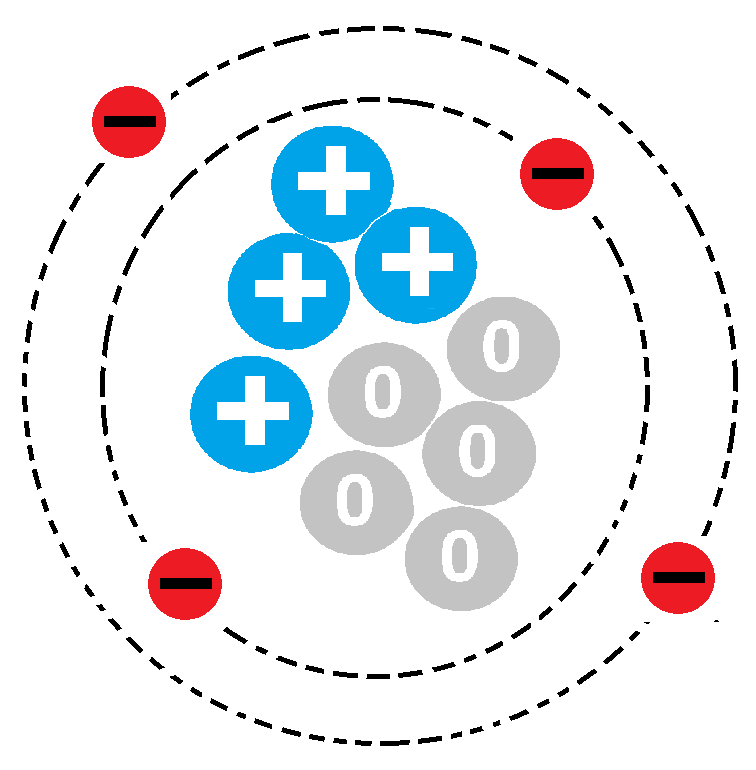

Particles in a ______________________ move quickly and are far apart.
gas
solid
liquid

Particles of a liquid
are tightly packed together and stay in a fixed position.
are free to move around one another but still touch.
A pure substance composed of two or more different elements is
element
homogeneous mixture
heterogeneous mixture
chemical compound
Anything that has mass and takes up space is an example of
energy
matter
chemical change
temperature

Define sublimation.
solid to liquid
solid to gas
gas to solid
liquid to gas

The average speed of molecules in a substance is called
thermodynamics
heat
temperature
The opposite phase of melting is
Condensation
Vaporization
Sublimation
Freezing


the lower the temperature
Temperature is a measure of the average _____________ energy of the particles of a substance.
potential
kinetic
gravitational
heat
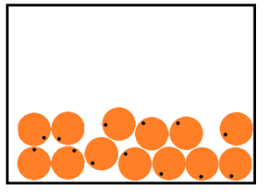

What happens to molecules when the temperature drops or lowers?
The molecules get closer together
The molecules start moving faster.
The molecules stop moving.
The molecules become smaller.
Molecules are always moving no matter what phase they are in: solid, liquid, gas.
True
False
While making homemade ice cream, you add rock salt to the ice. Which choice below provides the best explanation for why this is done?
Adding salt to the ice will lower the freezing point by creating a solution that's freezing point is lower than just the ice.
Adding salt to the ice will lower the freezing point by creating a solution that's freezing point is higher than just the ice.
Adding salt to the ice will raise the freezing point by creating a solution that's freezing point is lower than just the ice.
Adding salt to the ice will raise the freezing point by creating a solution that's freezing point is higher than just the ice.
Polar molecules have
no charges.
slight positive and negative charges on opposite ends of the molecules.
only positive charges.
either positive or negative charges, but not both.
Consider the ice cream lab, select all that was present in the salt water solution
polar water molecules
polar salt molecules
positive sodium ions
negative chlorine ions
positive chlorine ions
How did the salt affect the melting/freezing point of the solid ice?
it increased
it decreased
it didn't affect it
none of these
How did the salt affect the melting/freezing point of the liquid water?
it increased
it decreased
it didn't affect it
none of these
The freezing point depression is caused by an increase in _______________ in the solution resulting in a greater total amount of energy that must be lost in order for the water to freeze.
temperature
energy
particles
all of these
The charged ions from the salt interrupt the polar water molecules from _________________. This is one reason why the temperature of the salt water solution during the ice cream lab was able to drop below the freezing point of water.
freezing
melting
slowing down
getting into fixed positions

