
NEW
Font size
S
M
L
XL
 Worksheets
astronomy
Total questions: 60
Worksheet time: 31mins
Name
Class
Date
1.
Tides are caused by ___________
a)
wind
b)
gravitational pull of moon
c)
waves gravitation toward land
d)
rain
2.
Which planet is closest to the sun?
a)
Uranus
b)
Mercury
c)
Neptune
d)
Earth
3.
Which planet is farthest from the sun?
a)
Neptune
b)
Pluto
c)
Earth
d)
Uranus
4.

The __________ has planets, moons, comets, and asteroids.
a)
solar system
b)
earth
c)
rotation
d)
United States
5.
Which outer planets have rings?
a)
Just Saturn
b)
Saturn and Jupiter
c)
Jupiter, Neptune, and Saturn
d)
all 4 of them
6.
The GAS GIANTS or Outer planets are:
a)
Mercury, Earth, Jupiter, Saturn
b)
Saturn, Neptune, Pluto, Mars
c)
Saturn, Jupiter, Uranus, Neptune
d)
Earth, Mars, Saturn, Neptune
7.
About how long does it take Earth to make one complete orbit (revolution) around the Sun?
a)
24 hours
b)
7 day
c)
1 month
d)
1 year
8.
Which of the following is the result of the rotation of Earth?
a)
Cloud formation
b)
Day and night
c)
The seasons
d)
Weather
9.
Telescopes make objects look
a)
farther away than normal.
b)
darker than normal.
c)
whiter than normal.
d)
closer than normal.
10.
Movement of Earth around the sun.
a)
Rotation
b)
Revolution
11.
Spinning of Earth on its axis.
a)
Rotation
b)
Revolution
12.
Occurs when Earth is positioned between the moon and the sun and when Earth's shadow crosses the lighted half of the moon.
a)
Solar Eclipse
b)
Eclipse
c)
Lunar Eclipse
d)
Perigee
13.
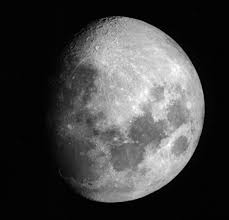
Name the moon phase
a)
waning crescent
b)
waxing crescent
c)
waning gibbous
d)
waxing gibbous
14.
Bodies, natural satellites that orbit the Sun
a)
Sun
b)
Planets
c)
Moon
d)
Stars
15.
The third planet from the Sun
a)
Mercury
b)
Neptune
c)
Venus
d)
Earth
16.
The central star in our solar system
a)
Earth
b)
Sun
c)
Northern Star
d)
Moon
17.
What type of surface does the first four planets have?
a)
Rock
b)
Liquid
c)
Gas
d)
Gas and Liquid
18.
What season comes after Winter?
a)
Spring
b)
Fall
c)
Summer
19.
In 365 days, the Earth __________ around the Sun
a)
Rotates
b)
Revolves
20.
In 24 hours, the Earth _____________.
a)
Revolves
b)
Rotates
21.
What is the phase of the moon when you cannot see it in the sky?
a)
Full
b)
Quarter
c)
Half
d)
New
22.
The moon changes it shape in the sky.
a)
True
b)
False
23.
The moon reflects light from the Sun.
a)
True
b)
False
24.
How many planets are in the solar system?
a)
10
b)
8
c)
9
d)
7
25.
Which planets have rings?
a)
Earth, Mercury, Jupiter, and Saturn
b)
Pluto, Venus, Neptune, and Mars
c)
Saturn, Uranus, Jupiter, and Neptune
d)
Mars, Earth, Uranus, and Venus
26.
Which planet has the most moons?
a)
Jupiter
b)
Earth
c)
Saturn
d)
Mars
27.
The Roman god of water is the inspiration for which planet?
a)
Jupiter
b)
Neptune
c)
Venus
d)
Mars
28.
Which planet is home to the Great Red Spot?
a)
Jupiter
b)
Mars
c)
Saturn
d)
Venus
29.
How many planets have water on them?
a)
6
b)
3
c)
4
d)
1
30.
Which planets have zero moons?
a)
Uranus and Mercury
b)
Neptune and Mars
c)
Venus and Earth
d)
Mercury and Venus
31.
Which planet is now classified as a dwarf planet?
a)
Mercury
b)
Mars
c)
Pluto
d)
Jupiter
32.
What is the hottest planet?
a)
Mercury
b)
Venus
c)
Earth
d)
Mars
33.
Which planet orbits on its axis sideways?
a)
Earth
b)
Jupiter
c)
Saturn
d)
Uranus
34.
The fifth planet of the Solar System is...
a)
Saturn
b)
Jupiter
c)
Uranus
35.
The third planet of the Solar System is...
a)
Mars
b)
Venus
c)
Earth
36.
The last (eighth) planet of the Solar System is...
a)
Neptun
b)
Uranus
c)
Mercury
37.
The fourth planet of the Solar System is...
a)
Jupiter
b)
Mars
c)
Earth
38.
The biggest planet of the Solar System is...
a)
Saturn
b)
Uranus
c)
Jupiter
39.
The smallest planet of the Solar System is...
a)
Mercury
b)
Venus
c)
Mars
40.
The coldest planet in the Solar System is...
a)
Uranus
b)
Neptune
c)
Saturn
41.
How many gas giants are there in the Solar System?
a)
Two
b)
Four
c)
Three
42.
What does Earth orbit around?
a)
Pluto
b)
The moon
c)
The Solar System
d)
The Sun
43.
What is the shape of the planets?
a)
A square
b)
Triangular
c)
Spherical
d)
A circle
44.
An orbit is...
a)
The spinning of the Earth
b)
The path that Earth follows around the Sun
c)
How long it takes the Earth to revolve around the Sun
d)
The path that the Sun follows around the Earth
45.
One full orbit is called a...
a)
Axis
b)
Rotation
c)
Inertia
d)
Revolution
46.
What keeps planets in orbit around the Sun?
a)
Nothing
b)
Force and motion
c)
Friction
d)
Gravity and inertia
47.
What keeps you on Earth?
a)
Gravity
b)
Inertia
c)
Friction
d)
Magnetism
48.
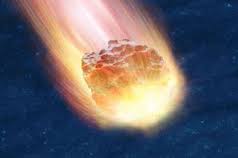
The difference between a meteor and meteoroid is:
a)
Size
b)
Weight
c)
Position in space
d)
Distance to Earth
49.
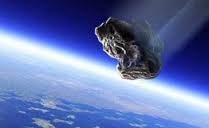
The two space objects that can give off light are:
a)
Comets/asteroids
b)
Comets/meteors
c)
Meteors/asteroids
d)
Meteors/meteoroid
50.

The greater the mass, the ______the gravity
a)
Lower
b)
Greater
c)
Smaller
d)
Heavier
51.

The largest asteroid is :
a)
Found between Mars and Earth
b)
Found between Saturn and Jupiter
c)
Found between Mars and Jupiter
d)
Found between Earth and Venus
52.

Which object can create a crater?
a)
Meteorite
b)
All answers
c)
Comet
d)
Asteroids
53.

A meteoroid is:
a)
Found in space
b)
Found entering the atmosphere
c)
Found hitting the surface
d)
Found orbiting the Sun
54.

True or False: All Planets have rings.
a)
True
b)
False
55.

Our solar system has several terrestrial planets. They include:
a)
Jupiter, Earth, Mars
b)
Venus, Mercury, Mars
c)
Saturn, Neptune, Uranus
d)
Pluto, Jupiter, Earth
56.
The greater an object's mass, the greater its gravity. The mass of Venus is close to Earth's mass. What conclusion can you draw about the gravity on Venus?
a)
The gravity on Venus is much lower than Earth's.
b)
The gravity on Venus is close to the gravity on Earth.
c)
The gravity is a little greater than the gravity on Earth.
d)
The gravity on Venus is much greater than the gravity on Earth.
57.
If the time for Earth to ROTATE once on its axis increased, what would happen?
a)
A day would be longer.
b)
A day would be shorter.
c)
A year would be longer.
d)
A year would be shorter.
58.
A __________ occurs when the Earth is directly between the Sun and the Moon.
a)
Solar Eclipse
b)
Waning Gibbous
c)
Waxing Gibbous
d)
Lunar Eclipse
59.

The earth's __________________ is responsible for days and nights
a)
Rotation
b)
Revolution
c)
Atmosphere
d)
Tilted Axis
60.
The moon seems to change shape from day to day in a cycle that lasts about a month as it goes through _.
a)
revolutions
b)
phases
c)
rotations
d)
eclipses
Reset

