wayground logo

Free Printable Worksheets

Font size

S
M
L
XL
Worksheets

IB Biology unit 3.2

Total questions: 14

Worksheet time: 12mins

Name
Class
Date
1.

Prokaryotes have one chromosome consisting of a (a)   DNA molecule

2.

Some prokaryotes have plasmids but (a)   do not contain plasmids.

3.

The DNA of prokaryotic cells is naked – meaning it is not associated with (a)   for additional packaging
4.
3.1- What is the set of alleles that an individual possesses?
a)
A gene
b)
A genotype
c)
A genome
d)
A genus
5.
3.1- What is the difference between the alleles of a gene?
a)
Their position on the chromosome
b)
Their amino acid sequence
c)
Their pentose sugars
d)
Their base sequence
6.
Which of the following is an inherited disease that is due to a base substitution mutation in a gene?
a)
Trisomy 21
b)
Sickle cell anemia
c)
AIDS
d)
Type II Diabetes
7.
The diploid number of human chromosomes is
a)
23
b)
46
c)
92
8.
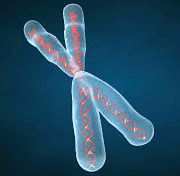
The structure that holds two chromosomes together until they separate for cell division is the
a)
chromatid
b)
chromatin
c)
centromere
d)
cytoplasm
9.
Each identical side of a chromosome is the 
a)
centromere
b)
chromatin
c)
centriole
d)
chromatid
10.

The two sister chromatids are attached to each other at a point called the __________ of a chromosome.

a)

zygote

b)

autosome

c)

gene

d)

centromere

11.

The 2 exact copies of DNA in a chromosome are called ________.

a)

chromatids

b)

genes

c)

mutations

d)

pathogens

12.

Chromosomes that are paired by size and content are called _______ chromosomes.

a)

homeostasis

b)

homologous

c)

matching

d)

sister

13.

Cells that contain 2 sets of chromosomes are called _________ (2n).

a)

diploid

b)

haploid

c)

triploid

d)

polyploid

14.

Cells that contain only ONE set of chromosomes are called ________ (n).

a)

diploid

b)

polyploid

c)

triploid

d)

haploid