
 Worksheets
Unit 4 Review
Total questions: 20
Worksheet time: 12mins
Name
Class
Date
1.

The snake is a predator to what prey in this food chain?
a)
frog
b)
grass
c)
grasshopper
d)
hawk
2.

The frog is a predator to what prey in this food chain?
a)
frog
b)
grass
c)
grasshopper
d)
hawk
3.

Why is a deer classified as a herbivore?
a)
A deer makes its own food.
b)
A deer eats only plants.
c)
A deer eats only animals.
d)
A deer eats plants and animals.
4.

Why is a racoon classified as an omnivore?
a)
A racoon eats only animals.
b)
A racoon eats only plants.
c)
A racoon makes its own food.
d)
A racoon eats plants and animals.
5.
What are organisms that use other organisms for food in order to gain energy?
a)
decomposers
b)
producers
c)
herbivores
d)
consumers
6.

What type of organism makes its own food?
a)
consumer
b)
carnivore
c)
producer
d)
animal
7.
Which are decomposers?
a)
humans
b)
trees
c)
red wolves
d)
worms
8.

A red wolf is a __________ and a ________.
a)
producer and hunter
b)
consumer and carnivore
c)
decomposer and carnivore
d)
decomposer and omnivore
9.
From where do producers get their energy?
a)
the ground
b)
other animals
c)
decomposers
d)
the sun
10.
Which are examples of consumers?
a)
grass and cows
b)
turtles and seaweed
c)
owls and bears
d)
sun and mushrooms
11.
The process of using sunlight, carbon dioxide, and water to make sugar and oxygen is called _________?
a)
chlorophyll
b)
evaporation
c)
photosynthesis
d)
transportation
12.

A living organism that puts materials from dead plants and animals back to the soil is called a ____________?
a)
carnivore
b)
decomposer
c)
herbivore
d)
omnivore
13.

What do the arrows represent in this diagram?
a)
who is being eaten
b)
the flow of energy
c)
the decomposition of organisms
d)
what things can change into
14.
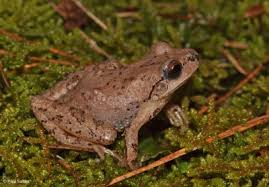
When taken to a new habitat, non-native plants often threaten native plants of the new habitat. Why do they do this?
a)
Non-native plants are able to mutate rapidly
b)
Non-native plants cause native animals to relocate
c)
Non-native plants are able to be used for medicine
d)
Non-native plants compete with native plants for resources
15.

The field mouse population in Australia has grown so fast that they eat an average of $4 billion of wheat every year. Their fast growth is caused by:
a)
A. The mice like to reproduce
b)
B. A lack of a native species to eat the field mouse
c)
C. Abundant food supply
d)
Both B and C
16.
1. What makes a species invasive?
a)
Moving to a new ecosystem and taking resources from natives
b)
Not having papers
c)
Species that can't adapt
d)
Plants that take up too much space
17.
What is an invasive species?
a)
A native (naturally found) species which are added to an area.
b)
A non-native (not naturally found) species added to an area.
c)
A keystone species in an environment
d)
none of the above
18.
Invasive species alter the ecosystem by _____ in number quickly. This leads to _____ food for the native species.
a)
increasing, less
b)
increasing, more
c)
decreasing, less
d)
decreasing, more
19.
A species that is not native to an area is called a ---
a)
Native Species.
b)
Natural Species.
c)
Invasive Species.
d)
Symbiotic Species.
20.
Why do the populations of invasive species grow so quickly?
a)
Invasive Species are native to an area.
b)
Invasive species are prey to many animals.
c)
Invasive species have no predators.
d)
Invasive species keep the ecosystems in equilibrium.
100 %

