

wayground logo

Free Printable Worksheets

Font size

S
M
L
XL
Worksheets

OnRamps Unit 4: The Cold War and Decades of Struggle

Total questions: 115

Worksheet time: 2hrs 42mins

Name
Class
Date
1.
1.  The Soviet Union’s goal during the Cold War was different from the United States because… 
a)
The Soviet Union wanted to spread communism.
b)
The Soviet Union wanted to contain the spread of communism.
c)
The Soviet Union wanted to start  a democratic government.
d)
The Soviet Union wanted to continue their democratic government.
2.
Why did the United States become involved in North and South Korea
a)
The United States wanted to promote the spread of communism.
b)
The United States wanted to keep South and North Korea separated by religion.
c)
The United States wanted to prevent the spread of communism into South Korea.
d)
The United States wanted to reunite North and South Korea as a communist government.
3.
Which of the following occurred during the Space Race between the Soviet Union and the United States?
a)
The United States was the first to have a man land on Mars.
b)
The Soviet Union was the first to have a man land on the moon.
c)
The United States launched an unmanned satellite, Sputnik, into space.
d)
The Soviet Union launched an unmanned satellite, Sputnik, into space.
4.
Which of the following events did NOT occur during the Cuban Missile Crisis? 
a)
The Soviet Union shipped nuclear missiles to Cuba.
b)
The United States shipped nuclear missiles to Cuba.
c)
The United States set up a naval blockade of Cuba
d)
The United States and the Soviet Union signed the Nuclear Test Ban Treaty
5.
What is an example of mass media? 
a)
The availability of automobiles 
b)
The agreement of two countries
c)
The returning of soldiers from war
d)
The spreading of news or pop culture
6.
New technologies created new products and improved existing products. Which of the following was NOT an example of new technology created during the Cold War Era? 
a)
a.  Personal laptops and computers
b)
a.  Jet engines and pressurized cabins
c)
a.  Televisions, air conditioners, and long distance service for telephones
d)
a.  Automatic transmissions, radial tires, and power-steering in automobiles
7.
The idea that if South Vietnam fell to communism, other nations would soon follow...
a)
Vietnamization 
b)
Communism
c)
Domino Theory
d)
Imperialism
8.
What provided congressional support for escalating military action in Vietnam? 
a)
Cuban Missile Crisis
b)
Battle Of Midway
c)
Gulf of Tonkin Resolution 
d)
Bay of Pigs Invasion
9.
What was a popular method of protesting the Vietnam War?
a)
Burning Clothing
b)
Burning Draft Cards
c)
Sit-Ins
d)
Burning Down Recruitment Centers
10.
Mexican American who received congressional Medal of Honor in Vietnam War? 
a)
Roy Benividez
b)
Pablo Escobar
c)
Fidel Castro
d)
Cesar Chavez
11.
The anti-war movement at home became more intense and even violent. 4 students were killed at ________ by the national guardsmen when they were protesting the war on campus. 
a)
Kansas State
b)
Kent State
c)
California State
d)
Ohio State
12.
These stolen documents showed that government officials lied to Congress and the people.
a)
Snowden Papers
b)
Watergate Papers
c)
Pentagon Papers
d)
Gulf of Tonkin Papers
13.
This was the replacing American troops with South Vietnamese troops.
a)
Napalm
b)
Deferment
c)
Mandate
d)
Vietnamization
14.
What event caused a negative shift in U.S. public opinion during the Vietnam War?
a)
The Geneva Accords
b)
Operation Rolling Thunder
c)
The Tet Offensive of 1968
d)
Gulf of Tonkin
15.
Limits the power of the President during a time of conflict
a)
Voting Rights Act
b)
Economic Opportunity Act
c)
Gulf of Tonkin Resolution
d)
War Powers Act
16.
The TET Offensive awoke Americans to the fact that Vietnam might not be a war that could be won and the Viet Cong were much stronger than they thought. It took place in: 
a)
Rural locations
b)
Jungle villages
c)
Urban centers
d)
Coastal villages
17.
Which amendment gave 18 year-olds the right to vote?
a)
14th
b)
15th
c)
19th
d)
26th
18.
The U.S. got involved in Vietnam because of what foreign policy?
a)
containment
b)
Good Neighbor policy
c)
isolationism
d)
Roosevelt Corollary
19.
Why is the Cold War considered a “cold” war, compared to WWII, a “hot” war?
a)
Most of the fighting took place in the cooler Northern Hemisphere
b)
The Soviet Union is located in a fairly cold area
c)
The Soviets and Americans never actually fought against one another with weapons
d)
The United States believed a nuclear war would end the seasons and it would be cold on Earth
20.
In the years just after World War II, the United States attempted to prevent the spread of communism in Europe mainly by…
a)
taking over the governments of several Western European nations
b)
increasing opportunities for political refugees to settle in the United States
c)
holding a series of summit meetings with leaders of the Soviet Union
d)
establishing policies of economic and military aid for European nations
21.
Which of the following best describes the outcome of the Korean War?
a)
the South Koreans won the war and controlled all of Korea
b)
the North Koreans won the war and controlled all of Korea
c)
neither side won the war and Korea remains divided today
d)
the U.S. and Soviet Union took over the area
22.
What organization was created by Congress to hunt for communist spies?
a)
Federal Civil Defense Administration (FCDA)
b)
Central Intelligence Agency (CIA)
c)
North Atlantic Treaty Organization (NATO)
d)
House Un-American Activites Commitee (HUAC)
23.
Which of these committed the United States to a foreign policy based on containment of communism?
a)
the Baruch Plan
b)
 the Four Freedoms
c)
the Long Telegram
d)
the Truman Doctrine
24.
What was the goal of the Marshall plan ?
a)
the fix war torn europe and make communism look unfavorable
b)
to put in marshall law in war torn europe
c)
to divide Berlin into 4 pieces 
d)
to provide materials and resources for blocked off Germany
25.
The House on Un-American Activities Committee (HUAC)
a)
Protested racial segregation in the armed forces.
b)
Investigated disloyalty and harmful foreign influences in the United States. 
c)
Investigated U.S. involvement in the Korean War and its lack of progress towards victory.
d)
Tried to deport all foreigners or Un-American peo
26.
The couple that was executed for spying and allegedly passing nuclear secrets to the Soviet Union were the                  
a)
Hiss’s
b)
Greenglass’s
c)
Rosenberg’s
d)
Chamber’s
27.
When the Space Race began in 1961, which of the following would have been an accurate headline in the
newspaper?
a)
"America Impresses Soviets by Sending Man to Space"
b)
"Soviets Shock America by Becoming the First to Send a Satellite to Space"
c)
"America and the Soviet Union Work Together to Send a Man to Space"
d)
"America and the Soviet Union Agree to Abandon Space Programs"
28.
Which event lead to the creation of the NDEA, increasing educational funding in math and science--
a)
the launch of a Soviet nuclear missile
b)
the launch of the Soviet satellite Sputnik
c)
the passage of the Space Race Act
d)
the Soviet mission to the moon
29.
• Affordable new houses were built.
• New highways were constructed.
• Low-interest home loans were granted.  

The reasons listed above explain the 1950s demographic shift to —
a)
rural areas
b)
inner cities
c)
urban areas
d)
suburban areas
30.
Which U.S. government action provided funding for veterans of the Second WorldWar in order to create a better educated and more productive workforce?
a)
Passage of the G.I. Bill
b)
Establishment of the Peace Corps
c)
Passage of the National Defense Education Act
d)
Establishment of the Department of Veterans Affairs
31.
An impact of the Cold War on American education priorities was a shift in the schoolcurriculum to a concentration on learning
a)
math and science
b)
social skills
c)
patriotism
d)
physical education
32.
Which of the following was the primary reason for US intervention in the Korean War?
a)
President Truman believed that a communist takeover of South Korea would endanger the security of other Asian countries.
b)
South Korea controlled large deposits of uranium ore, which it was selling to the United States for use in atomic weapons.
c)
President Truman believed that if North Korea lost, it would lead to the spread of communism in China.
d)
North Korea controlled large deposits of uranium ore sold to the Soviet Union for use in atomic weapons.
33.
How did the“baby boom” impact American society between 1945 and 1960?
a)
Slowed the demand for houses.
b)
It decreased the need for tax reform.
c)
Increased the need for schools.
d)
Encouraged people to migrate to the western states.
34.
Which post-World War II program provided the following for our veterans?
• Funds for education and training
• Home, farm, and business loans
• Unemployment compensation 
a)
Marshall Plan
b)
Truman Doctrine
c)
Eisenhower Replenishment Act
d)
G.I. Bill
35.
Which factor is most closely associated with McCarthyism?
a)
Buildup of weapons in the Soviet Union.
b)
Fear of communist influence in the United States.
c)
Rise of the Communist Party in China.
d)
Creation of the Warsaw Pact by the Soviet Union.
36.
What did the US Navy establish around Cuba during the Cuban Missile Crisis?
a)
A naval blockade
b)
Bases
c)
Missiles
d)
Ship Ports
37.
Allowed the public to consider different viewpoints concerning the  Vietnam war?
a)
Television 
b)
Radio
c)
Telegraph
d)
Internet
38.
The result of the discrepancy in government and television reports concerning the Vietnam War?
a)
Apathy towards gov't issues
b)
Greater support for the President
c)
Growing support for the war
d)
Credibility Gap 
39.
What event sparked significant protests in the United States during the 1960s?
a)
WWII
b)
Vietnam War
c)
Cuban Missile Crisis
d)
WWI
40.
Shifting the burden of actual combat from American troops to S. Vietnamese forces.
a)
Vietminization
b)
Vietcong
c)
Internationalism
d)
Linkage
41.
In Vietnam the fighters used a irregular warfare tactic that made it difficult for our soldiers to be successful...it was called?
a)
Vietnamese Warfare tactics
b)
Cheetah Warfare
c)
Hidden Warfare
d)
Guerrilla warfare
42.
Which side ended up winning the war?
a)
United states
b)
South Vietnam
c)
North Vietnam
d)
North korea
43.
The Pentagon Papers showed deception by which government?
a)
United States
b)
China
c)
USSR
d)
S. Vietnam
44.
At which university did Anti-War protests result in deaths of four college students in 1970?
a)
Jackson State College in Mississippi
b)
Harvard University in Massachusetts
c)
University of California, Berkeley
d)
Kent State University in Ohio
45.
Which statement describes the Marshall Plan?
a)
An alliance designed to combine the forces of all democratic nations in Western Europe
b)
An economic plan to spend 12.5 billion dollars on reconstructing Western Europe
c)
A failed military plan to cripple communist influence in Western Europe
d)
A peace treaty with the Soviet Union that was ultimately rejected
46.
"If one country falls to Communism, then others around it will, too!"
a)
Marshall Plan
b)
Domino Theory
c)
Truman Doctrine
d)
Containment
47.
Which of the following was an effect of the trend shown in the chart?
a)
Lyndon Johnson won a landslide victory in his re-election bid for the presidency in 1968
b)
the US began to win the war in Vietnam by 1968
c)
Anti-war protests increased as more Americans were drafted into the war
d)
President Nixon's Vietnamization plan was working as early as 1965
48.
A race to achieve the nuclear weapon superiority
a)
Arms Race
b)
Nuclear Race
c)
Nuclear Arms
d)
Nuclear Arms Race
49.
Showed that American leaders misled Congress and the American people about the war. 
a)
American Papers
b)
Pentagon Secrets
c)
Pentagon Papers
d)
Vietnam Papers
50.
Veterans were paid to go to college and obtain home loans easier.
a)
G.I. Bill
b)
Infantryman Act
c)
Selective Service Act
d)
Interstate Commerce for Veterans Act
51.
What provided congressional support for escalating military action in Vietnam? 
a)
Cuban Missile Crisis
b)
Battle Of Midway
c)
Gulf of Tonkin Resolution 
d)
Bay of Pigs Invasion
52.
What was the United States policy put in place in 1947 that would provide political, military and economic assistance to all democratic nations under threat from external or internal authoritarian forces? 
a)
Appeasement
b)
Blitzkrieg
c)
Truman Doctrine
d)
The Monroe Doctrine
53.

What ended the Cuban Missile Crisis?

a)

The USSR removes missiles and the US leaves Cuba alone.

b)

The US uses all of their missiles and destroys Cuba

c)

Cuba forfiets

d)

JFK got tired of fighting and just made a treaty

54.
What prompted Congress to pass the War Powers Resolution?
a)
Rulings issued by the Supreme Court that banned deployment of U.S. combat forces without a declaration of war
b)
Fears that renewed conflict in the Middle East would require the United States to defend Israel
c)
Decisions made by the executive branch during the Korean and Vietnam Wars
d)
Limits on the authority of the chief executive imposed by an international tribunal
55.
How did press coverage of events during the Vietnam War affect the United States?
a)
Film footage from the front lines increased congressional support for the war.
b)
Reporting on military setbacks contributed to public disillusionment with the war
c)
Increased U.S. media presence overseas resulted in overwhelming international support for U.S. intervention
d)
Live presidential press conferences led to a decline in partisan politics in Congress.
56.
This case decided that students can conduct a silent protest as long as it does not interfere with education environment at schools and “students do not shed their rights at the schoolhouse gate.” 
a)
Bethel v. Fraser
b)
Tinker v. Des Moines
c)
Hazelwood v. Kuhlmeier
d)
Texas v. Johnson
57.
This court case in the California (The West) held that the forced segregation of Mexican American students into separate "Mexican schools" was unconstitutional and unlawful.
a)
Brown v. Board of Education
b)
Sweatt v. Painter
c)
Menedez v. Wesminster
d)
Tinker v. Des Moines
58.

9.What was the impact of the Chicano Mural movement?

a)

It raised awareness for Mexican American culture and their issues

b)

It cost millions to clean up cities

c)

It lead to an increase in organized crime

d)

It lead to increased presence of INS

59.

10.What was the ruling in Delgado v Bastrop ISD (1948)?

a)

Segregation in schools is unconstitutional

b)

UTs law school for blacks was unconstitutional

c)

Segregation of Mexican-American students in schools is unconstitutional

d)

Schools had to give equal funding based on student population

60.

11.What was the ruling of Hernandez v Texas

a)

Citizens must be read their rights when arrested

b)

Minorities are protected under the 14th Amendment: Cannot be excluded from juries

c)

Schools must have equal funding

d)

Segregation in schools is unconstituional

61.

12.What was the goal of the Great Society?

a)

To ensure voting rights for minorities

b)

To create new education programs

c)

To provide temporary relief programs for low income Americans

d)

To ensure minors had their rights protected in school

62.

14.Which of these describes the Civil Rights Act of 1964?

a)

Bans employer discrimination and public segregation

b)

Bans voter intimidation and literacy tests

c)

Bans poll taxes

d)

Students can join any school activity regardless of gender

63.

15.Which of these describes the Voting RIghts Act of 1965?

a)

Bans employer discrimination and public segregation

b)

Bans voter intimidation and literacy tests

c)

Bans poll taxes

d)

Students can join any school activity regardless of gender

64.

2. Which philosophy did Martin Luther King Jr. make popular?

a)

violent resistance

b)

Non-violent civil disobedience

c)

Sit-Ins

d)

Hostile Hostage Takeovers

65.

3. Which describes the NAACP?

a)

WEB DuBois's civil rights activist group

b)

Booker T Washington's vocational training school

c)

Huey P Newton's Black Power movement

d)

A legal team who ended segregation in the U.S.

66.
 Using your background knowledge, decide which Civil Rights leader stated these words:
"Black people shouldn't be non-violent unless white people are going to be nonviolent."
a)
Martin Luther King, Jr.
b)
Malcolm X
67.
Protests such as marches, sit-ins, and boycotts
a)
Violent Protest
b)
Non-violent Protest 
68.
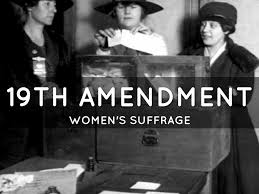
Which amendment guarantees women the right to vote?
a)
1st Amendment
b)
4th Amendment
c)
19th Amendment
d)
12th Amendment
69.
Which Southern politician upheld his pledge to uphold "segregation now, segregation tomorrow, segregation forever" by literally standing in their way at the University of Alabama?
a)
George Wallace
b)
Orval Faubus
c)
Lester Maddox
d)
Strom Thurmond
70.
What main problem does MLK address in the "I Have a Dream" speech?
a)
African Americans still do not have the rights guaranteed by the Constitution and Declaration of Independence
b)
African Americans do not have the same religious freedom as other groups
c)
African Americans have more rights than whites and are discriminating against them
d)
No one reads the speeches of Abraham Lincoln anymore
71.
This U.S. president was president during the Cuban Missile Crisis and supported the Civil Rights Movement. He was also assassinated for his support. 
a)
John F. Kennedy
b)
Robert F. Kennedy
c)
MLK
d)
FDR
72.
Birmingham's Public Safety Commissioner who was very racist and did anything he could to stop integration
a)
Bull Conner
b)
E.D. Nixon
c)
Z. Alexander Looby
d)
Robert Kennedy
73.

This established that separate public schools for black and white students was unconstitutional.

a)

Brown v Board of Education

b)

Dred Scott v Sandford

c)

Roe v Wade

d)

Plessy v Ferguson

74.

Sit-ins, freedom rides, & marches were all examples of...

a)

Attempts to expand opportunities for minorities

b)

New forms of exercise in the 60s

c)

Ways to connect the North & South US

d)

Economic growth for minorities

75.

What was the goal of "freedom rides"?

a)

Encourage the federal gov't to enforce rulings against discriminating in interstate transportation.

b)

To allow minority groups access to all forms of travel

c)

To show economic impact in discriminatory actions using transportation

d)

To connect southern and northern United States through bus routes

76.

This ended racial segregation in the armed forces

a)

Executive Order 9981 (Harry Truman)

b)

Civil Rights Act-1964

c)

Voting Rights Act

d)

Nineteenth Amendment

77.

Organized by Cesar Chavez & Dolores Huerta, this group worked for improvements for migrant workers.

a)

Safety and Health Administration

b)

United Farm Workers

c)

NAACP

d)

Latino Works Movement

78.
Organization of the Native American Civil Rights movement. Focused on recognition of their rights, temporarily seized some federal government properties.
a)
American Indian Organization (AIO)
b)
American Indian Opposition (AIO) 
c)
American Indian Movement (AIM)
d)
American Indian Management (AIM) 
79.

Which of the following best describes the Montgomery Bus Boycott?

a)

Segregation on buses became illegal after a couple of days of boycotting

b)

Segregation on buses became illegal after months of boycotting and it effectively marked the beginning of the modern civil rights movement.

c)

African-Americans blocked the streets preventing buses from operating

d)

Martin Luther King was arrested for not giving up his seat

80.
The Court Decisions in Delgado v Bastrop ISD and Hernandez v Texas held that --
a)
racially segregated schools are inherently unequal
b)
a student has no guaranteed rights while in a public school
c)
a student's right to privacy is limited under certain conditions.
d)
Mexican Americans were entitled to protection from discrimination under the 14th Amendment
81.
How did the approach of the Black Panthers differ from the methods used by Dr. Martin Luther King, Jr?
a)
Black Panthers were willing to use violence, while Dr. King used only nonviolence
b)
Black Panthers believed in nonviolence, while Dr King favored civil disobedience
c)
Black Panthers sought to use the court system, while Dr. King preferred passive resistance
d)
Black Panthers employed peaceful demonstrations, while Dr. King favored sit-ins and freedom rides
82.
What was significant about sending federal troops to protect African American students in Little Rock, Arkansas in 1957?
a)
It led to federal takeover of many Southern public schools.
b)
It strengthened control of education by state governments.
c)
It was the 1st time martial law had been declared in the US.
d)
It showed that the government would enforce court decisions on integration.
83.
Which Civil Rights leader also became the 1st African American to serve on the US Supreme Court?
a)
W.E.B. DuBois
b)
Martin Luther King Jr.
c)
Thurgood Marshall
d)
Rosa Parks
84.
In 1963, Matrin Luther King Jr., spoke his famous I Have A Dream speech. This speech expressed his desire to--
a)
unite all churches into one religion
b)
establish religious freedom for Americans
c)
replace racial segregation with an integrated society
d)
create a seperate nation for African Americans within the US
85.
The primary goal of Southern Democrats in Congress was to--
a)
end the practice of racial segregation in the South
b)
maintain the status quo in the South
c)
litigate for equal rights for all races in the South
d)
integrate the public schools throughout the South
86.
In his "Letter From a Birmingham City Jail," Dr King said, "I would agree with Saint Augustine that 'an unjust law is no law at all.'" This statement was used by Dr. King to show support for--
a)
Social Darwinism
b)
seperation of church and state
c)
Jim Crow Laws
d)
civil disobediance
87.
Amendments 15, 19, 26 deal particularly with which of the following? 
a)
Civil rights 
b)
State’s rights 
c)
Voting rights
d)
Women’s rights
88.
Which court case created the "separate-but-equal" doctrine, establishing legal segregation? 
a)
Plessy v. Ferguson
b)
Brown v. BOE (Board of Education of Topeka, Kansas)
c)
Sweatt v. Painter
d)
Regents of the University of California v. Bakke
89.
Which court case ended segregation in public schools? 
a)
Plessy v. Ferguson
b)
Brown v. BOE (Board of Education of Topeka, Kansas)
c)
Sweatt v. Painter
d)
Regents of the University of California v. Bakke
90.

What was the Little Rock Crisis?

a)

President sends troops to Little Rock to help integrate the schools

b)

The governor of Arkansas wants to integrate the Little Rock schools

c)

Freedom Riders staged protests at the local bus station

d)

Groups march for voting rights

91.

Texas case ending discrimination against poor school districts, redistributes property taxes equally across the state from richer districts to poorer districts.

a)

Mendez v Westminster

b)

Hernandez v Texas

c)

Edgewood ISD v Kirby

d)

Sweatt v Painter

92.
  • 14th, 15th, 16th amendments added to the U.S. Constitution
  • Passage of the 19th Amendment
  • Voting Rights Act of 1965
  • Passage of the 24th Amendment


These events show that the democratic process has been expanded by -

a)

non-violent protest

b)

presidential orders

c)

legislative actions

d)

court decisions

93.
Rosa Parks is most associated with
a)
March on Washington
b)
militant movements.
c)
Montgomery Bus Boycott
d)
Brown v. Board of Education
94.
Due to the sit-in protests, freedom rides, and the March on Washington it led to an expansion of political and economic opportunities for ____ citizens.
a)
minority
b)
judicial philosophy
c)
desegregation
d)
Civil Rights Act of 1964
95.
Which president desegregated the military in 1948?
a)
JFK
b)
LBJ
c)
Bill Clinton
d)
Harry S. Truman
96.
Who wrote The Feminine Mystique which helped launch the Women's Liberation Movement?
a)
Gloria Steinem
b)
Betty Friedan
c)
Rosa Parks
d)
Sandra Day O'Connor
97.
This bill was the most important civil rights legislation since Reconstruction.  It included prohibiting discrimination in most public accommodations and prohibiting discrimination in employment
a)
Voting Rights Act of 1965
b)
Civil Rights Act of 1964
c)
Twenty-third Amendment to the Constitution
d)
Twenty-sixth Amendment to the Constitution
98.
Who created the NAACP? 
a)
Booker T. Washington
b)
Martin Luther King Jr
c)
Malcolm X
d)
WEB DuBois
99.
What impact did Emmett Till's murder have on the Civil Rights movement?
a)
It scared blacks away for a while because they feared for their own safety
b)
Contributions to Civil Rights organizations soared and inspired new people to join the effort
c)
the vast majority of blacks responded with their own violence
d)
many blacks began to leave the U.S. for other countries
100.
What was the main tactic (or tactics) of Dr. Martin Luther King, Jr.?
a)
Civil disobedience and non-violence
b)
Civil disobedience and violence if necessary
c)
radical violence
d)
violence carried out a night wearing black robes
101.
When Arkansas's governor sent his state's National Guard to prevent the so-called "Little Rock Nine" from being enrolled, how did President Eisenhower react?
a)
He immediately sent federal marshals to reverse the situation
b)
He waited almost three weeks before sending 1,200 troops to enforce the court's order
c)
He agreed with the governor and did nothing
102.
Which element of Dr. Martin Luther King, Jr.’s “Letter from Birmingham Jail” MOST affected future civil rights movements?
a)
its call for civil disobedience against unjust laws
b)
its support for violent resistance of government authority
c)
its focus on economic equality for all minorities
d)
its criticism of judicial decisions in civil rights cases
103.
Prohibition against discrimination; exceptions. No person in the United States shall, on the basis of [gender], be excluded from participation in, be denied the benefits of, or be subjected to discrimination under any education program or activity receiving Federal financial assistance. . . . ? Which title BEST completes this citation line?
a)
Voting Rights Act of 1965
b)
Brown v. Board of Education, 1954
c)
Title IX Amendments of 1972
d)
Gideon v. Wainwright, 1963
104.
Use the excerpt below to answer the question. Section 1. The right of citizens of the United States to vote in any primary or other election for President or Vice President, for electors for President or Vice President, or for Senator or Representative in Congress, shall not be denied or abridged by the United States or any State by reason of failure to pay poll tax or other tax. —24th Amendment, U.S. Constitution Which statement BEST justifies the need for this amendment?
a)
Voter registration drives were poorly organized.
b)
Citizen participation in elections was based on education
c)
Segregated polling stations were used in federal elections.
d)
Economic status excluded some citizens from voting
105.
The writings and actions of Martin Luther King, Jr. MOST challenged
a)
charitable organizations to provide food for people in need of assistance.
b)
mainstream society to examine its moral conscience.
c)
city governments to improve living conditions for the working poor
d)
federal agencies to regulate large corporations.
106.
What was the overall goal of the court cases listed in this timeline?
Sweatt v. Painter (1950), Brown v Board of Education (1954) and Brown v Board of Education (1955)
a)
to increase funding for school teachers nationally
b)
to eliminate poll taxes in school elections
c)
to promote equality in military base schools
d)
to end the practice of segregation in public schools
107.

Who was Thurgood Marshall?

a)

First man in space

b)

First man on the moon

c)

Lawyer during Brown v. BOE case

d)

Framer of the constitution

e)

John F. Kennedy's best friend

108.

Refers to the steps taken to increase the representation of women and minorities in areas of employment, education, and business from which they have been historically excluded; developed from ideas introduced in Executive Order 10925 issued by President John F. Kennedy in 1961

a)

Title IX

b)

Affirmative Action

c)

Federal Housing Authority

d)

Great Society

109.

Which two decades in U.S. History were similarly characterized by heightened social tensions between those who held traditional values and those advocating changes?

a)

1930s and 1950s

b)

1920s and 1960s

c)

1940s and 1950s

d)

1970s and 1990s

110.

Who was chosen to lead the group that organized the Montgomery Bus Boycott? (HINT: It launched his career as a spokesman for the civil rights movement)

a)

Martin Luther King Jr.

b)

Jo-Ann Robinson

c)

E.D. Nixon

d)

Ralph Abernathy

111.
How does the 14th Amendment protect individual rights?
a)
It made slavery illegal
b)
Women could now vote in all elections
c)
It made poll taxes illegal
d)
It defined citizenship so all citizens have the same rights
112.
Which of the following responses best supports the 15th Amendment of the Constitution?
a)
A person cannot be denied the right to vote based on gender.
b)
A person cannot be denied the right to vote based on race.
c)
A person cannot be denied the right to vote based on age.
d)
No one can be denied the right to vote. 
113.

The Civil Rights movement in the United States began as a reaction to

a)

equality in public education

b)

Jim Crow Laws

c)

integration

d)

desegregation

114.
What was César Chávez’s goal for the United Farm Workers (UFW)?
a)
higher wages for migrant workers
b)
more opportunities for women to farm
c)
federal loans for future farmers
d)
safety regulations on farm equipment
115.

Cesar Chávez was a migrant farm worker who wanted to improve the lives of other migrant workers. Which of the following best completes the diagram above?

a)

Cesar Chávez married Helen Fabela and had eight children.

b)

Cesar Chávez was arrested for decreasing production on migrant farms.

c)

Grape growers in California accepted the United Farm Workers union.

d)

Migrant workers ignored Cesar Chávez and his attempts to help.
