
 Worksheets
pen final
Total questions: 134
Worksheet time: 1hrs 14mins
Jacobo Arbenz, leader of Guatemala, made the Dulles brothers nervous about his plans for the country due to their close ties to the what?
Fruit Growers of South America
South American Tourist group
United Fruit Company
Jose's Whole Sell Flowers
The 1983 keynote address delivered by Ronald Reagan that characterized the president’s sharp moralistic rhetoric during his first term is known as the what?
Five-Year Plans
Evil Empire Speech
Four Freedoms Speech
I have a Dream Speech
The YO YO YO Regan is AWESOME Speech
Was Mikhail Gorbachev more popular in Russia or the U.S?
U.S
Russia
That's not a real persons name
I think you miss spelled Micheal....
In 1983, Reagan unveiled a completely new strategy, the
Strategic Defense Initiative (SDI), which proposed
the construction of a futuristic space-based missile
defense system capable of neutralizing enemy missile
strikes mid-air by using high-tech lasers was known as what?
Star Trek
A lie
A Bluff
Star Wars
Star Ship Troopers
Ronald Reagan’s philosophy to deal with Russia was what?...
Speak soft but carry a big stick
Alway hit the biggest guy in the room first
peace through strength
Live long and prosper
Do or Do NOT, there is no try
Who engineered a covert arms sale to the
Ayatollah’s Iran and then illegally diverted the profits to the
contras.
Ronald Regan
Oliver North
Colin Powel
George Bush
Jeane Kirkpatrick
Rambo: First Blood (1982) and Rocky IV (1985) could be considered .......
over-the-top macho patriotism
Sweet love'n Romantic Comedies
Classic Sci-fi
Anti American
With out a doubt Stallone's best movies!!!
Why did Reagan's aides view the civil war in Nicaragua and El Salvador important
geographical proximity to the US
That is where his mother and father are from
they had large amounts of Uranium
all the gold in the hills
they supplied 75% of the worlds banna crop
Who spent tens of millions of dollars to covertly train a
Nicaraguan anti-communist fighting force known as the
“contras.”
US government
Russian government
Chinese government
Mexican government
FBI
Who was known as the “contras?”
Nicaraguan anti-communist fighting force
El Salvador anti-communist fighting force
the CIA
the tribes in the Congo
Brazilian Street Fighters
The covert arms (weapons) sale to the Ayatollah of Iran (Religious Leader)and then illegally diverted the profits to the contras in South America.
Iran-Contra affair
The I to the C pledge
Contra v. Ayatollah
Iran Contra mixed tape
The international folly
A charismatic, middle-aged African
American attorney....
Edith Sampson
Eleanor Roosevelt
John von Neumann
John Nash
Designated $1 billion in federal spending
over seven years to fund research grants, student loans,
scholarships, and curriculum development to help
America’s education system better support national
security needs.
military-industrial complex
G.I. Bill
National Defense Education Fund
National Defense Education Act
What is name of the speech given by FDR in 1941?
Four Score and 7 years ago
Our Freedoms
Us vs. Them
Four Freedoms
The belief that the United
States possessed a unique duty to spread its values and
institutions to nations around the world, is known as what?
To good to be true
American express
American dream
American exceptionalism

Who is this?
Karl Marx
Adolf Hitler
Vladimir Lenin
Joseph Stalin
Who wrote The Communist
Manifesto?
Adolf Hitler
Joseph Stalin
Karl Marx
Vladimir Lenin
Term for the ordinary working-class people in the USSR are known as.......
common wealth
poor
Bolsheviks
proletarian
Who led the USSR after Lenin’s death in 1924?
Joseph Stalin,
Vladimir Putin
Karl Marx
Mikhail Gorbachev
Term for the ordinary working-class people in the USSR are known as.......
common wealth
poor
Bolsheviks
proletarian
President Harry S. Truman,
assumed the presidency when who died?
Roosevelt
Kenedy
Bush
Eisenhower
This declaration came to be
known, pledged that the United States would intervene
anywhere that local communists, backed by the Soviet
Union, sought to sow “confusion and disorder.”16
Four Freedoms
Truman Doctrine
Four Truths
Declaration of Independence
This declaration came to be
known, pledged that the United States would intervene
anywhere that local communists, backed by the Soviet
Union, sought to sow “confusion and disorder.”16
Four Freedoms
Truman Doctrine
Four Truths
Declaration of Independence
Marshall Plan, provided how much in aid to
Northern and Western Europe?
$1 million
$ 5 Billion
$13 billion
$17 Billion
The original NATO agreement, signed on what date?
May 14, 1949,
May 4, 1949,
April 4, 1949,
April 14, 1949,
Who is considered the Architect of Containment?
George F. Kennan
George Forman
George Marshall
Paul Nitze
Lenin led a group of revolutionaries called _______________.
Bolsheviks
The Whites
Politburo
Provisional Government
When did the Russian Revolution happen?
1897
1917
1920
1924
Truman selected whom to serve as an alternate delegate to the UN, explicitly touting her appointment as “an answer to
Soviet propaganda regarding the Negro.”
Edith Sampson
Sally Ride
Rosa Parks
Myrtle Himsworth
In 1954, the Supreme Court unanimously ruled that racial segregation in public schools was unconstitutional in
the groundbreaking case known as what?
Brown v. Board of Education
Little Rock Nine
Roe v. Wayland
NAACP v. Education board
In 1954, the Supreme Court unanimously ruled that racial segregation in public schools was unconstitutional in
the groundbreaking case known as what?
Brown v. Board of Education
Little Rock Nine
Roe v. Wayland
NAACP v. Education board
1958, this company secured lucrative contracts to supply the government with military aircraft, heavy equipment, and missiles, had become a corporate behemoth employing more than 60,000 people in the greater Seattle area.
Boeing Company
Delta Airlines
Military-industrial Complex
Boris Pasternak
General Electrics
Khrushchev agreed to tour the exhibit with
Nixon on July 24, on the eve of its official opening. As
the two leaders entered the model kitchen equipped
with sparkling new appliances, they began a now-
famous exchange known as the......
Kitchen Debate
Great Debate
Food Fight
Mamma and the Pappas
Kitchen Knife Fight
Who was the leader of the Soviet Union during the Cuban Missile Crisis?
Nikita Khrushchev
Joseph Stalin
Mikhal Gorbachav
Fidel Castro
Sergei Fedorov
Kennedy approved an invasion plan called
Destroy Castro
Operation Cuba's Biggest Regret
The Bay of Pigs Invasion
The U-2Coastal Operation
The Soviet Nuclear Crisis
Which of the following justifies Kennedy's Navy block around Cuba?
Khrushchev removed all Soviet missiles from Cuba.
An American spy plane caught the Soviet Union placing nuclear weapons in Cuba.
Fidel Castro becomes dictator of Cuba and launches his new line of army fatigues with matching beards.
Khrushchev led a conference in Yalta but the US was not invited.
Castro threatened to launch four missiles at the US if Kennedy refused to take down the US missiles in Turkey.
How did the US discover that nuclear missile sites were being constructed in Cuba?
from American CIA spies in Cuba posing as farmers
from US spy satellites
from listening in on secret Soviet-Cuban radio transmissions
the British intercepted the telegram which outlined the nuclear missile project in Cuba
from photographs taken from an American U-2 spy plane
Where were extremely high-grade uranium deposits
assumed immense strategic value in the age of atomic
weapons.
Congo
Cuba
Germany
Vietnam
Mobutu
Which Axis Power in WW II took over all of the French colonies in Southeast Asia?
The US
Great Britain
Japan
Germany
The Gulf of Tonkin Incident claimed that 2 US Ships were attacked and this gave President ______________ the authority to send troops to Vietnam.
Kennedy
Johnson
Eisenhower
Truman
To burn the jungle areas and find the enemy, the US Government used a jellied gasoline that burned everything in site. This was called _____________.
Bombs
Napalm
Grenades
Carpet Bombing
What did Walter Cronkite do?
CBS Evening News host
NBC morning news host
ABC Evening News host
Pro Boxer
The ________________________ gave the Soviet Union the right to intervene in the political matters of the Satellite states.
The Comecon and Cominform
The Brezhnev Doctrine
Glasnost
Perestroika
In the 1980 election, Carter lost in a landslide to the
Republican....
Ronald Reagan
Jimmy Carter
Richard Nixon
Harry Truman
In early 1979, a popular revolution inspired by
the Muslim cleric named what, toppled the
secular but increasingly oppressive regime of Shah
Reza Pahlavi, which had been a key regional ally of the
United States for a quarter century.
Ayatollah Khomeini
Ayatollah Kokomoa
Deng Xiaoping
Afghan Mujahideen
a failed strategy used by British Prime
Minister Neville Chamberlain in the 1938 Munich
negotiations to placate Hitler’s expansionism by
conceding territory in Central Europe.
Appeasement
Blacklist
Atlantic Charter
Batista, Fulgencio

Who painted this?
Norman Rockwell
FDR
Karl Marx
Joseph Stalin
Who was the U-2 pilot convicted of espionage by a Soviet court and imprisoned for nearly two years after he was shot down?
Austin Powers
Gary Powers
Gary Austin
Connor Gravatt
Nathaniel De Ungria
Tensions between China and the Soviet Union were known as what?
Sino-Soviet split
Red v. Red
Secret War
Great Leap Forward
Paris Peace Accords
Which is the best definition of the geocentric model of the Universe?
The model in which the sun is at the center of the universe
The model in which the Earth is at the center of the universe
The model in which the moon is at the center of the universe
The model in which the Milky Way is at the center of the universe
Which is the best definition of the Heliocentric model of the universe?
The model in which the sun is at the center of the universe
The model in which the Earth is at the center of the universe
The model in which the moon is at the center of the universe
The model in which the Milky Way is at the center of the universe
Which is the best definition of astronomy?
The study of astronauts
The study of a boy band from South Korea
The study of celestial objects and phenomena in the universe
Whose model of the universe was accepted as true for 1400 years?
Keppler
Copernicus
Galileo
Ptolemy
Which is probably the oldest science?
Geography
Biology
Astronomy
Chemistry
Who was the first to use a telescope to study space?
Galileo
Copernicus
Kepler
Ptolemy
Which is the best description of the Earth's orbit
Round
Circular
Egg
Elliptical
The Greek word planetes means:
walker
runner
wanderer
floater
The Greek word planetes means:
walker
runner
wanderer
floater
If a wooden and iron ball, that are the same shape and size, were dropped from the roof of a building, which would hit the ground first?
Iron ball
Wooden ball
Both will hit the ground at the same time
Why did Galileo spend the last 10 years of his life under house arrest?
His clothes were a crime against fashion
He taught that the Earth is flat
His teachings went against the Ptolemaic Model and the Roman Catholic church
Light is an
A phenomena found only in our solar system
A frequency related to electrons
Wave amplitude
Electromagnetic waves
The speed of light is equal to
9,792,458 m/s.1
299,792,458 m/s.1
299,001,000 m/s.1
399,792,458 m/s.1
Electromagnetic waves can travel through the empty vacuum of space.
True
False
Radio waves and gamma rays are not part of the electromagnetic spectrum.
True
False
The colors of light we see depend on
Energy of light that reach our eyes.
Transparency of light that reach our eyes.
Reflection of light that reach our eyes.
Frequencies of light that reach our eyes.


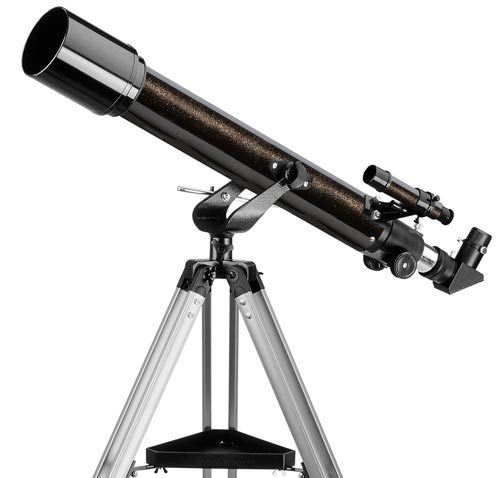
A refracting telescope uses _______ to focus light.
Lenses
Mirrors
Lasers
Water
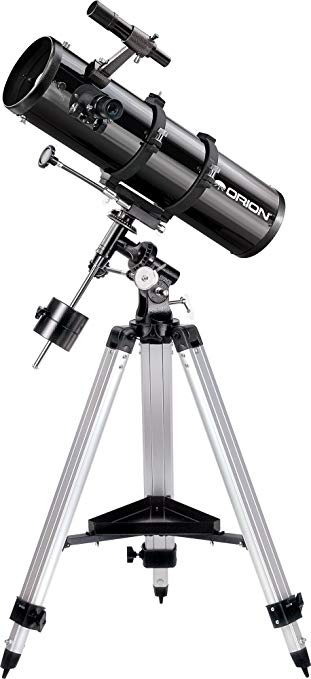
Reflecting telescopes use _______ to focus light.
Lenses
Flat mirrors
Curved Mirrors
A lens and lasers

What type of telescope is the Hubble Telescope?
Refracting
Cassegrain Reflecting
Prime Focus Reflecting
Newtonian Reflecting
What type of telescope is the Hubble Telescope?
Refracting
Cassegrain Reflecting
Prime Focus Reflecting
Newtonian Reflecting
Archaeologists have also uncovered evidence that the __________ ruins in __________ were used partly as astronomical observatories in the 9 th century CE.
Mayan Mexico
Indian Oklahoma
Roman Greece
Egyptian Egypt
He was the first recorded attempts to understand light occurred in ancient Greece in the 6 th century BCE.
Democritus
Alhazen
Einstien
Empedocles
He was the first recorded attempts to understand light occurred in ancient Greece in the 6 th century BCE.
Democritus
Alhazen
Einstien
Empedocles
What in England was likely used partly as an astronomical calendar in the first millennium BCE.
Tower of London
Eiffel Tower
Big Ben
Stonehenge
four elements, earth, wind, fire, and air were made by what goddess according to greeks.
Athena
Jesus
Zeus
Aphrodite
four elements, earth, wind, fire, and air were made by what goddess according to greeks.
Athena
Jesus
Zeus
Aphrodite
Greek philosopher-scientist, from (460 - 370 BCE) studied the physical world through observation.
Democritus
Empedocles
Plegus
Aristotle
According to Empedocles which element allowed the light rays to shine from the human eyes.
fire
earth
wind
light
Who was the most well known philosopher of ancient Greece?
Aristotle
Areosoyle
Arospace
Socrates
Who was the 8 th century, Arab scholar and physician working in Spain.
Alhazen
Isaac Newtown
Democritus
Empedocles
Democritus was from where?
Greece
Rome
Egypt
North Dakota
Who wrote The Treasury of Optics?
Alhazen
Huygens
Empedocles
Huygens
In 1704, he published his book,
Optiks, which discussed the properties of light and color.
Christiaan Huygens
Isaac Newtown
Thomas Young’s
Isaac Pendragon
In 1704, he published his book,
Optiks, which discussed the properties of light and color.
Christiaan Huygens
Isaac Newtown
Thomas Young’s
Isaac Pendragon
Newton believed that light was made of small particles he called
Carpools
micorule
corpuscles
Macromini buns
What was the name of Newton's book he wrote in 1704?
Optiks
Eye balls..... we all have one.
Fiber Optics
Optikus Prime
Who proposed that light moved through space similar to ocean waves.
Christiaan Huygens
Thomas Young
Isaac Newtown
William Collier
Who was a 17 th century, a Dutch scientist?
Kumar De Lipinhold
Hayden Christisen
Hans Of the Northern Fields
Christiaan Huygens
Who demonstrated that light consisted of two transverse waves, that together?
James Clerk Maxwell
Micheal Clark Duncan
James Earl Jones
Joshua Pendergrass
This type of waves are made up of continually changing electric and magnetic fields.
electromagnetic
mechanical
impuls
carrier
In 1888, a German professor, Heinrich Hertz (1857-1894), experimented with electromagnetic
waves using what?
human hair
a simple loop of wire
horse hair
square wire
Hertz’s findings proved that the wave theory of light was fundamentally
false
wrong
correct
unexplainable
Who came up with the Wave-Particle Duality Theory?
Albert Einstein
Heinrich Hertz
James Clerk Maxwell
Anna Rodgers
What musical term means the end?
Repeat sign
Coda
Rondo
Improvising
instruments such as the drums or xylophone
brass family
percussion family
string family
woodwind family
accompanying parts or musical lines that are not the melody; blend with/support the melody
harmony
melody
rondo
variation


What is the name of this piece of art?
Auto-Destructive Art, Gustav Metzger, 1961
The Artist in 1950, Hans Namuth, 1950
The Family of Man exhibition, curated by Edward Steichen, 1955
Souvenir (of the Cuban Missile Crisis Oct 16–28 1962), Gerald Laing, 1962

What is the name of this piece of art?
Souvenir (of the Cuban Missile Crisis Oct 16–28 1962), Gerald Laing, 1962 .
Untitled, Kazuo Shiraga, 1957
Cut Piece, Yoko Ono, 1964
NO+, Art Actions Collective (CADA), 1983–the present

What is the name of this piece of art?
It’s a Psychological Fact Pleasure Helps Your Disposition, Sir Eduardo Paolozzi, 1948
The Artist in 1950, Hans Namuth, 1950
A Day in the Street, Julio Le Parc (Groupe de Recherche d’Art Visuel), 1966
The Family of Man exhibition, curated by Edward Steichen, 1955
What is the name of this piece of art?
It’s a Psychological Fact Pleasure Helps Your Disposition, Sir Eduardo Paolozzi, 1948
The Artist in 1950, Hans Namuth, 1950
A Day in the Street, Julio Le Parc (Groupe de Recherche d’Art Visuel), 1966
The Family of Man exhibition, curated by Edward Steichen, 1955

What is the name of this piece of art?
Souvenir (of the Cuban Missile Crisis Oct 16–28 1962), Gerald Laing, 1962
A Day in the Street, Julio Le Parc (Groupe de Recherche d’Art Visuel), 1966
Global Groove, Nam June Paik and John Godfrey, 1973
Untitled, Kazuo Shiraga, 1957

What is the name of this piece of art?
Der Wurstesser (The Sausage Eater), Sigmar Polke, 1963
It’s a Psychological Fact Pleasure Helps Your Disposition, Sir Eduardo Paolozzi, 1948
I Am Glad If I Can Look at the Wall and I Would Be Glad If I Could Write Something
on the Other Side of the Wall, Endre Tót, 1979
Insertions into Ideological Circuits: Coca-Cola Project, Cildo Meireles, 1970

What is the name of this piece of art?
Balloons from the series House Beautiful: Bringing the War Home,
Martha Rosler, c. 1967–72
The Dawn of our Fatherland, Fyodor Shurpin, 1949
NO+, Art Actions Collective (CADA), 1983–the present
It’s a Psychological Fact Pleasure Helps Your Disposition, Sir Eduardo Paolozzi, 1948

What is the name of this piece of art?
Insertions into Ideological Circuits: Coca-Cola Project, Cildo Meireles, 1970
Our Goal Is Communism!, Vitaly Komar and Alexander Melamid, 1972
The Family of Man exhibition, curated by Edward Steichen, 1955
Cut Piece, Yoko Ono, 1964

What is the name of this piece of art?
I Am Glad If I Can Look at the Wall and I Would Be Glad If I Could Write Something
on the Other Side of the Wall, Endre Tót, 1979
Our Goal Is Communism!, Vitaly Komar and Alexander Melamid, 1972
Balloons from the series House Beautiful: Bringing the War Home,
Martha Rosler, c. 1967–72
The Dawn of our Fatherland, Fyodor Shurpin, 1949

What is the name of this piece of art?
Der Wurstesser (The Sausage Eater), Sigmar Polke, 1963
A Day in the Street, Julio Le Parc (Groupe de Recherche d’Art Visuel), 1966
NO+, Art Actions Collective (CADA), 1983–the present
Global Groove, Nam June Paik and John Godfrey, 1973

What is the name of this piece of art?
Untitled, Kazuo Shiraga, 1957
Our Goal Is Communism!, Vitaly Komar and Alexander Melamid, 1972
NO+, Art Actions Collective (CADA), 1983–the present
Global Groove, Nam June Paik and John Godfrey, 1973

What is the name of this piece of art?
Composition, Alberto Burri, 1953
Insertions into Ideological Circuits: Coca-Cola Project, Cildo Meireles, 1970
Untitled: Silueta Series, Mexico, from Silueta Works in Mexico,
Ana Mendieta, 1973–77, 1976
The Family of Man exhibition, curated by Edward Steichen, 1955

What is the name of this piece of art?
Global Groove, Nam June Paik and John Godfrey, 1973
NO+, Art Actions Collective (CADA), 1983–the present
It’s a Psychological Fact Pleasure Helps Your Disposition, Sir Eduardo Paolozzi, 1948
Der Wurstesser (The Sausage Eater), Sigmar Polke, 1963
What is the name of this piece of art?
I Am Glad If I Can Look at the Wall and I Would Be Glad If I Could Write Something
on the Other Side of the Wall, Endre Tót, 1979
Our Goal Is Communism!, Vitaly Komar and Alexander Melamid, 1972
Balloons from the series House Beautiful: Bringing the War Home,
Martha Rosler, c. 1967–72
The Dawn of our Fatherland, Fyodor Shurpin, 1949

What is the name of this piece of art?
Auto-Destructive Art, Gustav Metzger, 1961
A Day in the Street, Julio Le Parc (Groupe de Recherche d’Art Visuel), 1966
The Artist in 1950, Hans Namuth, 1950
Souvenir (of the Cuban Missile Crisis Oct 16–28 1962), Gerald Laing, 1962
What is the name of this piece of art?
Der Wurstesser (The Sausage Eater), Sigmar Polke, 1963
A Day in the Street, Julio Le Parc (Groupe de Recherche d’Art Visuel), 1966
NO+, Art Actions Collective (CADA), 1983–the present
Global Groove, Nam June Paik and John Godfrey, 1973
What is the name of this piece of art?
Global Groove, Nam June Paik and John Godfrey, 1973
NO+, Art Actions Collective (CADA), 1983–the present
It’s a Psychological Fact Pleasure Helps Your Disposition, Sir Eduardo Paolozzi, 1948
Der Wurstesser (The Sausage Eater), Sigmar Polke, 1963
Asymmetrical balance refers to
being exactly the same on both sides
balance that is achieved through identical objects
balance that is achieved through unlike objects
The point at which your eye tends to rest is called
point
symmetrical point
focal point
resting point
What are the 3 elements of paint? Choose ALL that apply
pigment
binder
glue
solvent
When wax, water and oil are used to make prints, this technique is called
relief printmaking
stamping
etching
lithography
Paints made out of plastic materials and polymers, which was developed after World War 2, is called
gouache
fresco
watercolor
acrylic
What is an allusion?
reference to itself.
reference to something else.
a trick used in magic.
comparing two unlike items.
What is alliteration?
repeat the first letter in a series of
words in order to draw attention to the sound.
repeat the last letter in a series of
words in order to draw attention to the sound.
used in creating nursery rhymes.
none of the above
In literature, contrast is a...
literary device through which writers
identify differences between two subjects, places,
persons, things, or ideas in order to draw attention
to them.
a literary device in the form of a
poem, quotation, or sentence.
compares two things that aren’t alike by
using “like” or “as.”
descriptions that appeal to the five senses.
Tone is used to set the.
general attitude or mood of a piece.
general setting of a story.
way characters talk in a story.
pace in which a readers reads the passages.
Tone is used to set the.
general attitude or mood of a piece.
general setting of a story.
way characters talk in a story.
pace in which a readers reads the passages.
Onomatopoeia occurs when...
a word follows no conventional English Language rules.
a word is spelled like it
sounds.
a word describes an animal.
two words rhyme.
A metaphor makes a..
indirect comparison between
two objects by replacing one idea for another.
direct comparison between
two objects by replacing one idea for another.
direct comparison between
three objects by replacing one idea for another.
indirect comparison between
three objects by replacing one idea for another.

