
 Worksheets
Nature of Science Review for Test-Unit #1
Total questions: 35
Worksheet time: 46mins
Lilly was trying to explain to her friend the difference between a theory and a law in science. She used the theory of plate tectonics and the law of superposition as examples. Lilly explained the difference by using non-scientific language. Which statement could Lilly use to correctly describe the difference between a theory and a law in science?
A theory describes a natural event, while a law explains it.
A theory explains a natural event, while a law predicts it.
A theory explains a natural event, while a law describes it.
A theory predicts a natural event, while a law explains it.
Which of these describes a natural phenomenon or relationship that always occurs under specific conditions?
theory
law
Which of these can be represented mathematically and does not provide an explanation for why a phenomenon occurs?
theory
law
A possible explanation for a problem that has not yet been tested. An educated guess.
data
theory
hypothesis
fact
Scientists frequently repeat the experiments of other scientists. Why is this important in science?
a. Scientists often ask each other for help in performing experiments.
b. Replication of experiments helps confirm and verify results.
c. Scientists frequently perform other scientists’ experiments to practice their technique.
d. Repeating experiments is an effective way to ensure a laboratory is in optimal condition.
a
b
c
d
Experiments are often repeated many times by the same or different scientists. What is the most important reason that more than one scientist should conduct an investigation using the same methods?
If the results are the same, replication of the investigation helps confirm the results.
The competition makes the scientists work more carefully.
More than one scientist is interested in the problem.
Different scientists might perform the experiment differently.
What is the best way to ensure your data is accurate in an experiment?
Do research
Conduct your experiment multiple times
Make a prediction
Form a conclusion
Replication is when one scientist
copies another scientist's experiment.
laughs at another scientist's experiment.
repeats their own experiment several times.
clones another scientist.
Repetition is when one scientist
copies another scientist's experiment.
bumps into another scientist.
repeats their own experiment several times.
clones a T. rex.
Daniel and Alex are both scientists. Daniel conducts an experiment testing different fuel sources for cars in the future. Daniel conducts each test three times to compare his data. After he finishes the trials, Daniel shows Alex his results from each trial. Alex is confused by Daniel’s results, so he decides to conduct the experiment himself. Which scientific process did each scientist use?
Alex and Daniel used each other's data to compare their results.
Alex and Daniel used the same hypothesis to compare their results.
Daniel used repetition in his experiment while Alex replicated Daniel's experiment
Daniel used replication in his experiment while Alex used repetition to conduct Daniel's experiment.
Will a construction paper airplane fly faster than an airplane made from notebook paper? Choose the best hypothesis.
If I make a paper airplane from notebook paper, then it will fly faster than construction paper.
Yes.
No.
I think the construction paper airplane will fly faster.
If I study for my scientific method test, I will have a better test score. What is the dependent variable?
Scientific Method
Studying
Independent variable
Test score
The variables that you keep the same in an experiment are called
independent variables
dependent variables
controlled variables
hypothesis

The boy is probably sad.
Qualitative Observation
Hypothesis
Inference
Quantitative Observation

The speed of the car is 55 mph.
Qualitative Observation
Quantitative Observation
Hypothesis
Inference

The penguins are black and white.
Qualitative Observation
Inference
Hypothesis
Quantitative Observation

The penguin was pushed in.
Qualitative Observation
Inference
Quantitative Observation
Hypothesis

Which part of this data table will be graphed on the Y-AXIS?
The food cooked
Type of barbecue
The time
The temperature
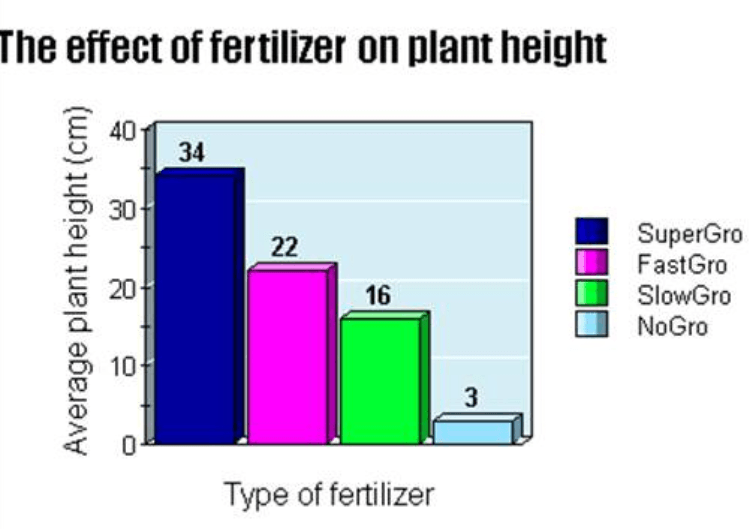
What is the independent variable?
Type of fertilizer
Average plant height
The effect of fertilizer on plant height
The effect of plant height on fertilizer
What is the dependent variable?
Type of fertilizer
Average plant height
The effect of fertilizer on plant height
The effect of plant height on fertilizer

What is the best title for this graph?
The Relationship Between Time Spent Studying and Test Grades
The Effect of Time Spent Studying and Test Grades
Time Spent Studying
Test Grades

What is the independent variable in this graph?
Discipline Division
Popular Bachelor's Degrees, 1999-2000
Number of Degrees Awarded
The effect of Discipline Division on Degrees Awarded
What is the dependent variable in this graph?
Discipline Division
Popular Bachelor's Degrees, 1999-2000
Number of Degrees Awarded
The effect of Discipline Division on Degrees Awarded
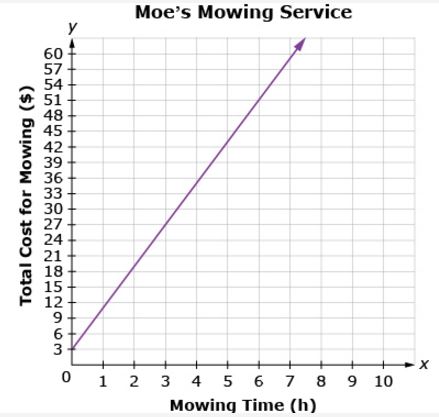
What can be concluded from this line graph?
The more you mow, the less money you make.
You make the same amount of money regardless of how long you mow.
The more you mow, the more money you make.
Mowing is dangerous.

Which statement below accurately represents the graph?
$100 is earned for each hour worked
$100 is earned for every 2 hours worked
$500 is earned for every 8 hours worked
$200 is earned for every 3 hours worked
Which choice describes gathering data with the senses?
observing
modeling
experimenting
simulating
A scientist wanted to learn more about these blue birds at a beach. He goes to the beach and writes down everything he sees the birds doing and all the sounds they make. This is an example of which scientific tool?
Observational Investigation
Comparative Investigation
Experimental Investigation
Hypothesis Investigation
Collecting data on different items or under different conditions to make a comparison.
Comparative Investigation
Experimental Investigations
Observational Investigations
Hypothesis Investigations
Mark wanted to find out if salt water evaporates faster than pure, fresh water. He formulated a hypothesis and then placed 100 mL of fresh water in a beaker. He placed 100 mL of salt water in another beaker. He placed both beakers on the same hot plate. Mark then watched the beakers and timed how long it took the water to evaporate. He then analyzed, studied, and recorded the results. Which type of scientific investigation did Mark use?
Comparative Investigation
Observational Investigation
Experimental Investigation
Hypothesis Investigation

