
 Worksheets
8: EOC Review Plant cell vs. Animal Cell
Total questions: 20
Worksheet time: 1hrs 22mins
Name
Class
Date
1.
Plants and animal cells both have a nucleus.
a)
True
b)
False
2.
Provides extra support for the plant cell and gives in shape
a)
chlorophyll
b)
chloroplast
c)
cell wall
d)
vacuole
3.
A storage structure- in an animal cell there are many small ones, but in a plant cell there is just one large one.
a)
vacuole
b)
ribosomes
c)
golgi body
d)
chloroplast
4.
Acts like a gatekeeper- allowing some materials to pass through it, but not others.
a)
cytoplasm
b)
cell membrane
c)
mitochondria
d)
vacuoles
5.

Which would be found in the cell of a sunflower plant but not in the cell of a chicken?
a)
cell wall
b)
vacuole
c)
mitochondria
d)
cell membrane
6.
Which of the following is a correct list of structures found in both plant AND animal cells?
a)
mitochondria, vacuole, nucleus, cell membrane, cytoplasm
b)
mitochondria, vacuole, nucleus, cell membrane, cytoplasm, cell wall, chloroplasts
c)
mitochondria, vacuole, nucleus, cell membrane, cell wall, chloroplasts
d)
mitochondria, vacuole, nucleus, cell membrane, cell wall
7.
Heterotrophic organisms contain animal cells which cannot produce their own food. As a result, heterotrophic organisms have to find other sources of food to fulfill their nutrition needs. This requires more energy on a daily basis. Which cell structure would release the energy a heterotrophic organism needs to find the food it needs?
a)
vacuole
b)
mitochondria
c)
chloroplasts
d)
nucleus
8.

Which of the following would help you determine if the image shown comes from a plant or an animal?
a)
the number of mitochondria
b)
the size of the vacuole
c)
the presence of a cell wall
d)
all of these could be used
9.
Which of the following does a bacteria cell NOT have in common with a plant cell?
a)
cytoplasm
b)
cell membrane
c)
genetic material (DNA)
d)
nucleus
10.
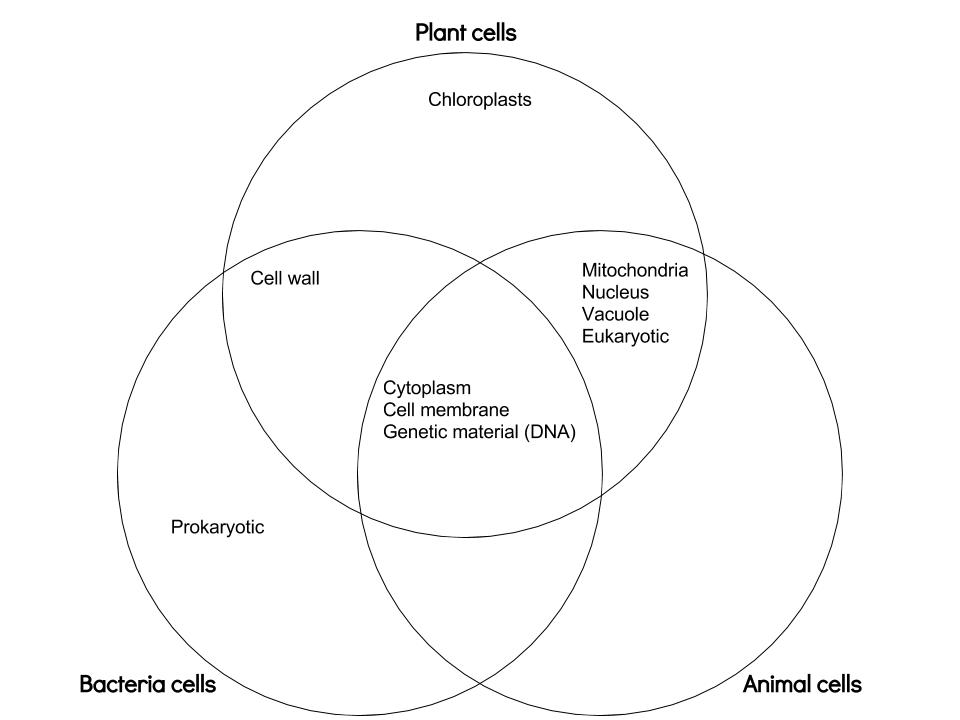
Observe the Venn diagram. Which structures do both prokaryotic and eukaryotic cells have in common?
a)
cell membrane, cytoplasm, genetic material (DNA)
b)
cell wall
c)
mitochondria, nucleus, vacuole
d)
chloroplasts
11.
Which organelle is only found in a plant cell?
a)
nucleus
b)
chloroplast
c)
mitochondria
d)
cell membrane
12.
Where are proteins made?
a)
Golgi body
b)
Mitoichondria
c)
Chromosomes
d)
Ribosomes
13.
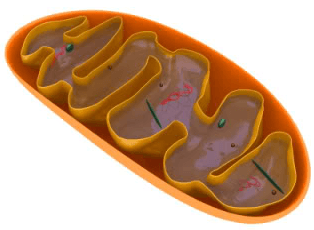
What are tiny organelles that convert glucose into ATP?
a)
Ribosomes
b)
Vesicles
c)
Cytoskeleton
d)
Mitochondria
14.

Name this cell
a)
Prokaryotic
b)
Eukaryotic
c)
Animal
d)
Plant
15.

Name this cell
a)
Prokaryotic
b)
Eukaryotic
c)
Plant
d)
Animal
16.

Name this type of cell
a)
Prokaryotic Plant
b)
Prokaryotic Animal
c)
Eukaryotic Animal
d)
Eukaryotic Plant
17.

Name this type of Cell
a)
Prokaryotic Plant cell
b)
Prokaryotic Bacteria Cell
c)
Eukaryotic Plant cell
d)
Eukaryotic Animal Cell
18.

Name this type of cell
a)
Prokaryotic Plant
b)
Prokaryotic Animal
c)
Eukaryotic Animal
d)
Eukaryotic Plant
19.

Name this type of cell
a)
Prokaryotic Animal
b)
Prokaryotic Plant
c)
Eukaryotic Animal
d)
Eukaryotic Plant
20.

Name this type of cell (blood cells)
a)
Prokaryotic animal
b)
Prokaryotic plant
c)
Eukaryotic animal
d)
Eukaryotic plant
100 %

