
 Worksheets
Life Science Review
Total questions: 30
Worksheet time: 20mins
Mushrooms, bread molds, and yeasts are classified together in the fungi kingdom. Specific characteristics are used to classify these organisms. Which of the following is a characteristic used to classify these organisms as fungi?
They are parasites.
They are unicellular
They are prokaryotes.
They are heterotrophs.

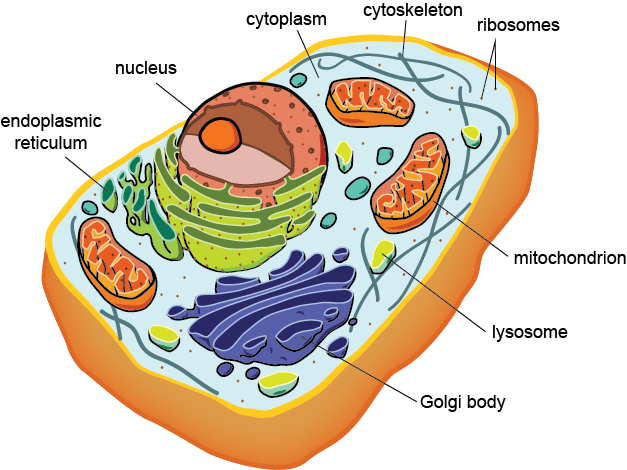
This organelle is a rigid outer layer that protects plant cells.
Cell Membrane
Cell Wall
Nucleus
Chloroplast

This organelle controls what goes in and out of plant and animal cells.
Cell Wall
Cell Membrane
Cytoplasm
Cytoplasm
Which structures do plant cells have that animal cells do NOT have?
cell wall
large central vacuole
chloroplasts
all of these
In an external environment that is always changing, an organism must be able to maintain relatively constant internal conditions. This maintenance of a stable internal environment is known as
transport
homeostasis
metabolism
nutrition
Select the choice that best completes the following sentence:
The _______ system breaks down the food we eat, while the _______ system transports the nutrients to each cell in the body.
circulatory; digestive
digestive; respiratory
muscular; circulatory
digestive; circulatory
How does the skeletal system benefit the digestive system?
It protects organs within the system.
It supplies blood to organs within the system.
It provides oxygen to organs within the system.
It provides nutrients to organs within the system.

A collection of same cells produced through Mitosis, like the muscles in the image, are called....
Organ
Biosphere
Tissue
Macromolecule


A genotype when there are two alleles that are exactly the same is?
Purebred
Homozygous
Heterozygous
Recessive
An organism with two different alleles for a trait is?
Homozygous
Genotype
dominant factor
Heterozygous
The physical appearance of an organism is?
phenotype
genoty[e
probability
beauty
The small segments of a chromosome that help code for a trait are called?
trait
mutations
DNA
genes
An organism that gains its energy from consuming producers is what level consumer?
Producer
Primary Consumer
Secondary Consumer
Tertiary Consumer
Where a plant cell makes food
chloroplasts
mitochondria
nucleus
the green pigment in chloroplasts that provides energy to the cell
producer
photosyntesis
chloroplasts
chlorophyll



