
 Worksheets
Ch 02 The Development of Feudalism in Western Europe
Total questions: 75
Worksheet time: 36mins
During the Middle ages unfree peasants were called (a) .
About what age did a squire become a knight?
early 30s
18 only
early teens
early 20s
early man
Two armed knights on horseback galloped at each other with their lances held straight out.
What is this describing?
Curling
Jousting
Archery
Longbow
Sparring
We get the modern idea of _____________ as traditional forms of courtesy and kindness towards women.
Jousting
Monarch
Heraldry
Chivalry
Bushido
After 7 years of being as a (a) , a young boy became a squire.
Manors is where the ____________ lived.
Monarchs
Kings
Serfs
Lords
Nights
(a) was the powerful Duke of Normandy and his nickname was the Conqueror.
What were the fools who performed jokes and stunts called?
(a)
What is the definition of a MOAT?
The Medieval knight's code of ideal behavior, including bravery, loyalty, and respect for women.
large estate, including manor farmland and villages, held by a lord
A ruler, such as a king or queen
Land granted by A Lord to a vassal in exchange for loyalty and service.
a deep, wide ditch, often filled with water
What is the definition of CHIVARLY?
The Medieval knight's code of ideal behavior, including bravery, loyalty, and respect for women.
large estate, including manor farmland and villages, held by a lord
A ruler, such as a king or queen
Land granted by A Lord to a vassal in exchange for loyalty and service.
a deep, wide ditch, often filled with water
What is the definition of ARMOR?
system of organizing people into ranks, with those of higher rank having more power and privileges
large estate, including manor farmland and villages, held by a lord
A ruler, such as a king or queen
Land granted by A Lord to a vassal in exchange for loyalty and service.
a covering, usually made of metal or leather, worn to protect the body during fighting
What is the definition of a BARBARIAN?
highest type of European noble, ranking just below a prince
belief that God gives monarchs the right to rule
person belonging to a tribe or group that is considered uncivilized
bishop of Rome and supreme leader of the Roman Catholic Church
person of high rank by birth or title
What is the definition of a POPE?
highest type of European noble, ranking just below a prince
belief that God gives monarchs the right to rule
person belonging to a tribe or group that is considered uncivilized
bishop of Rome and supreme leader of the Roman Catholic Church
person of high rank by birth or title
What is the definition of DIVINE RIGHT OF KINGS?
highest type of European noble, ranking just below a prince
belief that God gives monarchs the right to rule
person belonging to a tribe or group that is considered uncivilized
bishop of Rome and supreme leader of the Roman Catholic Church
person of high rank by birth or title
What is the definition of a NOBLE?
highest type of European noble, ranking just below a prince
belief that God gives monarchs the right to rule
person belonging to a tribe or group that is considered uncivilized
bishop of Rome and supreme leader of the Roman Catholic Church
person of high rank by birth or title
Pages and squires were boys in training to become
(a)
Serfs were required (forced) to
grind their own grain at home
join the king's enemies
move to nearby cities and towns
stay on the land that they worked


Why were castles built during the Middle Ages?
To make nobles more comfortable
To impress guests
For protection
Nobles likes to show off their wealth
When a king granted a fief to a vassal, what did the vassal owe the king in return?
He worked the king's lands to produce food for him.
He provided a number of peasants to work for the king.
He gave the king a supply of knights in time of war.
He owed the king nothing but his gratitude.

The (a) was at the top of the medieval social pyramid.
Which word is spelled correctly?
miedieval
medevil
medieval
medevel
midieval
Match the following:

armor

Christianity

Roman Catholic Church

Pope

barbarian
Match the following

Divine Right of Kings

Noble

Duke

Moat

King
Match the following

fief

manor

jousting

chivalry

hierarchy


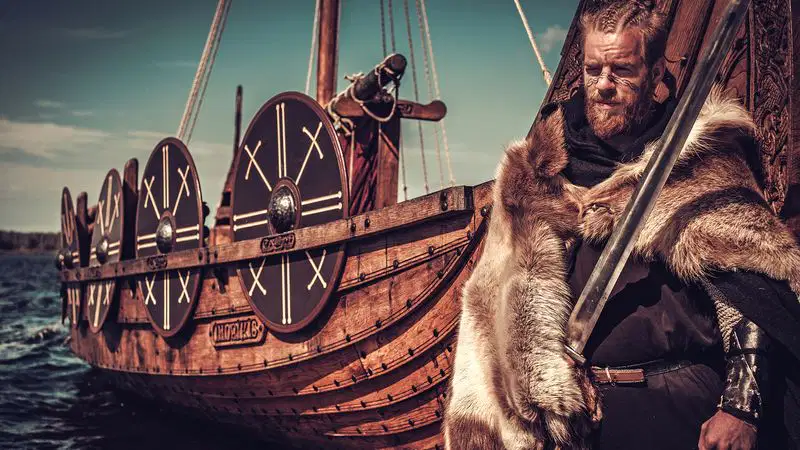


Why were castles built during the Middle Ages?
To make nobles more comfortable
To impress guests
For protection
Nobles likes to show off their wealth
We are studying (a) Europe.
What was Charlemagne's greatest accomplishment?
He was the first Frankish king to become Christian.
He permanently ended the threat from invading Vikings.
He built an empire that endured for centuries after his death.
He unified nearly all the Christian lands of Europe into a single empire.

What belongs in the empty box to complete the cause-and-effect diagram?
Development of farming
Expansion of freedoms
Rise in prosperity
Increase in attacks
Which of the following best describes the Vikings?
Northern people who made quick, fierce raids on European villages
Muslim nomads who traded in goods from the Middle East
Germanic people who swept south to topple the Roman Empire
Central European people who originally migrated from Asia

Who are the men in the picture?
lord and vassal
peasant and serf
merchant and squire
villager and priest
How long after the fall of Rome did Clovis become king of the Franks?
5
7
10
14

Using the timeline provided, when did William of Normandy conquer England?
481 CE
1066 CE
1300 CE
1450 CE
It was easy to change social class/social status in the Middle Ages. True or false.
(a)
A lord's home was the center of his
guild
monastery
manor
fief

Feudalism hierarchy from top to bottom
noble, king, serf, lord
king, lord, knight, peasant
serf, noble, peasant, king
king, peasant, vassal, serf
king, queen, prince, princess
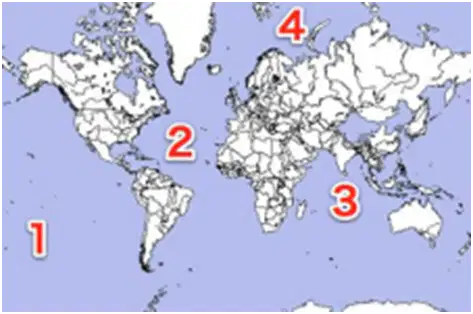
Canada is bordered to the east by the Atlantic Ocean, which is shown by the number
1
2
3
4

the average weather in an area over a long period of time
climate
weather
relief
scale

What country is this?
Canada
Cuba
Mexico
United States of America

What country is this?
Canada
Cuba
Mexico
United States of America

What country is this?
Egypt
Madagascar
Somalia
South Africa

What country is this?
Australia
China
India
Russia

What country is this?
Australia
China
India
Russia

What country is this?
Australia
China
India
Russia

What country is this?
USA
India
New Zealand
China

What country is this?
Bulgaria
Switzerland
Sweden
Netherlands

What country is this?
Canada
Cuba
Mexico
United States of America

What country is this?
Mozambique
Madagascar
Malawi
Tanzania
Where can you see Machu Picchu
Venezuela
Guatemala
El salvador
Peru
What is always in front of you but you can't see it?
Air
life
fun
The future
What has hands but cannot clap?
clock
time
person
monkey
I can travel anywhere but I can't move. What am I?
Envelope
Air
Stamp
All of the Above
When you feed me I give life, when you give me a drink I die. What am I?
Rat
Your anger
Fire
Other

Can you guess which country this vibrant flag belongs to?
France
Poland
Romania
Italy
What has teeth but cannot bite?
Dog
Cat
Shark
Comb

Can you guess which country this vibrant flag belongs to?
South Korea
North Korea
Cambodia
Thailand

Can you guess which country this vibrant flag belongs to?
Germany
Belgium
Spain
Portugal

Can you guess which country's flag we're looking at?
Vietnam
Turkey
China
Russia

Can you guess the capital city of the Dragon Land, also known as China?
Beijing
Peijing
Meijing
Neijing

Let's take a trip to the land of pyramids! Can you guess the capital city of Egypt?
Athens
New Delhi
Cairo
Rome

Guess what! The country we've highlighted on the map is...
Japan
South Korea
Philippines
Russia

