
 Worksheets
Grahams law of effusion/diffusion
Total questions: 11
Worksheet time: 11mins
Name
Class
Date
1.

Which diagram best shows the end result of diffusion?
a)
F
b)
G
c)
H
d)
J
2.
Diffusion is the movement of molecules from an area of _____ concentration to an ______ concentration
a)
High, low
b)
Low, high
c)
Low, low,
d)
High, high
3.
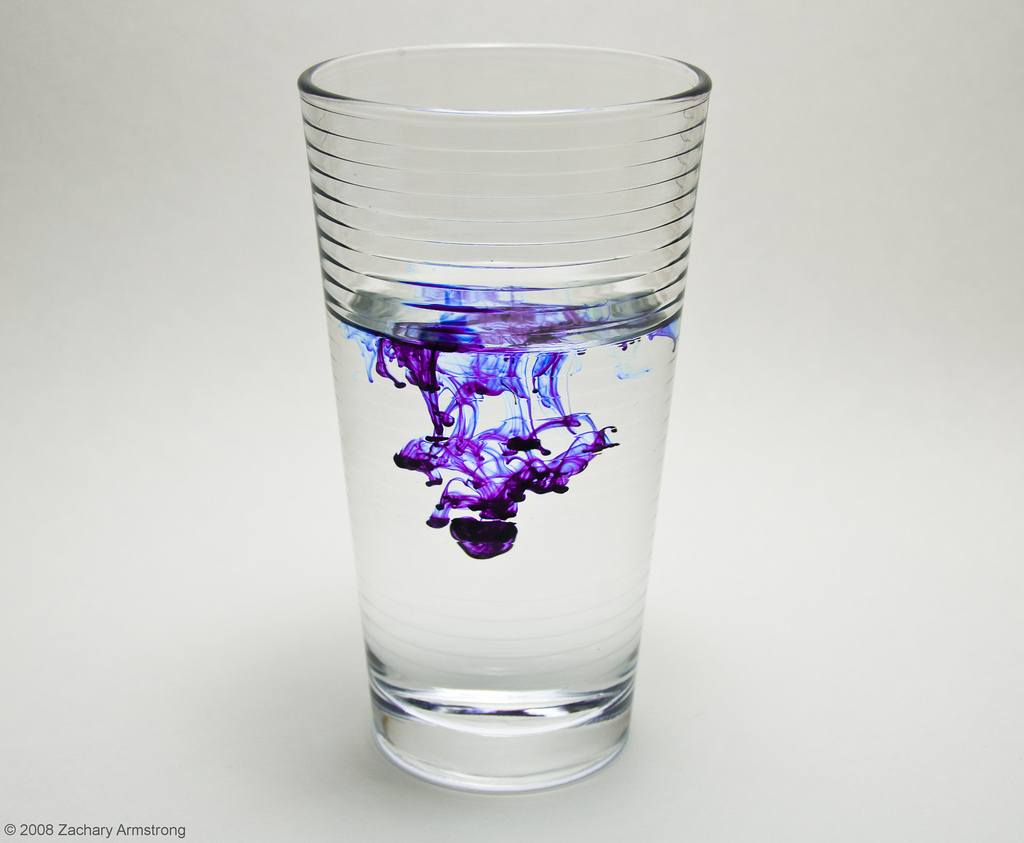
Where is there a low concentration of dye?
a)
at the bottom of cup
b)
in the color
c)
at the top of cup
d)
no concenteraion gradient
4.

What process is being shown in this picture
a)
Diffusion
b)
Fermentation
c)
Effusion
d)
Chaos
5.
why would O2 effuse faster than CO2 in the same room
a)
because it has more energy
b)
because it has a greater molar mass
c)
because oxygen has a higher temperature
d)
they will effuse the same because the temperature is fixed
6.
Grahams law of effusion states that The rate of effusion of gases at the same temperature and pressure are;
a)
directly proportional to the mass
b)
inversely proportional to the molar mass
c)
inversely proportional to the square root of the molar mass
d)
directly proportional to the square root of the molar mass
7.
diffusion and effusion are the same in which way?
a)
both describe particles moving
b)
both describe the movement through a tiny whole
8.
The rate of effusion is _______________ proportional to the square root of its' molar mass.
a)
Directly
b)
Inversely
9.
Lighter gases have a ________________ rate of effusion.
a)
faster
b)
slower
c)
rate of effusion does not depend on mass.
10.
Effusion is
a)
used to describe the combustibility of a gas.
b)
ability of a gas to escape through a tiny opening
c)
what occurs after diffusion.
d)
the ability of a gas to mix with other gases.
11.
Identify the factor that determines rates of diffusion and effusion for different molecules at a given temperature.
a)
Size of the molecules
b)
Polarity of the molecules
c)
Temperature of the gas
d)
Molar mass of the gas
100 %

