
 Worksheets
Radioactive decay
Total questions: 25
Worksheet time: 19mins
How is the alpha particle written in a nuclear equation?
42He
24He
0-1e
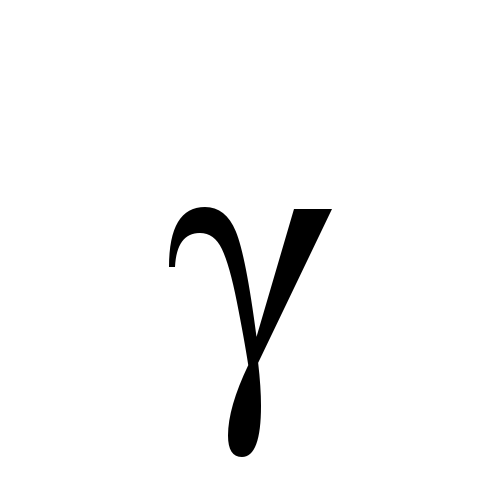
00γ
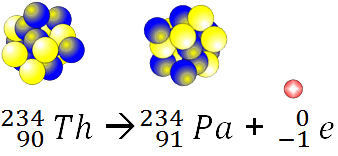
85209At = ___ + 24He
Gamma rays have
no mass
a huge mass
a small mass
an average mass
614C = ___ + -10e

The nucleus is held together by the ___________________________force.
The Strong Nuclear Force
The Weak Nuclear Force
Electromagnetism
Gravity


In a correctly written symbol what would be located in the "Z" position?
number of neutrons
atomic number
number of electrons
mass number
85209At = ___ + 24He
614C = ___ + -10e

What two subatomic particles are found in an atom's nucleus?
Protons and neutrons
neutrons and electrons
electrons and protons

What is likely to happen to unstable nuclei with too many, or too few, neutrons?
They will decay by emitting radiation.
They will loose all their electrons.
They will bond with other atoms.

What could an unstable nucleus emit?
Alpha, gamma, beta, and sometimes a neutron.
Alpha, beta, gamma, and sometimes delta
Alpha, beta, delta, and sometimes gamma

If the nucleus has too few neutrons, it will emit two protons and two neutrons called ___________.
an alpha particle
a beta particle
a neutron
gamma radiation
Alpha decay causes the mass number of the nucleus to decrease by ________ and the atomic number of the nucleus to decrease by _______.
four, two
two, four
one, two
two, three
If the nucleus has too many neutrons, a neutron will turn into a proton and emit a fast-moving electron. This process is known as ___________.
alpha radiation
beta radiation
gamma radiation
neutron radiation

What observation suggests the atom is mostly empty space?
Most alpha particle travel straight through.
Some alpha particles are deflected at small angles.
Occasionally an alpha particle come straight back.

What type of radiation is the most penetrating?
Alpha
Beta
Gamma
What subatomic particle determines the name of the element?
Electron
Proton
Neutron
Boson

