
 Worksheets
G1 Human Reproduction
Total questions: 14
Worksheet time: 9mins
The sperm and the egg are what kind of cells?
ova
scrotums
gametes
testes
What will happen when a female reaches puberty?
(There can be one or more answers)
Her voice will deepen.
She will be able to reproduce.
She will undergo menopause.
Her hips will widen.
Her embryos are released periodically.
The fallopian tubes connect
the ovaries to the uterus
the uterus to the vagina
the ovaries to the vagina
The female reproductive cell is called the (a) .

Which structure is part of BOTH the reproductive and urinary system?
A
B
C
D
E
What is the male reproductive organs that produce sperms?
Penis
Fallopian tube
Testes
Ovary
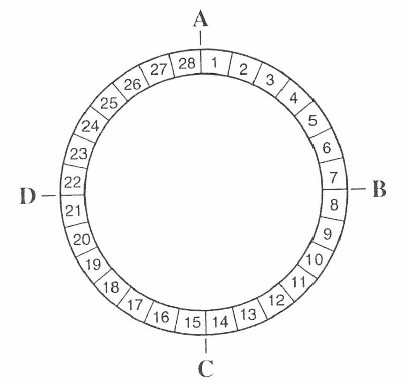
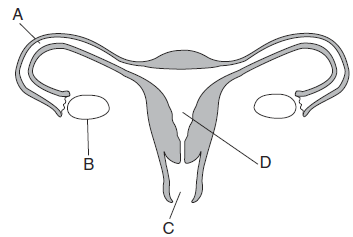
The human female reproductive system is represented below. Where will the embryo attach itself after fertilization?
A
B
C
D
Which of the following correctly describes sexual reproduction in humans?
Fertilisation of the egg takes place inside the male's body.
Many eggs are fertilised by one sperm.
The fertilised egg develops in the stomach.
Fertilisation occurs when a sperm and an egg fuse.

A female had her first day of menstruation on the 6th of May. (Shown in the calendar using a red dot)
When will she most likely to ovulate?
10 May
15 May
19 May
2 June
The female hormone that helps to repair the uterine lining.
adrenaline
oestrogen
progesterone
testosterone
Which option correctly shows the development of a fertilised egg?
foetus > zygote > embryo > baby
embryo > foetus > zygote > baby
zygote > embryo > foetus > baby
zygote > foetus > embryo > baby
The process where the fertilised egg is implanted onto the uterine lining is known as
fertilisation
implantation
ovulation
reproduction

