Wayground logo

Free Printable Worksheets

Font size

S
M
L
XL
Worksheets

Weathering and Erosion Review Quiz

Total questions: 35

Worksheet time: 23mins

Name
Class
Date
1.

This process moves bits of rock from one place to another.

a)

mechanical weathering

b)

chemical weathering

c)

erosion

d)

deposition

2.

Landslides, mudslides, and creep are caused by.....

a)

wind

b)

gravity

c)

ice

3.

Abrasion is

a)

when a rock is slowly worn down by scraping or wearing away

b)

when ice repeatedly freezes and melts causing a rock to break apart

c)

when plant roots grow in the cracks of rocks causing the rock to break apart

d)

when an animal scapes and digs on the rocks in an area

4.

Ice wedging is when.....

a)

when a rock is slowly worn down by scraping or wearing away

b)

when ice repeatedly freezes and melts causing a rock to break apart

c)

when plant roots grow in the cracks of rocks causing the rock to break apart

d)

when an animal scapes and digs on the rocks in an area

5.
________ is the setting down of sediment.
a)
weathering
b)
erosion
c)
deposition
d)
compaction
6.
Rocks that break down into smaller pieces is called ________________.
a)
weathering
b)
erosion
c)
deposition
d)
convection
7.
What is it called when sediment is moved from one place to another?
a)
weathering
b)
erosion
c)
deposition
d)
convection
8.
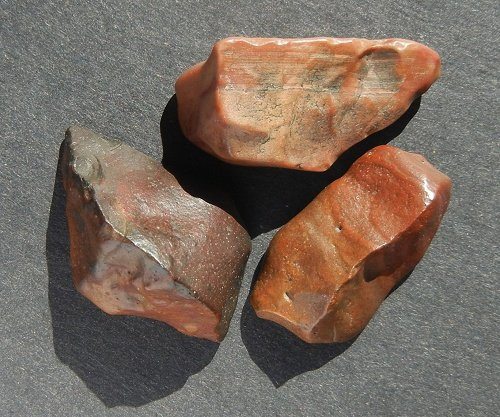
What caused the edges of these rocks to become smooth?
a)
rocks bumping and scraping against each other in a river
b)
ice scraping from a glacier
c)
sand blowing in the wind
d)
plants growing roots
9.

Rocks being picked up and carried downstream is an example of ____________.

a)

weathering

b)

erosion

c)

deposition

10.
Material from broken down rocks
a)
Sediment
b)
Mass wasting
c)
Deposition
d)
Delta
11.
A huge downhill movement of rock or soil due to gravity
a)
mass wasting
b)
delta
c)
chemical weathering
d)
deposition
12.
The freezing and thawing action of water affects a rock by
a)
transforming the rock into igneous rock
b)
chemically changing the rock
c)
gradually breaking down the rock into smaller pieces
d)
leaving behind sediment particles from evaporation
13.
Process that occurs when water repeatedly freezes and thaws. 
a)
Residual soil
b)
Frost wedging
c)
Erosion
d)
Oxidation
14.
The diagrams shows a rock with water trapped in the cracks during the day and at night. 

Which statement best explains why this process results in weathering?
a)
frozen water acts as a solute
b)
water expands when it freezes
c)
the mass of water increases when it freezes
d)
frozen water dissolves most types of rock
15.
What was sand before it was broken down?
a)
soil
b)
rock
c)
water
d)
cement
16.
What is sediment?
a)
the process of rocks being broken down and carried away
b)
bits of rock, sand, and silt caused by the weathering of rocks
c)
the top layer of the soil
d)
decaying plant or animal material 
17.

Which of these is an example of erosion?

a)

Light shinning onto a mountain

b)

Rain breaking down rock

c)

Wind blowing away sediment

d)

All of the above

18.
How do plants weather rocks?
a)
during photosynthesis
b)
when roots grow into cracks of rocks and expand the rock
c)
when the plant moves water from the roots to the leaves
d)
Plants don't weather rocks
19.
What is groundwater?
a)
any form of liquid water
b)
water that is not moving
c)
water on Earth's surface
d)
water below Earth's surface
20.
Which landform is formed because of the erosion of groundwater?
a)
valley
b)
canyon
c)
channel
d)
cavern
21.
What force is responsible for erosion and deposition in landslides?
a)
gravity
b)
ice
c)
wind
d)
temperature
22.
What is a type of mass movement by gravity?
a)
dune
b)
loess
c)
glacier
d)
mudslide
23.
Downslope movement of material under the influence of gravity is termed
a)
Weight
b)
Slope angle
c)
Mass Wasting
d)
Porosity
24.
Which regions are the greatest rick of having slope failure
a)
Grasslands
b)
Mountain Ranges
c)
Coastal Area
d)
Deserts
25.
Addition of water to slopes will....
a)
Increase the likelihood of slope failure
b)
Decrease the likelihood of slope failure
26.
What is it called when forces of nature such as wind or ice break apart rock into sediments?
a)
erosion
b)
oxidation
c)
deposition
d)
weathering
27.

This freezing water is expanding, causing the crack in the rock to widen (frost action). What kind of weathering is this?

a)

chemical weathering

b)

physical weathering

28.

These plant roots are widening cracks in the rock. What kind of weathering is this?

a)

chemical weathering

b)

physical weathering

29.

This arch was formed by wind and particles carried by the wind rubbing on the rock over time (abrasion). What type of weathering is this?

a)

chemical weathering

b)

physical weathering

30.

Burrowing animals like this one dig holes in the ground, breaking up soils. What kind of weathering is this?

a)

chemical weathering

b)

physical weathering

31.

Does this show signs of physical or chemical weathering?

a)

Physical Weathering

b)

Chemical Weathering

32.

The rocks in this stream have gradually worn down from the water and particles in the water rubbing on them over time (abrasion). What kind of weathering is this?

a)

chemical weathering

b)

physical weathering

33.
These rocks were made smooth by wind blowing smaller rock particles across their surface.  This is an example of:
a)
ice wedging
b)
chemical weathering
c)
acid rain
d)
abrasion
34.
Which type of climate will have faster chemical weathering?
a)
Hot and Wet
b)
Cold and Dry
c)
Hot and Cold
d)
Cold and Wet
35.
Which of the following is an example of chemical weathering?
a)
Acid rain dissolving limestone
b)
roots breaking into concrete
c)
paper being ripped
d)
Water running over rocks