
 Worksheets
Chemistry Unit Test 1
Total questions: 35
Worksheet time: 42mins
The ability to burn is a chemical or physical Property?
Chemical Property
Physical Property
The fact that an element reacts with Hydrochloric acid is a Chemical or Physical Property?
Chemical Property
Physical Property
What does malleable mean?
ductile
shiny
can be made into a wire
can be hammered into different shapes
What two sub-atomic particles belong in the nucleus of an atom?
electrons and protons
protons and neutrons
electrons and neutrons
Valence electrons and energy levels
The number of neutrons in an atom =
number of protons - number of neutrons
mass number - number of protons
mass number - number of electrons

What is the atomic number of this Carbon atom
6
8
14
12

What is the atomic mass of this Carbon atom?
8
12
6
15

The number 18 represents the
Atomic number
Neutrons
Element Name
Element symbol
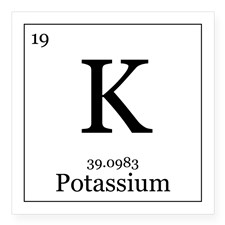
How many neutrons are in the atom "K"?
7
2
21
20

Beryllium has how many electrons?
4
9.0122
2
13.0122

What does the 1.00794 stand for?
Hydrogen
atomic number
atomic mass
atomic explosion

How many neutrons does Sodium have?
11
22
33
12
Two different elements can have the same number of protons
True
False
A positively charged particle located in the nucleus of an atom of Zinc is most likely _______
A Neutron
An Electron
A Proton
An element

In the picture, what is highlighted in orange?
Group
period
Metalloids
Electron
Which of the following is most likely to be a very reactive non metal.
Neon (Ne)
Carbon (C)
Helium (He)
Bromine (Br)
Which of these elements would be the least reactive?
Beryllium which is found in group 2
Chlorine which is found in group 17
Lithium which is found in group 1
Krypton which is found in group 18
Which of these elements would be the most reactive with water (explodes)?
Beryllium which is found in group 2
Gold which is in group 11
Lithium which is found in group 1
Krypton which is found in group 18
Nonmetals (select all that apply)
are found on the right side of the periodic table.
are found on the left side of the periodic table.
are good conductors of heat and electricity.
are brittle
can be solid, liquids, or gases at room temperature.

Part of the Periodic Table is shown.
Which element is most likely to be a gas that does not react with potassium?
A
B
C
D
The periodic table is organized randomly
True
False
Which of the following is a chemical property of water?
Reacts with pure sodium
Boils at 100 oC
Is liquid at room temperature
Has a density of 1 gm/mL
Which of the following is NOT an example of a chemical property?
flammability
oxidation
reactivity
color

Which of the following are accurate headings for each column?
Column A = Physical Properties; Column B = Chemical Properties
Column A = Chemical Properties; Column B = Physical Properties
Column A = Observable Properties; Column B = Non-Observable Properties
Column A = Non-Observable Properties; Column B = Observable Properties
If a substance has luster, it is ________
shiny/reflective
weak
dull
easily pulled into a wire
If a substance is ductile, it can be _______________.
very heavy for its size
easily breakable
used to insulate wires
rolled into thin wires

K and Na
K and Ca
K and Cl
K and S

Which of the following elements has properties of both metals and non metals?
Boron (B)
Aluminum (Al)
Lead (Pb)
Bismuth (Bi)
Solid metals; second most reactive of the metals; harder, denser, and melt at higher temperatures than Group 1
alkali metals
alkaline earth metals
halogens
noble gases
hydrogen
The family with the most reactive metals is the
transition metals
alkaline earth metals
alkali metals
lanthanide metals

What is one way Neutrons are different from electrons?
they both are negative
neutrons have no charge, while electrons have a negative charge
Both are in the nucleus( center of atom)
Electrons are inside nucleus and neutrons are outside the nucleus.



