Wayground logo

Free Printable Worksheets

Font size

S
M
L
XL
Worksheets

Tn Ready ( All Content) 2021

Total questions: 100

Worksheet time: 1hrs 9mins

Name
Class
Date
1.

Look at this picture of Argon off the periodic table. Which of the following is true for this element?

a)

18 protons

b)

40 protons

c)

22 protons

d)

21.9 protons

2.

Look at this picture of Argon off the periodic table. Which of the following is true for this element?

a)

18 neutrons

b)

40 neutrons

c)

22 neutrons

d)

21.9 neutrons

3.

Which part of an atom is used to identify it?

a)

number of protons

b)

number of neutrons

c)

number of electrons

4.

Which of the following is correct?

a)

Protons are positive, electrons are negative, neutrons are neutral.

b)

Protons are neutral, electrons are negative, neutrons are positive

c)

Protons are negative, electrons are positive, neutrons are neutral

d)

Protons are positive, electrons are neutral, neutrons are negative

5.

What two subatomic particles must be equal for an atom to have no charge (neutral).

a)

protons and neutrons

b)

protons and electrons

c)

electrons and neutrons

6.

Name the element

a)

Boron

b)

Carbon

c)

Nitrogen

d)

Oxygen

7.

How many neutrons does platinum have?

a)

78

b)

117

c)

195

d)

196

8.

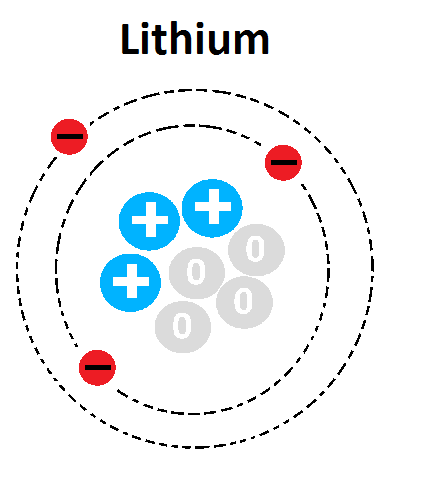
Identify #1

a)

proton

b)

neutron

c)

electron

d)

nucleus

9.

Identify #2

a)

proton

b)

neutron

c)

electron

d)

nucleus

10.

Identify #3

a)

proton

b)

neutron

c)

electron

d)

nucleus

11.
What is the mass number of this atom?
a)
1
b)
3
c)
4
d)
7
12.
How many valence electrons?
a)
2
b)
3
c)
5
d)
10
13.

Baking Cookies

a)

Physical Change

b)

Chemical Change

14.

Lighting a Match

a)

Physical Change

b)

Chemical Change

15.

Melting Ice Cream

a)

Physical Change

b)

Chemical Change

16.

Popping Popcorn

a)

Physical Change

b)

Chemical Change

17.

Blowing up a balloon

a)

Physical Change

b)

Chemical Change

18.

Cooking Pancakes

a)

Physical Change

b)

Chemical Change

19.

Crumpling Paper

a)

Physical Change

b)

Chemical Change

20.

Slicing Bread

a)

Physical Change

b)

Chemical Change

21.

Rusting Nail

a)

Physical Change

b)

Chemical Change

22.

Cutting a banana

a)

Physical Change

b)

Chemical Change

23.

Dying your hair blonde

a)

Physical Change

b)

Chemical Change

24.

Evaporating Water

a)

Physical Change

b)

Chemical Change

25.

Burnt toast

a)

Physical Change

b)

Chemical Change

26.
a copper penny turning greenish after a few years.
a)
Chemical Change
b)
Physical Change
27.
An instant ice pack getting cold when the chemicals are able to touch.
a)
Chemical Change
b)
Physical Change
28.

broken glass

a)

physical change

b)

chemical change

29.

Burning wood

a)

physical change

b)

chemical change

30.

Melting ice

a)

physical change

b)

chemical change

31.

Bending a metal rod

a)

Physical Change

b)

Chemical Change

32.

Adding baking soda to vinegar

a)

Physical Change

b)

Chemical Change

33.
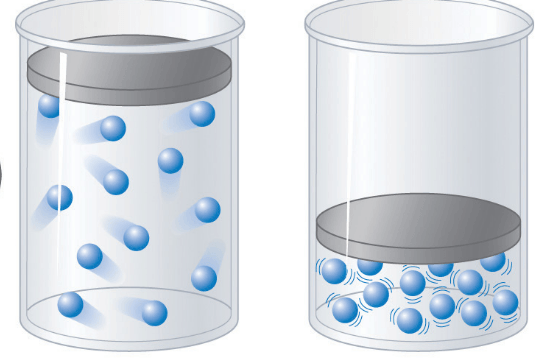
Which container will have a lower pressure?
a)
left
b)
right
c)
they both have the same pressure
d)
I don't know
34.
Gas Laws involve what three terms?
a)
Solid Liquid Gas 
b)
Speed Velocity Acceleration 
c)
Elements Compounds Mixtures 
d)
Pressure Temperature Volume 
35.

Which of these is NOT in Boyle's law (because it stays the same?)

a)

Pressure

b)

Volume

c)

Temperature

36.
When Pressure increases then the Volume must...
a)
Increase
b)
decrease
37.
Charles' Law States...
a)
As Pressure goes up volume goes down
b)
As Pressure goes up temperature goes up
c)
As Volume goes up temperature goes up 
d)
As Pressure goes down volume goes down 
38.

What Gas law does the graph show?

a)

Boyles'

b)

Charles'

c)

Combined Gas Law

39.
Which one of the following would you use to separate sand from iron filings?
a)
a bar magnet
b)
filter paper
c)
chromatography paper
d)
alum
40.
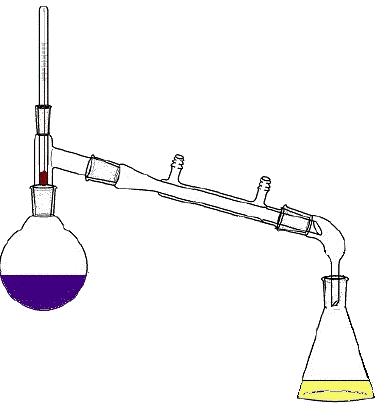
Which of the following pairs of substances may best be separated through distillation
a)
 sand and soil
b)
water and soil
c)
salt and sand
d)
 water and alcohol
41.

This diagram represents...

a)

An element

b)

A molecule

c)

A compound

d)

A mixture of elements and compounds

42.
a)
element
b)
compound
c)
mixture of elements
d)
mixture of compounds
43.
a)
element
b)
compound
c)
mixture of elements
d)
mixture of compounds
44.
a)
element
b)
compound
c)
mixture of elements
d)
mixture of compounds
45.
a)
element
b)
compound
c)
mixture of elements
d)
mixture of compounds and elements
46.
a)
element
b)
compound
c)
mixture of elements
d)
mixture of compounds
47.

Which substances, when mixed together, maintain their original physical properties?

a)

gravel and water

b)

wood chips, water and sand

c)

sand and water

d)

all of the above

48.

All of these can be separated easily EXCEPT -

a)

nuts, bolts, and screws

b)

powdered drink mix, sugar and water

c)

sand and water

d)

iron filings and sand

49.

What is a change in which a new substance is NOT formed?

a)

physical change

b)

chemical change

c)

color change

d)

physical property

50.

What is a combination of 2 or more substances that keep their identities?

a)

physical property

b)

mixture

c)

physical change

d)

chemical change

51.

Which is NOT an example of a physical change?

a)

tearing paper

b)

molding clay

c)

burning wood

d)

chopping wood

52.
What type of mixture is this?
a)
heterogeneous 
b)
homogeneous
53.

where are the metaloids found

a)

far left, vertical

b)

stair step/diagonal

c)

far right horizontal

d)

at the bottom

54.

A row on the Periodic Table of Elements

a)

family

b)

period

c)

row

d)

isotope

55.

Metals (select all that apply)

a)

are found on the right side of the periodic table.

b)

are found on the left side of the periodic table.

c)

are good conductors of heat and electricity.

d)

are brittle.

e)

are malleable and ductile.

56.

Nonmetals (select all that apply)

a)

are found on the right side of the periodic table.

b)

are found on the left side of the periodic table.

c)

are good conductors of heat and electricity.

d)

are brittle.

e)

can be solid, liquids, or gases at room temperature.

57.

Which element is found in group 2, period 6?

a)

Oxygen (O)

b)

Barium (Ba)

c)

Selenium (Se)

d)

Carbon (C)

58.

Elements that have the same number of energy levels are said to be in the same ______.

a)

group

b)

period

c)

family

d)

classification

59.
What is the atomic number of this element?
a)
4
b)
80
c)
79
d)
8
60.
What is the symbol for Carbon?
a)
C
b)
Ca
c)
Cl
d)
H
61.
Which one of these is not a noble gas?
a)
Helium
b)
Radon
c)
Iodine
d)
Krypton
62.
What is the atomic number of Oxygen?
a)
6
b)
7
c)
8
d)
9
63.
What two elements come together to make this substance in the picture?
a)
Oxygen and Carbon
b)
Sodium and Calcium
c)
Sodium and Chlorine
d)
Helium and Nitrogen
64.
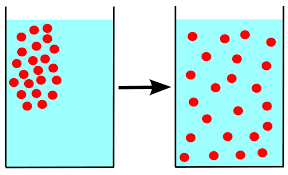
What is diffusion?
a)
when molecules move from a low concentration to a high concentration 
b)
when molecules move from a high concentration to a low concentration.
c)
no movement 
d)
molecules move everywhere
65.
The picture below is an example of _________________.
a)
osmosis
b)
isotonic
c)
diffusion
d)
active transport
66.
What is the definition of Osmosis?
a)
the movement of WATER molecules across the cell membrane.
b)
the state where molecules are equally concentrated (balanced) on both sides of the cell membrane.
c)
the process that brings LARGE particles INTO the cell through the cell membrane
d)
he movement of molecules across the cell membrane that REQUIRES ENERGY output from the cell
67.
Which of the following is the correct equation for PHOTOSYNTHESIS?
a)
CO2 + light + H2O --> O2 + Sugar
b)
CO2 + sugar + H2O --> O2 + light
c)
O2 + light + H2O --> CO2 + Sugar
d)
CO2 + O2 + H2O --> Light+ Sugar
68.
What process occurs when light energy is captured in autotrophs and converted into sugar?
a)
Photosynthesis
b)
Cellular Respiration
69.
What is the pigment in chloroplasts that performs photosynthesis?
a)
Methylene blue
b)
Chlorophyll
c)
Carotene
d)
Green
70.
What is photosynthesis?
a)
The process in which humans eat their food
b)
When a photographer takes a photo.
c)
To get your pictures from the photo lab.
d)
The process in which plants make their food.
71.
Which organelle from the plant cell is primarily responsible for converting sunlight to energy?
a)
Mitochonria
b)
Nucleus
c)
Vacuole
d)
Chloroplast
72.
Which organisms perform Photosynthesis?
a)
Only Autotrophs
b)
Only Heterotrophs
c)
Autotrophs and Heterotrophs
73.
What is produced as a result of photosynthesis?
a)
Glucose and Chlorophyll
b)
Glucose and Oxygen
c)
Water and Light energy
d)
Carbon dioxide and Water
74.
Cellular respiration takes place in the
a)
nucleus
b)
cytoplasm
c)
ribosomes
d)
mitochondria
75.
What are the products of photosynthesis?
a)
water and carbon dioxide
b)
oxygen and glucose
c)
oxygen and carbon dioxide
d)
oxygen and water
76.
This process releases chemical energy from sugars and other carbon-based molecules to make ATP when oxygen is present.
a)
Photosynthesis
b)
Osmosis
c)
Cellular respiration
d)
Diffusion
77.
What are the products of cellular respiration?
a)
Glucose and oxygen
b)
Carbon dioxide, water, and Energy
c)
Lactic acid
d)
Carbon monoxide
78.
What is the correct equation for cellular respiration?
a)
O2 + C6H12O6 -> CO2 + H2O + Energy
b)
O2 + C6H12O6 + Energy -> CO2 + H2O
c)
CO2 + H2O -> O2 + CH12O6 + Energy
d)
CO2 + H2O + Energy -> O2 + C6H12O6
79.
In which way are photosynthesis and cellular respiration different?
a)
Cellular respiration stores ATP, while photosynthesis releases ATP.
b)
Cellular respiration produces oxygen, while photosynthesis uses oxygen.
c)
Photosynthesis releases energy, while cellular respiration stores energy.
d)
Photosynthesis used carbon dioxide, while cellular respiration produces carbon dioxide.
80.
If there is a higher concentration of O2 in the lungs than in the blood stream. . .
a)
O2 will diffuse from the lung to the blood stream.
b)
O2 will diffuse from the blood stream to the lungs.
c)
 CO2 diffuse from the blood stream to the lungs
d)
Water will move by osmosis from the bloodstream to the lungs
81.
All of the following have a nucleus except...
a)
Bacteria
b)
Animalia
c)
Plantae
d)
Protista
82.

What kingdoms have organisms that are prokaryotic? (hint: 2 correct answers)

a)

animalia

b)

fungi

c)

eubacteria

d)

archeabacteria

83.
How many cells are found in Archaebacteria?
a)
Unicellular
b)
Multicellular
c)
Both
84.

A pine tree is a member of the kingdom

a)

Animalia

b)

Protista (Protists)

c)

Fungi

d)

Plantae (Plant)

85.
How many kingdoms are there?
a)
2
b)
3
c)
6
d)
8
86.
Which kingdom do humans belong to?
a)
Plantae
b)
Fungi
c)
Animalia
d)
Protista
87.
Examples are mushrooms and yeast
a)
Fungi
b)
Protista
Protista
c)
Plantae
d)
Animalia
88.
Archeabacteria...
a)
are eukaryotic
b)
live in extreme environments
c)
are non-living
d)
live in the soil
89.
Organisms that are classified as autotrophic are able to-
a)
be seen with the human eye
b)
move
c)
reproduce
d)
make their own food
90.
This domain is characterized by bacteria that can live in extreme environments, such as hot springs.
a)
Archaea
b)
Bacteria
c)
Eukarya
d)
Prokarya
91.

All of the following have a nucleus except...

a)

Bacteria

b)

Animalia

c)

Plantae (Plant)

d)

Protista (Protist)

92.
What does the word eukaryote mean?
a)
A cell with a nucleus
b)
A cell with DNA
c)
A cell with a cell membrane
d)
A cell without a nucleus
93.

All of the following have a nucleus except...

a)

Bacteria

b)

Animalia

c)

Plantae (Plant)

d)

Protista (Protist)

94.

What kingdom has organisms that feed off dead or decaying organisms?

a)

Plantae (Plant)

b)

Fungi

c)

Protista (Protist)

d)

Archaebacteria

95.

Which kingdom is known as the "odds and ends" kingdom?

a)

Animalia

b)

Plantae (Plant)

c)

Protista (Protist)

d)

Fungi

96.

Which 2 kingdoms has organisms that are all multicellular and eukaryotes?

a)

Animal and Plant

b)

Fungi and Animal

c)

Eubacteria and Plant

d)

Fungi and Plant

97.
How many parents does asexual reproduction involve?
a)
one 
b)
two
c)
three
d)
four
98.
The offspring from asexually reproduced organisms are?
a)
Different than their parents
b)
Identical to parents
c)
Like a combination from both parents
d)
A different species
99.
If two organisms reproduce sexually, then their offspring will exhibit a genetic makeup that is -
a)
identical to only one parent
b)
identical to all of its siblings
c)
a unique combination of traits
d)
the recessive traits of each parent
100.
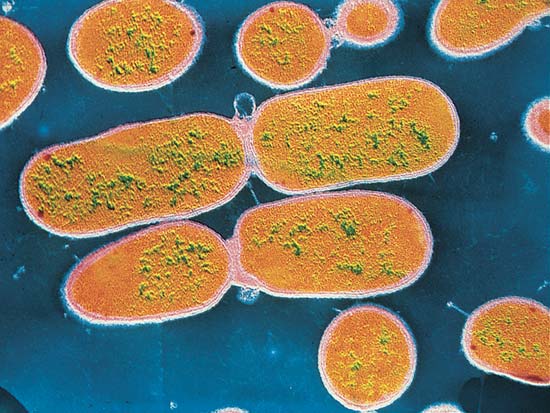
Prokaryotes (bacteria) reproduce asexually via -
a)
spore formation
b)
bud creation
c)
vegetative propagation
d)
binary fission