
 Worksheets
Levels of Life
Total questions: 25
Worksheet time: 15mins
Name
Class
Date
1.
The ___________ is the basic unit of life
a)
organ
b)
cell
c)
atom
d)
tissue
2.
A group of tissues that perform a similar function is called_____. (Examples include the heart, lungs or stomach)
a)
cells
b)
tissues
c)
organs
d)
organ system
3.
When many organ systems work together it can form...
a)
organ
b)
cells
c)
organ system
d)
organism
4.
What is the correct order of organization
a)
tissues-cells-organs-organ systems-organism
b)
cell-tissue-organs-organ systems-organism
c)
organism-cells-tissues-organ systems-organism
d)
tissues-cells-organs-organ sytems-organism
5.
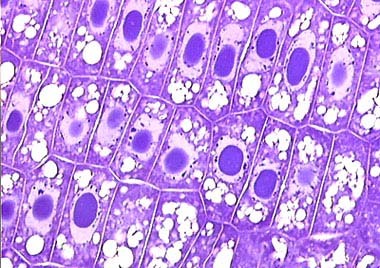
This is a example of ........
a)
cell
b)
tissue
c)
organ
d)
organ system
6.
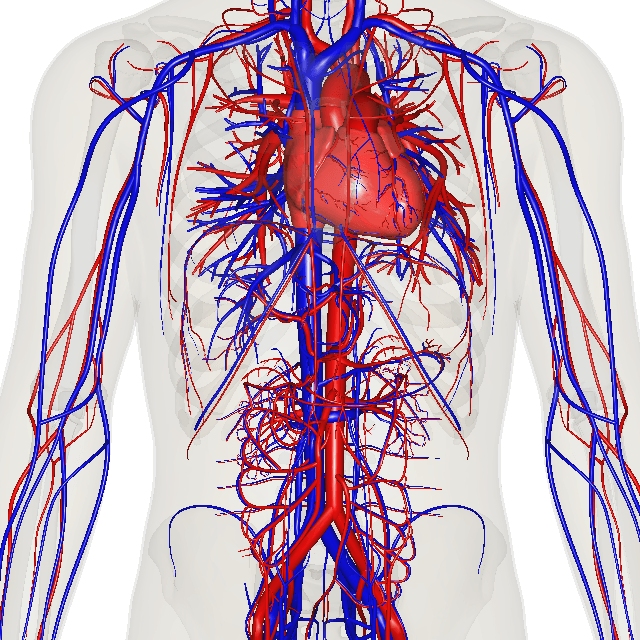
This is a example of ........
a)
organ
b)
organ system
c)
tissue
d)
cell
7.
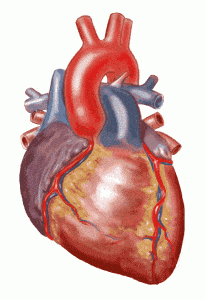
This is a example of ........
a)
cell
b)
organ system
c)
organ
d)
tissue
8.
A group of similar cells that come together to perform a specific function is a/an
a)
organ
b)
organism
c)
organ system
d)
tissue
9.
What is the difference between cells in a multicellular organism and a unicellular organism?
a)
The cells in a unicellular organism are dependent on each other.
b)
The cells in a multicellular organism are dependent on each other.
c)
The cells in a multicellular organism are not alive
10.
unicellular organisms can live independent from each other
a)
true
b)
false
11.

What part is missing in the hierarchy?
a)
cell
b)
organ
c)
tissue
d)
organism
12.

Which level of organization in the human body does the diagram best represent?
a)
cell
b)
tissue
c)
organ system
d)
atom
13.
Composed of cells from the same origin. Examples are connective, muscle, epithelial, and nerve.
a)
Cell
b)
Tissue
c)
Organ System
d)
Molecules
14.
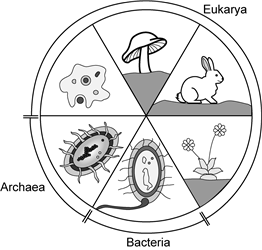
The taxonomic levels represented in this picture are the three —
a)
classes, the lowest levels of organization, and their associated phyla.
b)
kingdoms, the broadest levels of organization, and their associated phyla.
c)
domains, the broadest levels of organization, and their associated kingdoms.
d)
orders, the lowest levels of organization, and their associated domains.
15.
Which level of organization is the most complex?
a)
organism
b)
population
c)
community
d)
ecosystem
16.
Multiple organisms of the same species describes a
a)
organism
b)
population
c)
community
d)
ecosystem
17.
Which is an example of an organism?
a)
a beetle
b)
a lake
c)
a rock
d)
a shell
18.
Which of the following is an example of an organism?
a)
Human
b)
Apple tree
c)
Yeast
d)
All of these
19.
A neuron is an example of a(n) _________.
a)
Organism
b)
Organ
c)
Organ system
d)
Cell
20.
Which of the following is an example of an organ system?
a)
Nervous sytem
b)
Computer system
c)
Intelligence system
d)
Healthcare system
21.
A peach tree is an example of a(n) __________.
a)
Organ
b)
Organ system
c)
Tissue
d)
Organism
22.
Which of the following is NOT an example of a human organ system?
a)
Integumentary system
b)
Lymphatic system
c)
Endocrine system
d)
Hand system
23.
The brain, spinal cord, and nerves are organs that work together to form a/an -
a)
Cell
b)
Tissue
c)
Organ
d)
Organ system
24.
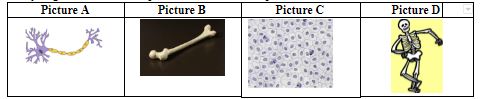
Which picture represents an organ?
a)
A
b)
B
c)
C
d)
D
25.
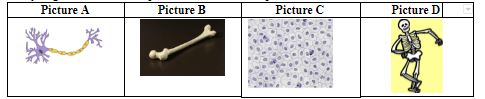
A group of organs that works together to perform a similar function represents which picture?
a)
A
b)
B
c)
C
d)
D
100 %

