
 Worksheets
Cells/Biochemistry
Total questions: 20
Worksheet time: 21mins
Name
Class
Date
1.
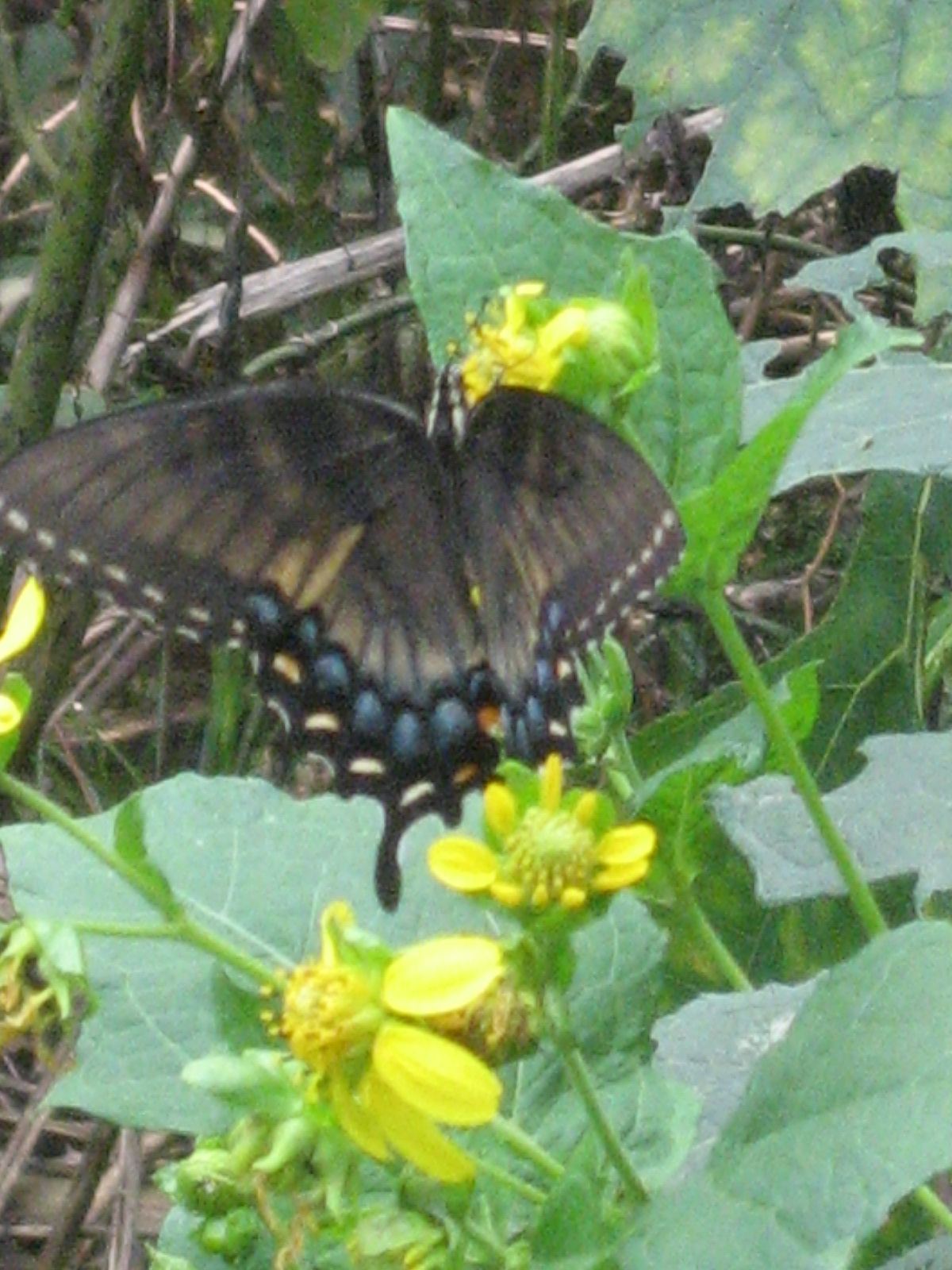
The 8 levels of classification, most broad to most specific.
a)
Domain, Genus, Family, Order, Class, Phylum, Kingdom, Species
b)
Domain, Species, Kingdom, Genus, Phylum, Family, Class, Order
c)
Domain, Kingdom, Phylum, Class, Order, Family, Genus, Species
d)
Order, Kingdom, Species, Domain, Phylum, Family, Class, Genus
2.
Cells that do not have a true nucleus are called....
a)
eukaryote
b)
prokaryote
c)
unicellular
d)
multicellular
3.
Cells that have a true nucleus are called....
a)
eukaryotes
b)
prokaryotes
c)
unicellular
d)
multicellular
4.
The science of describing, classifying, and naming living things is called:
a)
Geology
b)
Biology
c)
Taxonomy
d)
Chemistry
5.

An illustration and a dichotomous key are given. What is the correct classification for this organism?
a)
Class Insecta
b)
Order Amblygygi
c)
Order Araneae
d)
Order Scorpiones
6.
What are the two types of cells?
a)
Prokaryotic & Eukaryotic
b)
Bacteria & Eukaryotic
c)
Eukaryotic
d)
Animal & Plant
7.
Which of the following does a plant cell ONLY have?
a)
Vacuole
b)
Chloroplast
c)
Centrosome
d)
Nucleus
8.
Which organelle is responsible for the removal of waste and foreign particles?
a)
Plasma Membrane
b)
Lysosomes
c)
Peroxisomes
d)
Mitochondrion
9.
What is a unique characteristic of the plasma (cell) membrane?
a)
Semipermeable
b)
Rigid
c)
Jelly-like
d)
Orange
10.
Which biomolecule has sugars and starches?
a)
Lipids
b)
Proteins
c)
Carbohydrates
d)
Nucleic Acid
11.
Which biomolecule functions include enzymes which speeds the rate of chemical reactions, structural components in cells, mechanical functions in muscles and cytoskeleton, cell signaling, and immune response; provides structure and helps with chemical reactions
a)
Protein
b)
Lipids
c)
Carbohydrate
d)
Nucleic Acid
12.
Which biomolecule is important source of energy for humans; glucose for human cells, tissues, and organs; provides fiber, sugar, and starches; provides structural support, cell wall, and cell membrane maker?
a)
Nucleic Acid
b)
Lipid
c)
Carbohydrate
d)
Protein
13.
What is a substance called if it speeds up a chemical reaction?
a)
reusable
b)
catalyst
c)
specific
d)
fragile
14.
Each enzyme only has 1 substrate that will fit its active site. What is this called?
a)
reusablility
b)
denaturation
c)
specificity
d)
fragility
15.
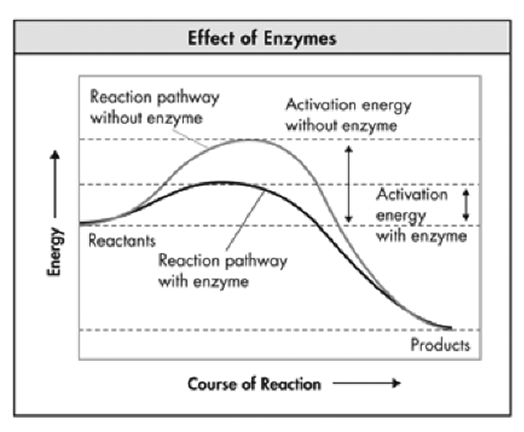
The graph shows how enzymes affect reactions in cells. Which statement best summarizes the information shown in the graph?
a)
Enzymes increase the energy of the reactants.
b)
Enzymes decrease the energy level of the products.
c)
Enzyme decrease the activation energy of the reaction.
d)
Enzymes reverse the direction of the reaction.
16.
A phospholipid has 2 parts. What are they called?
a)
Hydrophilic Head, Hydrophobic Tail
b)
Hydrophobic Head, Hydrophilic Tail
17.
"Water Loving"
a)
Hydrophobic
b)
Hydrophilic
c)
Hydroelectric
d)
Hydroloric
18.
___________ have 2 functions in the cell membrane.
1.) They act like gatekeepers, only let certain things in.
2.) Enzyme receptors embedded in the membrane.
1.) They act like gatekeepers, only let certain things in.
2.) Enzyme receptors embedded in the membrane.
a)
Carbohydrates
b)
Proteins
c)
Phospholipids
d)
Cholesterol
19.
Controls the passage of materials inside and outside of the cell.
a)
Cell Membrane
b)
Lipid Cleric Layer
c)
Membrane Gate
d)
Protein Receptors
20.
Something is ___________ ____________
when some molecules can cross the membrane while others cannot.
when some molecules can cross the membrane while others cannot.
a)
Selectively (or Semi) Permeable
b)
Totally Transparent
c)
Liquid Licorice
d)
Heavily Patrolled
100 %

