
 Worksheets
Revision final Tuesday
Total questions: 40
Worksheet time: 22mins
Which of the following is a non-flowering plants and has chlorophyll?
Fern
Paddy plant
Mushroom
Mould

Which of the following is the characteristic for the organism shown above?
Make their own food
cause disease
do not have chlorophyll
can only be seen under an electron microscope
Which of the following characteristics is common to parrots, toads and lizards?
They lay eggs
They are warm-blooded
Thay can only live on land
They have scales on their bodies
________________ plants are simple and small plants without a vascular system. _______________ plants have a vascular system within them that transport water and food throughout the plant. These plants also have true roots, stems and leaves.
Vascular ; Non-vascular
Non-vascular ; Vascular

Homeothermic = (a) -blooded
Frog group of (a)

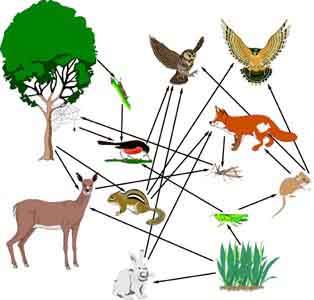
Grass is a (a) because it can produce its own food.

Benedict test is used to test the presence of (a) .
rickets is caused by the deficiency of (a) .
Fat is completely digested in the (a)


Starch solution and glucose solution were placed in two different visking tube. Then both visking tubes were immersed into a distilled water. What is the end results of the experiment?
Only starch present in the distilled water
Only glucose present in the distilled water
Both starch and glucose leave the visking tube into the distilled water
Both starch and glucose did not leave the visking tube into the distilled water
Which of the food classes help in defecation and prevent constipation?
Fibre
Protein
Vitamin K
Carbohydrates
The following information about the steps taken in a food test.
1. Mix ethanol and oil in a test tube
2. Add distilled water into the mixture
3. Shake the mixture and leave it for 2 minutes
4. Observe the changes in the mixture
What is the food test?
Benedict's test
Millon's test
Iodine's test
Emulsion test
The lining of the small intestine is folded which
Increases surface area of the small intestine
Allows for slower passage of food molecules into the small intestine.
Allows for more nutrient absorption.
All of the above
If high amount of glucose is present, Benedict's solution turns from blue to
yellow
green
orange/red
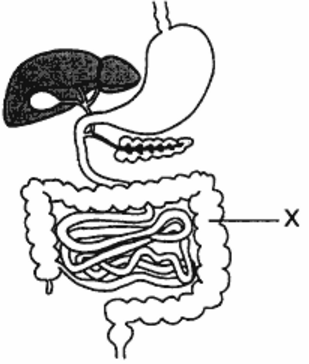
Which of the following is the organ that involved in human defecation process?


" The organisms that can cause disease' is called _______
bacteria
pathogen
probiotic
biosome
Infectious disease are spread by (i)__________ , transmitted by infected person called (ii) ______________.
pathogens, vector
vector, pathogens
pathogen, host
host, medium
"Cholera, Typhoid, Amoebic dysentery"
is the common disease that transmitted through _____
air
touch
vector
water


Which of the following is disease that is not infectious?
Tinea
Tuberculosis
Dengue fever
cancer
Which of the following is a substance usually prepared from killed or weaken pathogens?
White blood cells
Antibodies
Lymph
Vaccines

This graph refer to
Passive natural immunity
Passive artificial immunity
Active natural immunity
Active artificial immunity

This graph refer to
Passive natural immunity
Passive artificial immunity
Active natural immunity
Active artificial immunity

The following skin disease can be prevented by...
Share and exchange cloth among friends
practice proper hygiene like showering.
eat and maintain proper and balance food.
consume imbalance diet

Animal that transmit pathogen from one host to another is called __________
species
vector
predator
prey

This graph shows a passive immunity type ....
Natural
Artificial
Preservative
Antiaging
It is an effort to stimulate the body defence against infection and needed by babies children and adults.
This statement refers to ...
Immunisation
Vaccination
Columnisation
Phagocytation
Ability of our body to fight phatogen.
This statement refers to
Immunisation
Immunity
Immune system
Immusegregation
A balanced diet is when the food eaten provide the ____(a)_____ amount of ____(b)______ needed by our body for healthy ______(c)_______ and developement.
(a) accurate , (b) nutrients, (c) growth
(a) correct , (b) dietary fibre , (c) diet
(a) correct , (b) nutrients, (c) diet
(a) correct , (b) nutrients, (c) growth

Which of the following statements is true?
A balanced diet should not include anything sweet.
Pasta and vegetables are enough to provide a balanced diet.
A balanced diet must include carbohydrates, fats, proteins, minerals, vitamins, water and fibre.
A balanced diet should not include any fats.

