
 Worksheets
Evolution
Total questions: 35
Worksheet time: 37mins

Which of the following is the best definition for evolution?
the process which organisms die
the process which organisms change over time
the process which organisms that are extinct become revived
the process which non-living things fossilize

The solidified remains or imprint of an organism are called what?
fossils
homologous structures
adaptations
genetic similarities

What type of evidence is represented in the picture?
fossils
genetic similarities (DNA)
homologous structures

What type of evidence is shown in the image?
fossils
genetic similarities (DNA)
homologous structures

Which of the following best describes adaptations?
genetic mutations that have gone resulted in a disorder or problem
physical or behavioral characteristics that help an organisms survive and reproduce
physical or behavioral characteristics that do not help or harm the organism in any way

The similarities of the bones in the diagram provide evidence of what?
the organisms shown lived in the same environment
the organisms shown may have developed from a common ancestor
the organisms shown have the same genetic diseases
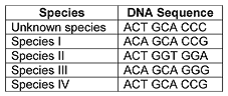
According to this data, the unknown bacterial species is most closely related to---
Species I
Species II
Species III
Species IV

The diagram shows fossils in different rock layers. Which of these statements about the age of these fossils is most likely correct?
fossil A and C are the same age
fossil B is older than fossil C
fossils A is older than fossil B
fossil D is older than fossil C

What process is being shown in this image?
variation
natural selection
selective breeding
extinction
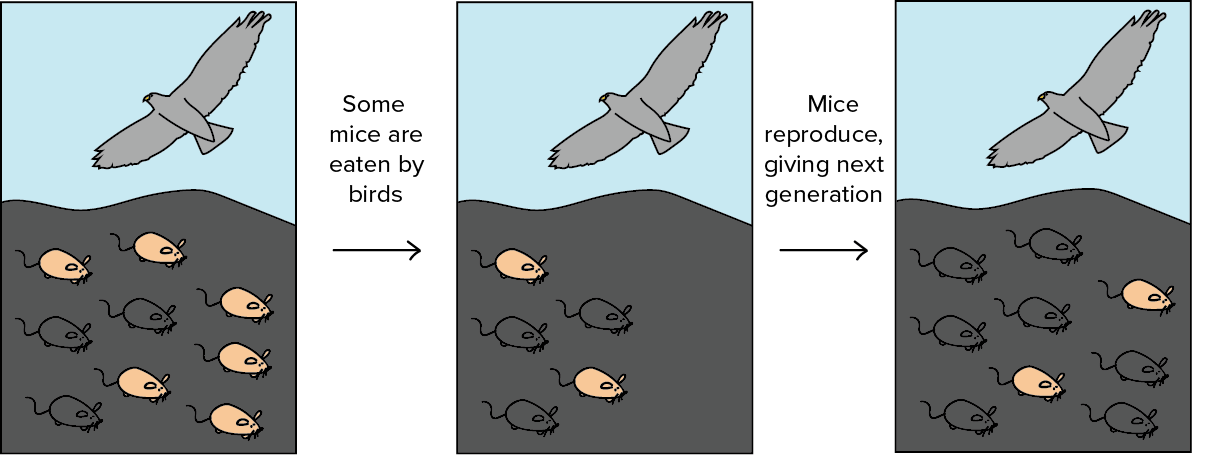
Why is the mouse population changing over time?
the light mice can reproduce more successfully than the dark mice
the hawks eat more dark mice than light mice because the dark mice taste better
the hawks eat more light mice than dark mice because they can see the light mice more easily
the hawks eat more dark mice than light mice because they can see the dark mice more easily

Which scientist is known for his work that he did on the Galapagos Islands to develop his theory of evolution through natural selection?
Gregor Mendel
Charles Darwin
Anton Van Leewenhoek
Robert Hooke

Variation, overproduction, survival of the fittest, and adaptation are the 4 parts of which theory?
natural selection
fossil record theory
homologous structures
behavioral adaptation

Which of the following is true about the picture?
Camels are highly adapted to cold climates.
Camels are well adapted to survive in very wet climates.
Camels have directly evolved from whales.
A camels fat storage, long large intestine, long eyelashes and wide feet allow it to be very adapted to the desert.

Darwin wrote that organisms with traits that are best suited to the environment will ________________
survive and be more likely to reproduce and increase in number
decrease in numbers and become extinct

Which species’ DNA is most similar to the DNA of the toothed whale?
hippopotamus
baleen whale
hoofed grazing mammals
camels and llamas

The environment around Manchester, England, changed during the Industrial Revolution. How did this change affect peppered moths living in the area?
Natural selection favored moths with dark wings because predators could not see them on the soot-colored trees.
Natural selection favored moths with white wings that were easy for predators to see.
Natural selection favored moths with white wings because predators could not see them on the soot-colored trees.
Which of the following terms means when all of the organisms of a species die off?
adaption
extinction
fossilization
mutation

What do you call a characteristic that allows an organism to survive in an environment?
variation
adaptation
extinction
overproduction

Hibernation is an example of which type of adaptation?
behavioral
structural

Beak shape, camouflage, and webbed feet are all examples of which type of adaptation?
behavioral
structural

Scientists have collected millions of fossils of different organisms, and have developed a timeline of how life on earth has changed. This evidence is known as what?
genetic similarities
natural selection
homologous structures
fossil record

Gigantopithecus were very large primates that lived 500,000 years ago. Since none of these mammals are still today, they are said to be --
extinct
mutated
endangered
limiting factors
What most likely caused the finches on the Galapagos Islands to have beaks that were different from the finches on the mainland?
There were different types of predators on the island.
There were different types of food available on the island.
The finches had no water to drink.
There were different climates on the islands.
When looking at two birds of the same species, you notice that one has darker feathers than the other one. You also notice that one has a beak that is just a little longer. These slight differences within members of the same species are called --
fossils
extinctions
homologous structures
variations

In the graph shown, how many species of lizards seem to have beneficial adaptations?
1
2
3
4
Mistakes or changes that occur in the DNA sequence are called what?
adatations
homologous structures
mutations
natural selections

This picture is a model for what process?
DNA structure of the horse
evolution of the horse
extinction of the horse
fossilization of the horse
Which adaptation would be most helpful in a desert environment?
white fur
claws for burrowing
grean and black camouflage
flippers
Which would NOT be considered a fossil?
bones buried deep in the earth
footprints harened in mud or rocks
imprints left in rocks
stories passed down from generation to generation
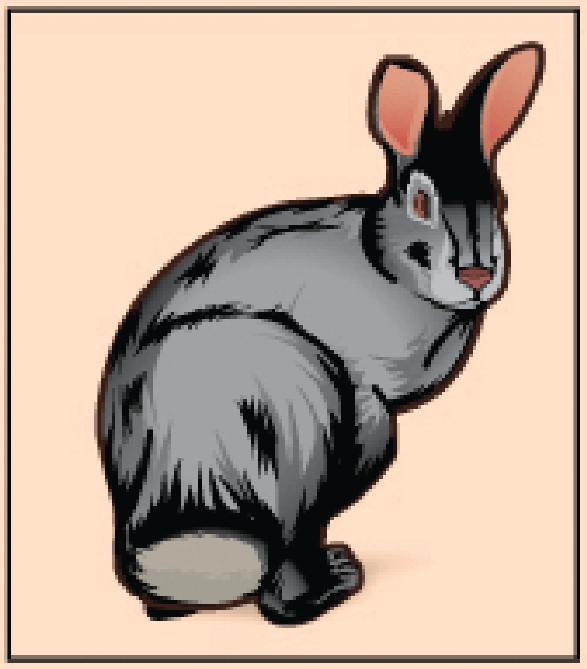
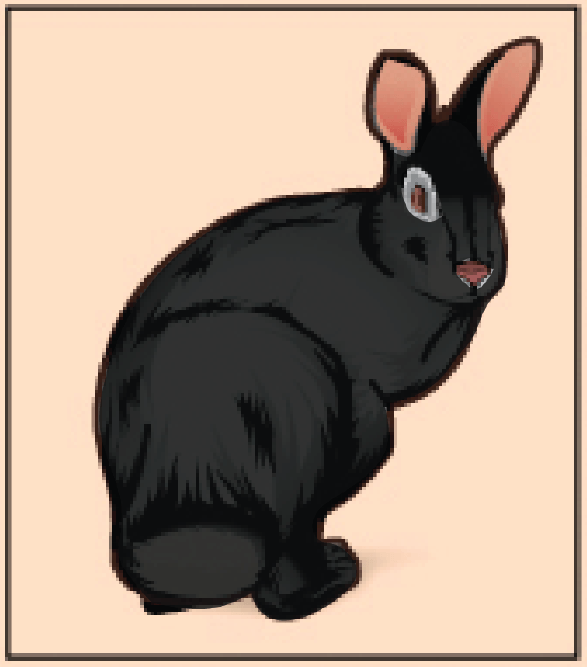
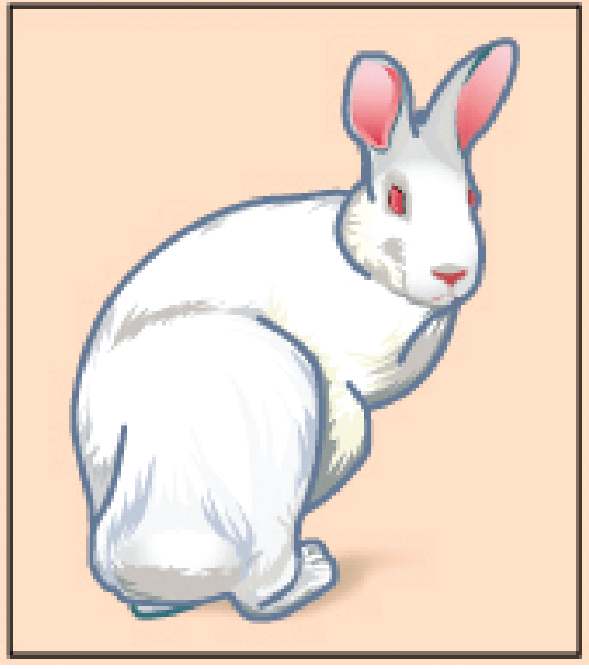
Which of these will be more successful in a cold region with NO snow?

Humans, birds, whales, and lizards all have similar arm bones. What is the reason for this?
the function of these bones is the same in all animals
they live in similar environments
they have a common ancestor
all organisms resemble humans

Which word means to adjust to a changing environment?
mutation
adaptation
extinction
This is the trace or remains of an organism that lived long ago, most commonly preserved in sedimentary rock.
homologous structure
extinction
evidence
fossil
What is another name for natural selection? (It is one of the key parts of the theory.)
survival of the smartest
survival of the fastest
survival of the biggest
survival of the fittest
Surviving and reproducing show that an organism ---
is adapting
is mutating
is forming fossils
is going extinct

