
 Worksheets
East Asia to West Africa Review
Total questions: 53
Worksheet time: 29mins
Why did so many people turn to Buddhism in the Period of Disunion?
Buddhist temples offered food to anyone willing to convert to the religion.
The kingdom’s leaders forced people to convert to Buddhism.
Buddhism offered people a strong education for their children.
They took comfort in the Buddhist teaching that people can escape suffering.

Why do historians view the Tang dynasty as the golden age of Chinese civilization?
Tang dynasty leaders lived in palaces made of solid gold.
It was located between the gold mines in the south and valuable
salt resources in the north.
Artisans during the Tang dynasty learned to work with gold in
new and exciting ways.
It was a period of great expansion as well as artistic, legal, and cultural achievements.
Which of the following is an invention from the Tang Dynasty?
Woodblock Printing
Wheel
Paper Money
Irrigation system
What invention from the Song Dynasty helped spread literacy and sped up the printing process?
Book Binding
Moveable Type
Woodblock Printing
Celadon

What was the major trade route from China to Europe and Africa called?
Silk Road
Porcelain Path
Riches Route
None of the above
______ organized the Mongols into a powerful army and conquered Northern China.
Kublai Khan
Genghis Khan
Empress Wu
Zhu Yuanzhang
Zheng He
Genghis Khan
Kublai Khan
Zhu Yuanzhang
Series of waterways used for trade that connected Northern and Southern China
The Panama Canal
The Great Canal of China
The Grand Canal
The Mongolian Canal
A famous European traveler who went to China and traveled on the Silk Road?
George Washington
Kublai Khan
Genghis Khan
Marco Polo
Zheng He contributed to the prosperity of China under the Ming dynasty by?
Defeating the Manchu invaders
Constructing the Great Wall along the northern frontier
Expanding trade with nations of Asia and Africa
Establishing colonies in Korea and Japan
How did the Heian period of Japanese history lead to the eventual creation of a Japanese nation?
it established a major capital city and a royal court
it developed a strict policy of isolationism
it funded expeditions of North America
it adapted European traditions and culture
Which two Chinese ideas spread to Japan?
Confucianism
Written language
Iron Tools
Buddhism
Which Chinese dynasty re-built much of the Great Wall that still stands today?
Han
Ming
Tang
Qin
Song
Does Shintoism have a holy book?
The 5 Pillars
The Qur’an
The Holy Bible
Shintoism doesn’t have a holy book
3. The Samurai could best be described as ______________________.
common people
government administrators
rulers
warriors

During the Period of Disunion, what happened when different cultures came into contact with each other?
There was cultural warfare that lasted until one culture was destroyed.
The cultures argued until one culture agreed to adopt all aspects of the other culture.
The cultures blended to form a new culture.
The cultures remained distinct, with very little mixing of people.
How did the Byzantine Empire have a lasting influence on European culture?
It preserved Greek and Roman cultures during the Middle Ages.
It ended the growing conflict between Europe and the Middle East.
It unified the languages of Europe into one common dialect.
It supported the Germanic invaders that destroyed the Roman Empire.
Why did Justinian create the Justinian Code?
To develop a written set of laws in the Byzantine Empire
To ensure peace with the Germanic kingdoms
To expand the powers of the Catholic Church
To establish a trade relationship with Egypt
How did the rule of Justinian I impact the Byzantine Empire?
It caused unrest and sparked a civil war.
It brought the Germanic tribes into the empire.
It decreased the influence of Christianity.
It led to an era of growth and prosperity.
What was the significance of the city of Constantinople to the Roman Empire after 300 CE?
It was the only Islamic city of the Roman Empire.
It was destroyed by Germanic invaders.
It was controlled by African traders.
It was the capital of the Roman Empire.
Why did the Roman Empire relocate it capital to Constantinople?
to increase the influence of Islam in the Roman Empire
to make peace with the leaders of the Germanic invaders
to weaken the government of the Roman Empire
to protect the Roman government from Germanic invasions
Which of the following BEST describes the city of Constantinople?
Built by the Muslims, poor economy, quickly was abandoned for a new capital
Easy to attack and defeat, along a missionary route, united under one culture
Easy to defend, multicultural, along trade routes
Large city, large army present, accepted no outsiders
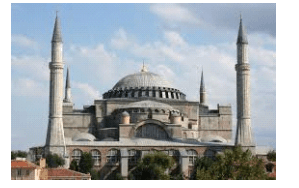
Five Holy Books
The Five Caliphs
Five Pillars of Islam
Five Commandments
This language was used for the spread of Islam and trade throughout the Middle East. The language itself was spread further alongside religion and trade goods.
Arabic
Italian
Hebrew
Latin
Which factor is most responsible for unifying Southwest Asia and North Africa as a cultural region?
Theocratic governments
Islamic religion
Persian language
Similar architecture
What city did the Ottoman Empire conquer in 1453 putting an end to the Byzantium Empire?
Rome
Constantinople
Athens
Vienna
Who is the known as the Conqueror because he took over Constantinople.
Suleyman I
Ossman the Great
Ottoman III
Mehmed II
Suleiman was known to westerners as the Magnificent, but to many others he was known as the
Gravedigger
Enlightened
Law-bringer
Peace Maker
Under Suleiman
the Ottoman Empire collapsed
the Ottomans conquered all of Europe
Christians and Jews were forced to convert to Islam
the Ottoman Empire reached its cultural peak or golden age
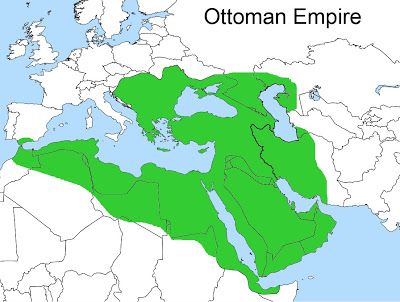
Which continents did the Ottoman Empire have some control over? Click all that apply.
Europe
Asia
Africa
North America
South America
Muslims contributed to Science by ________
creating chemistry
building hospitals
using calligraphy
writing literature
Which of the following was a Muslim contribution to math?
geometry
calculus
algebra
statistics
Africans felt as though __________ held spiritual powers.
specific dances
lineage
gold
masks
Why were the roles of griots and storytellers important in African civilizations?
They established democratic traditions.
They increased trade throughout the region.
They preserved African history and culture.
They spread Islam into the region.
Aside from preserving food, why was salt one of the world’s principal trading commodities in the Middle Ages?
It was a precious mineral in short supply.
It was used to make bland food taste better.
It was used to make bland food taste better.
It was used to as an early form of gun powder.
What is one thing the African kingdoms of Ghana, Mali, and Songhai have in common?
They were all ruled by the same king.
They were all a collection of city-states.
The were all from Southern Africa.
They were all from Western Africa.
Why did West African gold and salt trade depend on various modes of transportation such as camels, boats, and donkeys?
The governments of West Africa each named different modes of transportation as official.
The large trade network occupied different climates and geographies that suited different modes of transportation.
The trade network connected many different cultures that all used the mode of transportation with which they were most comfortable.
The neighboring kingdoms gave gifts of different inventions and animals in exchange for a portion of the gold and salt trades.
Which two (2) of the following became cultural and economic centers of West Africa?
Alexandria
Babylon
Jenne
Beijing
Timbuktu
The kingdoms of Mali and Songhai both depended on the trade of what goods?
gold and salt
lumber and spices
silk and porcelain
tobacco and rice
What religion was widely practiced in the ancient Ghana Empire before the spread of Islam?
Animism
Christianity
Judaism
Zoroastrianism
Why did Mansa Musa journey to Mecca?
to solidify trade relations
to complete a religious pilgrimage
to conquer new lands
to develop new technologies
How did the establishment of long-distance trade routes across Africa influence the culture of West African trading states?
Trade was used to introduce the caste system to the region.
Trade brought diseases to the region, killing large portions of the population.
Trade destroyed local economies and kingdoms.
Trade brought new ideas to the region and connected it to Europe.
Which of the following are beliefs that were a part of some indigenous African religions?
Monotheism
Ancestor Worship
Animism
Pilgrimage
Dieties
How did Mansa Musa impact religion in West Africa?
He went of a pilgrimage to Mecca and spread the Islamic faith on his journey
He spread traditional African Beliefs through storytelling
He brought Christianity into West Africa
None of the above

