
 Worksheets
Lewis Structures, VSEPR, Polarity and IMFs
Total questions: 40
Worksheet time: 2hrs 0mins


Which image could be a representation of NH3?
A
B
C

Which of the following is the correct Lewis structure for a molecule of fluorine?
A
B
C
D
In HCN (Carbon is usually the central atom) what kind of bond is between the C and N
Single
Double
Triple

Model the Lewis Structure for ClO4- where the central atom obeys the octet rule. How many unshared pairs, single bonds and double bonds are on the central atom?
1, 3, 0
1, 1, 1
0, 4, 0
0, 0, 2
2, 2, 0
Model the Lewis Structure for SF2 where the central atom obeys the octet rule. How many unshared pairs, single bonds and double bonds are on the central atom?
1, 3, 0
1, 1, 1
0, 4, 0
0, 0, 2
2, 2, 0
Model the Lewis Structure for NH4+ where the central atom obeys the octet rule. How many unshared pairs, single bonds and double bonds are on the central atom?
1, 3, 0
1, 1, 1
0, 4, 0
0, 0, 2
2, 2, 0
Model the Lewis Structure for ClF3 where the central atom has an expanded octet. How many unshared pairs, single bonds and double bonds are on the central atom?
1, 3, 0
1, 1, 1
0, 4, 0
0, 0, 2
2, 3, 0
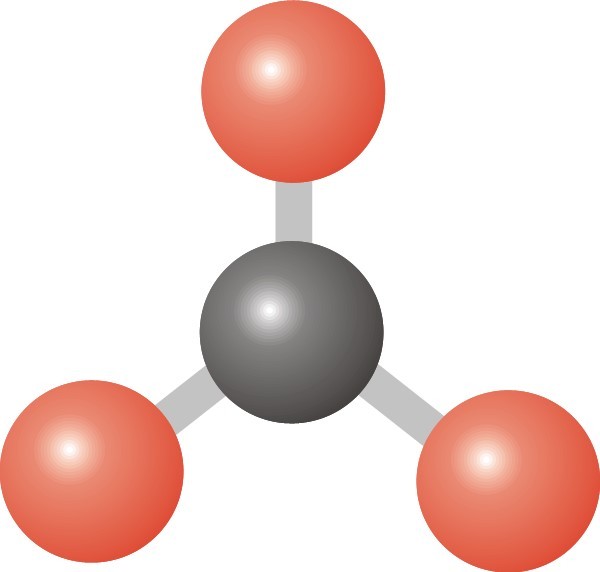
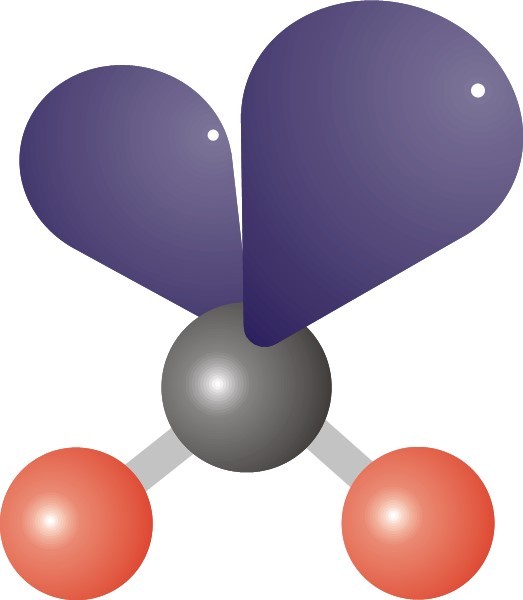

Is this molecule polar?
Yes
No
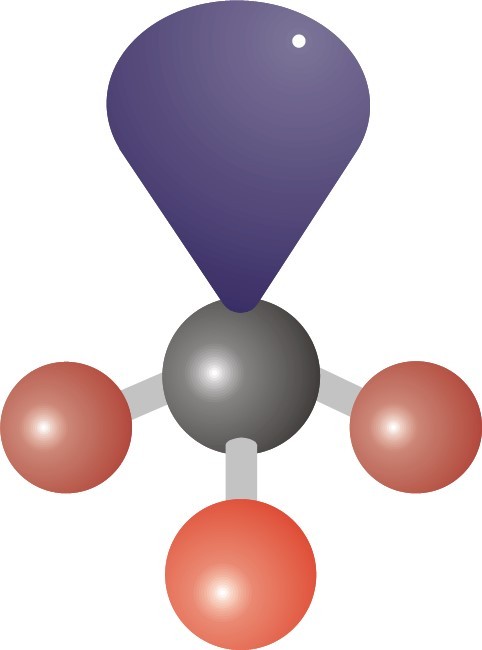
Is this molecule polar?
Yes
No
Choose the correct molecular shape for SO3.
trigonal planar
trigonal pyramidal
bent
tetrahedral
What molecular geometry would PBr3 have?
trigonal pyramidal
trigonal planar
tetrahedral
linear
Choose the correct molecular shape for NH4+.
trigonal planar
trigonal pyramidal
bent
tetrahedral
A diatomic molecule like O2 is always _____ because electrons are shared _____
nonpolar; unequally
polar; equally
nonpolar; equally
polar; unequally

Is this molecule polar or non-polar?
Polar
Non-polar

Is this molecule polar or non-polar?
Polar
Non-polar

Is this molecule polar or non-polar?
Polar
Non-polar

Is this molecule polar or non-polar?
Non-polar
Polar
yes
no

Intermolecular forces for: CO2
Dispersion Force
Dipole dipole
Hydrogen bonding
covalent bond
London forces
hydrogen bond
dipole-dipole attraction
Intermolecular forces depend on the size of the charge
true
false

In a water molecule, the bond between the hydrogen and the oxygen is best described as
a hydrogen bond
an intermolecular bond
an ionic bond
a covalent bond
Does NH3 or PH3 have a higher boiling point?
NH3 because it has the strongest intermolecular forces
PH3 because it has the strongest intermolecular forces
NH3 because it has the weakest intermolecular forces
PH3 because it has the weakest intermolecular forces
In general, substances with stronger intermolecular forces have ________ boiling points than those with weaker forces
Higher
Lower
Forces and boiling point are not related
Which statement explains why Br2 is a liquid at STP and I2 is a solid at STP?
Molecules of Br2 are polar, and molecules of I2 are nonpolar
Molecules of Br2 are nonpolar, and molecules of I2 are polar
Molecules of Br2 have stronger intermolecular forces than molecules of I2.
Molecules of I2 have stronger intermolecular forces than molecules of Br2.

