wayground logo

Free Printable Worksheets

Font size

S
M
L
XL
Worksheets

MCAS Review 5th

Total questions: 48

Worksheet time: 48mins

Name
Class
Date
1.
A teacher places four small cubes on a table in front of a science class. Each cube is the same size and painted the same color. However, each cube is made of a different material: copper, iron, wood, or plastic. Which of the following tools would most help the students identify the cube made of iron?
a)
hot plate
b)
bar magnet
c)
metric ruler
d)
magnifying glass
2.
What form of energy makes a compass needle point north?
a)
electrical
b)
heat
c)
light
d)
magnetic
3.
Which of the following is an example of a form of energy?
a)
the air in a sealed jar
b)
the wire in a metal hanger
c)
the water in a small puddle
d)
the sound in a loud classroom
4.
A student freezes some orange juice. Which of the following statements best describes how the orange juice is different after it is frozen?
a)
It is a liquid.
b)
It weighs more.
c)
It stays in one shape.
d)
It takes up less space.
5.
Which of the following best explains why electrical wires are usually covered with plastic or rubber?
a)
to insulate the electrical wire
b)
to keep the electrical wire warm
c)
to make the electrical wire stronger
d)
to make the electrical wire more flexible
6.
Jose has two bar magnets. He pushes the ends of the two magnets together and then he lets go. The magnets move quickly apart. Which of the following statements best explains why this happens?
a)
The north poles of the two magnets are facing each other.
b)
One magnet is a north pole and one magnet is a south pole.
c)
The ends of magnets repel each other but the centers attract.
d)
One magnet is storing energy and one magnet is releasing energy.
7.
A student hears the sound of a bell. Which of the following carries the sound of the bell to the student?
a)
electrical currents
b)
magnetic signals
c)
radio waves
d)
vibrating air
8.
Which of the following changes is caused by removing heat?
a)
A solid changes to a gas.
b)
A liquid changes to a gas.
c)
A solid changes to a liquid.
d)
A liquid changes to a solid.
9.
Heat, light, and sound are all different forms of
a)
fuel
b)
energy
c)
matter 
d)
electricity
10.

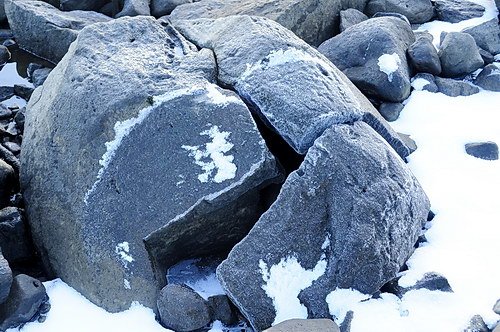
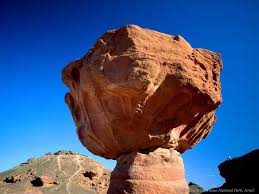
Pick and example of PHYSICAL weathering:

a)

Frost wedging

b)

Acid rain

c)

Oxidation

d)

Carbonic acid

11.

Which event breaks rocks down into smaller pieces?

a)

Sedimentation

b)

Deposition

c)

Weathering

d)

Erosion

12.

In what way are weathering and erosion the same?

a)

Both move sediment from one place to another.

b)

Both break down rocks into smaller pieces

c)

Both change the Earth's surface

d)

Both leave sediment in new places

13.

How do the processes of weathering and deposition differ?

a)

Weathering breaks down rocks and deposition leaves them in new places

b)

Weathering has to do with air and deposition has to do with plants

c)

Weathering occurs only in summer and deposition occurs year-round

d)

Weathering can be chemical or physical and deposition is only chemical

14.

Which of these is the BEST example of physical weathering?

a)

Sediment piling up at the mouth of a river

b)

Plant roots growing through concrete and splitting it

c)

Waves carrying sand away from a beach

d)

Small rocks being carried along a river bed

15.

Which would be the BEST example of deposition?

a)

Sediment piling up at the mouth of a river

b)

Plant roots growing through concrete and splitting it

c)

Waves carrying sand away from a beach

d)

A large rock splitting into pieces because of ice

16.

An avalanche is an example of which process?

a)

Weathering

b)

Erosion

17.
How does freezing water cause the weathering of rocks?  The freezing water—
a)
keeps the rocks in place.
b)
makes the rocks last longer.
c)
expands cracks and breaks rocks.
d)
causes rocks to fall in landslides.
18.
The process that breaks down rocks and other materials on Earth's surface is called
a)
Weathering
b)
Erosion
19.
A cliff formed near the ocean.  Which statement best describes how this cliff formed?
a)
Warm air melted the rock.
b)
Sun rays evaporated the rock.
c)
Ocean waves washed away rock.
d)
Plant roots pushed away the rock.
20.

The process by which water, ice, wind, or gravity moves weathered rock and soil from one place to another.

a)

Weathering

b)

Erosion

21.

Which of these is an example of erosion?

a)

Light shining onto a mountain.

b)

Rain breaking down rocks on a mountain into smaller pieces.

c)

Wind blowing away bits of dirt to a new place on the mountain.

d)

All of the above.

22.
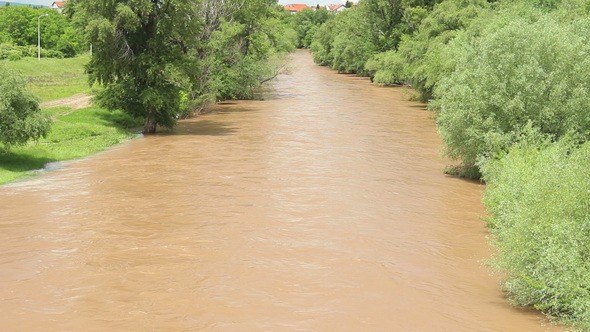
Muddy water being carried away by a fast-moving river is an example of
a)
Weathering
b)
Erosion
c)
A mess
d)
A nice place to swim
23.
What is an enormous mass of ice moving over land, causing weathering of rock and soil?
a)
A glacier
b)
An iceberg
c)
An ice wedge
d)
A sand dune
24.
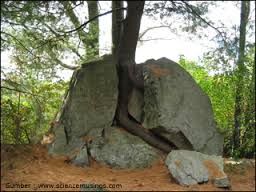
How do plants weather rocks?
a)
Plants don't weather rocks.
b)
When roots grow into cracks of rocks and expand the rock breaks.
c)
When the plant moves water from the roots to the leaves, the rock breaks.
25.
Wind blowing sand from one location to another is called
a)
Weathering
b)
Erosion
26.
A mudslide flowing down a steep hill is called?
a)
Weathering
b)
Erosion
27.
The process of slowly breaking rocks into smaller pieces is called
a)
weathering
b)
erosion
28.
Flood water pounding against a canyon wall and wearing it down
a)
Weathering
b)
Erosion
29.

Earthquake is the sudden shaking of Earth.

a)

True

b)

False

30.

Strong earthquakes can ruin tall buildings and destroy roads and houses.

a)

True

b)

False

31.

A Tsunami is caused due to

a)

Undersea Earthquake

b)

Lightning

c)

Heavy thunder

32.

The movement of the earth’s plates causes

a)

cyclones

b)

earthquakes

c)

thunderstorms

33.

Choose one option which is not a cuase for the earthquake

a)

Volcanic eruption

b)

Tectonic plate movement

c)

Tsunami

34.

Where is the largest abundance of US Volcanoes located?

a)

Alaska

b)

Hawaii

c)

California

d)

Washington

35.

What percentage of Earth's volcanoes are found in the Ring of Fire?

a)

10%

b)

25%

c)

50%

d)

75%

36.

What is the most dangerous geological hazard common around the Ring of Fire?

a)

Earthquakes

b)

Mudslides

c)

Volcanic Eruptions

d)

Tsunamis

37.

Around what body of water will you find the region known as the Ring of Fire?

a)

Atlantic Ocean

b)

Indian Ocean

c)

Arctic Ocean

d)

Pacific Ocean

38.

The current explanation for the geologic processes behind the Ring of Fire is that large pieces of the Earth's surface, called plates, are moving around. What is the name for the field of study which investigates this motion?

a)

Terrology

b)

Plate tectonics

c)

Oceanography

d)

Crust kinematics

39.

Share with others.

a)

brainstorm

b)

communicate results

c)

plan/create

d)

evaluate

e)

state the problem/challenge

40.

The thing you want to work on.

a)

brainstorm

b)

communicate results

c)

plan/create

d)

evaluate

e)

state the problem/challenge

41.

A series of steps used to guide people as they develop new solutions, products, or processes.

a)

design

b)

engineering

c)

engineering design process

d)

technology

42.

Select all the words that mean the same thing as "requirements".

a)

criterion

b)

constraints

c)

restrictions

43.

Select all the words that mean the same as "parameters".

a)

requirements

b)

criterion

c)

constraints

44.

A preliminary model of something from which other forms are developed or copied.

a)

design

b)

invention

c)

prototype

d)

technology

45.

When you are gathering information for the Engineering Design Process you are ____________.

a)

doing research

b)

building a prototype

c)

designing a solution

d)

testing a solution

46.

After planning a solution, the next step is to __________.

a)

build a prototype

b)

improve

c)

ask questions

d)

test and evaluate

47.

After testing and evaluating your prototype design you would __________.

a)

imagine and plan

b)

improve the design

c)

build a prototype

d)

test and evaluate

48.

Which word best describes a prototype?

a)

model

b)

problem

c)

step

d)

solution