
Font size
 Worksheets
The Amazing Brain
Total questions: 12
Worksheet time: 7mins

Which Lobe? It plays a large role in your behavior and personality.
Frontal
Parietal
Temporal
Occipital

Which Lobe? It's responsible for sensing touch, spatial processing (being able to tell where objects are in space), language, and memory.
Frontal
Parietal
Temporal
Occipital

Which Lobe? It's responsible for vision and is involved in some forms of visual, short-term memory.
Frontal
Parietal
Temporal
Occipital
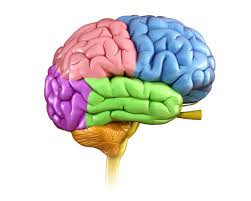
What lobe is green in this picture? It's responsible for processing smell and sound, as well as the ability to recognize and understand words and language.
Frontal
Parietal
Temporal
Occipital

What structure is GREY in this picture?
Cerebrum
Cerebellum
Brainstem
Pons

What is this? Its job is to coordinate and regulate muscular activity.
Cerebrum
Cerebellum
Brain Stem
Temporal Lobe
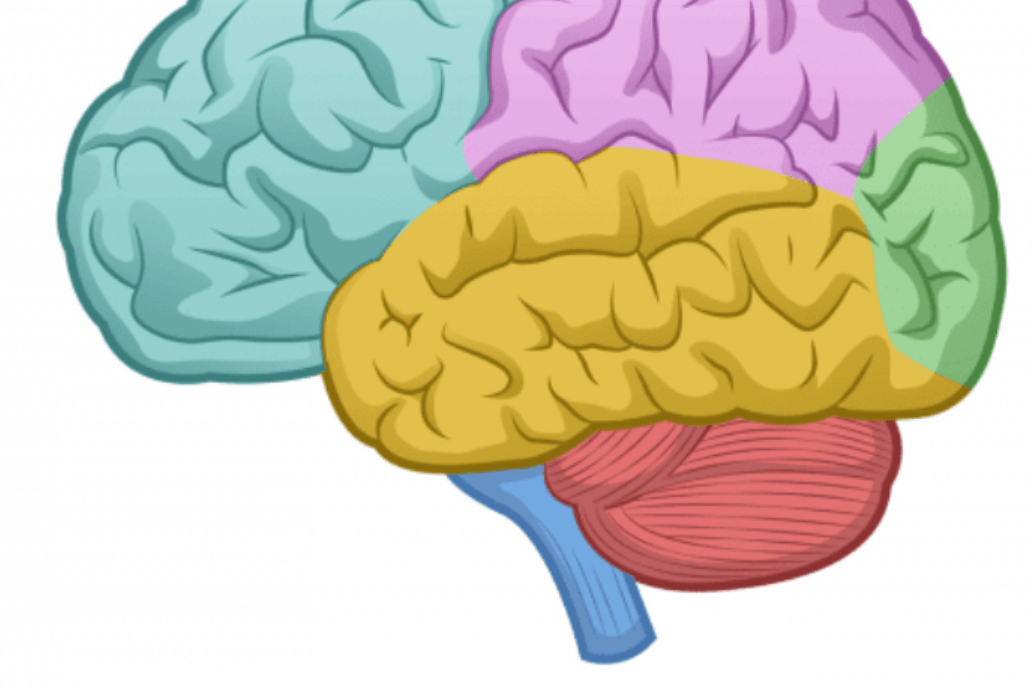
What structure is blue at the bottom of this picture? It connects your brain to your spinal cord.
Cerebrum
Cerebellum
Brain Stem
A broad band of nerves that connects the left and right hemispheres of the cerebrum. Without it, the two halves of the brain wouldn't be able to communicate.
Thalamus
Hypothalamus
Corpus Callosum
Olfactory Bulbs
A small, interior part of the brain that relays sensory information and acts as a center for pain perception.
Thalamus
Hypothalamus
Corpus Callosum
Olfactory Bulbs
What are the three major parts of your brain? Choose all that apply.
Cerebrum
Nerves
Brain Stem
Spinal Cord
Cerebellum

A neurologist has information that leads her to suspect that a patient has a brain tumor. What test should she order to confirm the diagnosis?
A brain scan such as a CT scan or MRI
A spinal tap to collect cerebrospinal fluid (CSF)
Electromyography (EMG) tests
Nerve conduction velocity tests

