
NEW
Font size
 Worksheets
Cardiovascular System Quiz #2
Total questions: 17
Worksheet time: 9mins
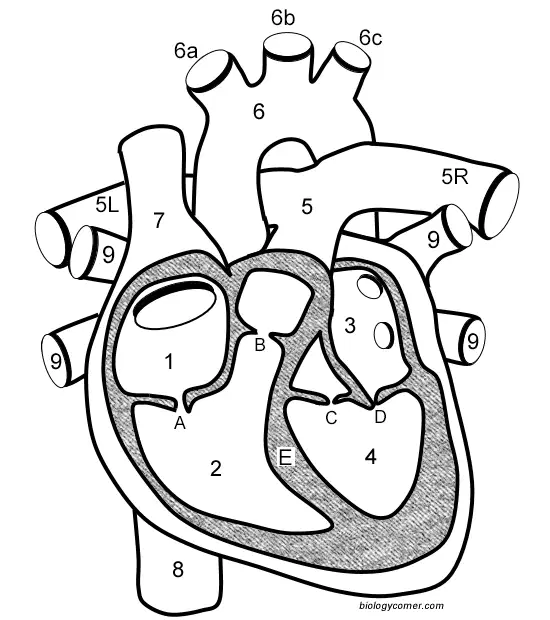
located between the atria and the ventricles of the heart (A & D in diagram)
atrioventricular valves
semilunar valves
chordae tendinae
sinoatrial node
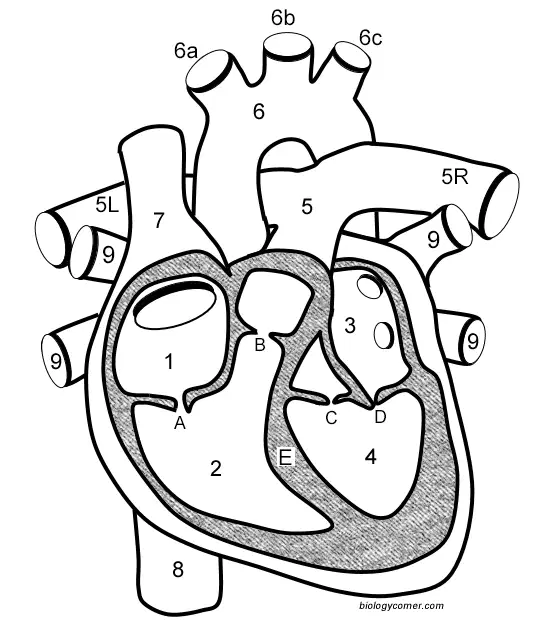
located between the left atrium and left ventricle (D in the diagram)
bicuspid valve
tricuspid valve
pulmonary semilunar valve
aortic semilunar valve
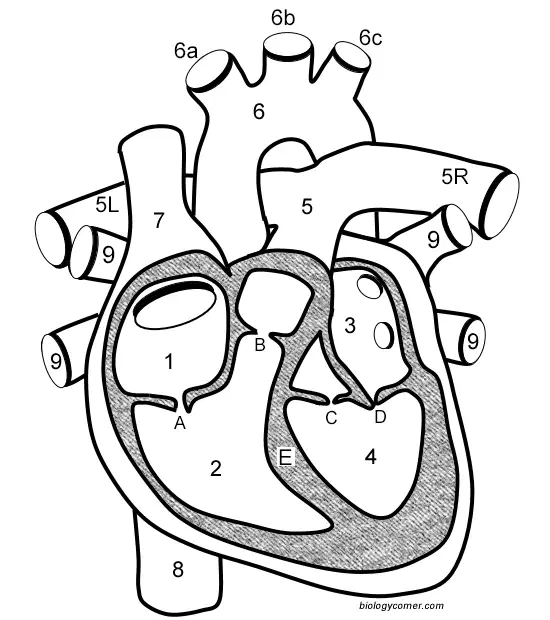
located between the right atrium and right ventricle (A in diagram)
tricuspid valve
bicuspid valve
aortic semilunar valve
pulmonary semilunar valve

prevent valves from everting and allowing blood to flow backward
chordae tendinae
sinoatrial node
atrioventricular node
bundle of His
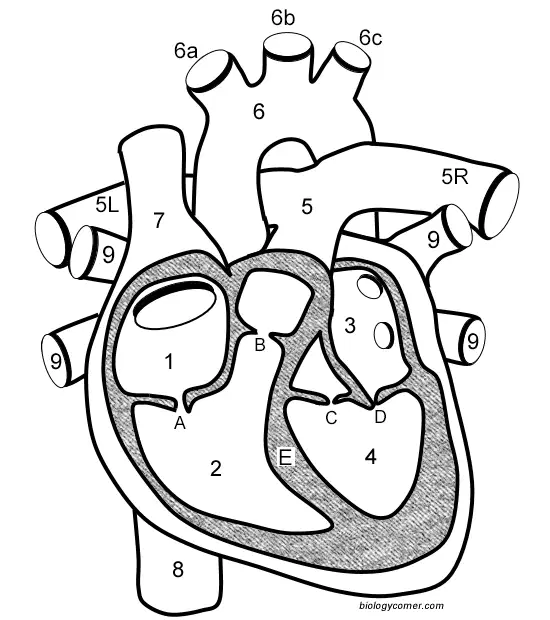
found at the base of the aorta and the pulmonary artery; prevent blood from flowing back into the ventricles (B & C in diagram)
semilunar valves
bicuspid valve
tricuspid valve
chordae tendinae

inflammation caused by repeated bacterial infections of the heart muscle
endocarditis
ischemia
tachycardia
pulmonary edema

vessels branching from the base of the aorta that serve to supply oxygen to the heart
coronary arteries
cardiac veins
bundle branches
pulmonary arteries
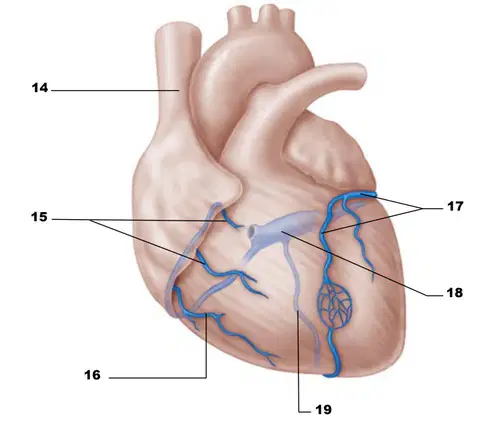
drain the myocardium from oxygen-depleted blood
cardiac veins
coronary arteries
pulmonary veins
pulmonary arteries
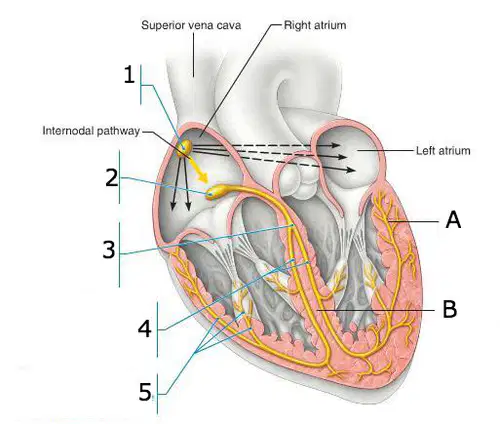
One of the most important parts of the intrinsic conduction system of the heart; located in the right atrium (#1 in diagram)
sinoatrial node
atrioventricular node
bundle of His
bundle branches
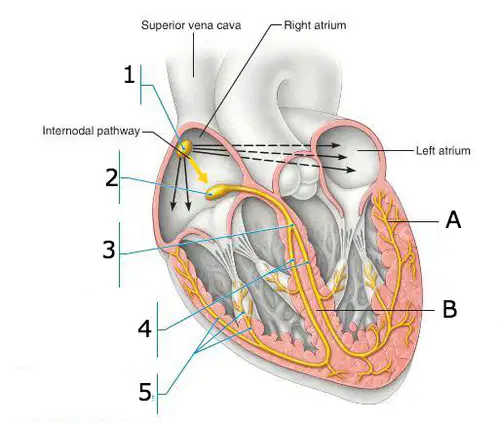
part of the intrinsic conduction system located between the atria and the ventricles (#2 in diagram)
atrioventricular node
sinoatrial node
bundle of His
bundle branches
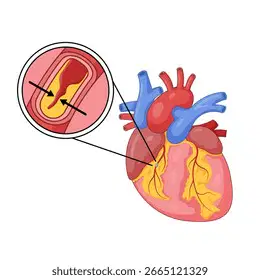
lack of adequate blood supply to the heart muscle
ischemia
fibrillation
tachycardia
bradycardia
a rapid, uncoordinated shuddering of the heart muscle
fibrillation
ischemia
tachycardia
bradycardia
rapid heart rate (over 100 bpm)
tachycardia
bradycardia
ischemia
fibrillation
sustained heartrate below 60 bpm
bradycardia
tachycardia
fibrillation
ischemia
contraction of the heart muscle
systole
diastole
heart rate
stroke volume
relaxation of the heart muscle``
diastole
systole
cardiac output
stroke volume
the amount of blood pumped out by each side of the heart in one minute
stroke volume
cardiac output
heart rate
pulmonary edema

