

wayground logo

Free Printable Worksheets

NEW

Font size

S
M
L
XL
Worksheets

Unit 7 Review #1

Total questions: 22

Worksheet time: 16mins

Name
Class
Date
1.

The formation of a new species is called

a)

Natural selection

b)

Struggle for existence

c)

Speciation

d)

Darwinism

2.

Which of the following is NOT a source of genetic diversity?

a)

mutation

b)

sexual reproduction

c)

mitosis

3.

The salamander has all these derived characteristics EXCEPT...

a)

claws or nails

b)

lungs

c)

jaws

4.

Which animals have amniotic eggs?

a)

Turtle and Tuna

b)

Turtle and Leopard

c)

Lancelet and Lamprey

5.

Individuals that are well adapted to their environment will survive and produce _________

a)

more offspring

b)

better traits

c)

stronger genes

6.

You look at two species and see very similar DNA. What does this likely tell you?

a)

These are the same animal.

b)

These animals are not likely related.

c)

These animals have a common ancestor.

7.

An inherited characteristic that increases an organisms ability to survive and reproduce in its specific environment is called a(n)

a)

vestigial structure

b)

analogous structure

c)

adaptation

8.

What is the common ancestor of Letters A, B, C, D, E?

a)

1

b)

2

c)

3

9.

_________________ is an evolutionary tree is a branching diagram or "tree" showing the inferred evolutionary relationships among various biological species or other entities.

a)

Line graph

b)

Cladistics

c)

Phylogenetic tree

10.

What number is the common ancestor of C and D

a)

1

b)

2

c)

3

d)

4

11.
Structures that are inherited from a common ancestor are homologous.
a)
True
b)
False
12.

Whales have pelvic bones. What type of structure does this best represent?

a)

Homologous structure

b)

Analogous structure

c)

Vestigial structure

d)

None of the above

13.
Which of the following is a term for a group of similar organisms that can reproduce fertile offspring?
a)
individual
b)
population
c)
species
d)
fossil
14.
Extinction can occur because of which of the following?
a)
All can be causes of extinction.
b)
Increased competition with other species
c)
New predators within the environment
d)
Loss of habitat and/or catastrophes
15.
The law of superposition states
a)
the oldest rock layer is on the top, the younger rock layer is on the bottom
b)
rock layers are always in sequence from oldest to youngest
c)
the youngest rock layer is on the bottom and the oldest is on the top
d)
the oldest layer is on the bottom and the youngest is on the top when it is undisturbed
16.
Dolphins have the same arm structure as wolfs, what type of evidence for evolution does this represent?
a)
DNA
b)
vestigial structures
c)
homologous structures
d)
embryology
17.
The climate of a certain area is cold, and snow is found on the ground most of the year. Equal numbers of two populations of rabbits are introduced into this climate by a group of scientists. One of the populations is brown and the other is white. Predict what will happen over several generations.
a)
There will be equal numbers of brown and white rabbits
b)
There will be more brown rabbits that white rabbits
c)
There will be more white rabbits than brown rabbits
d)
There is no way to predict what will happen to the rabbit population
18.

Which of these animals does not have/produce an amniotic egg?

a)

Turtle

b)

Leopard

c)

Lamprey

d)

All three of these animals produce the amniotic egg
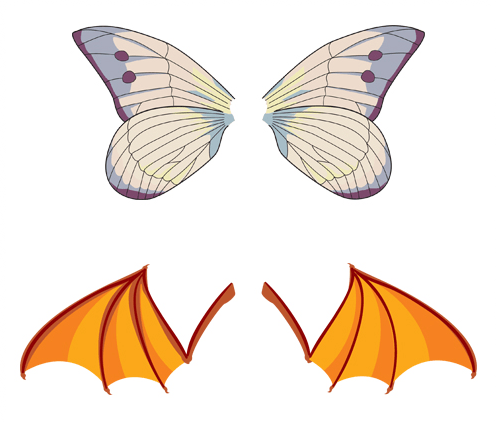
19.
Structures that are inherited from a common ancestor are homologous.
a)
True
b)
False
20.
Humans, birds, whales, and lizards all have similar arm bones. What is the reason for this?
a)
The function of these bones is the same in all animals
b)
They live in similar environments
c)
They have a common ancestor
d)
All organisms resemble humans
21.
Analogous structures show common ancestry.
a)
True
b)
False
22.
How would you describe this evolution?
a)
Homologous structure
b)
Analogous structure
c)
Structural adaption
d)
Functional adaption
