
 Worksheets
Intro to Econ
Total questions: 38
Worksheet time: 27mins
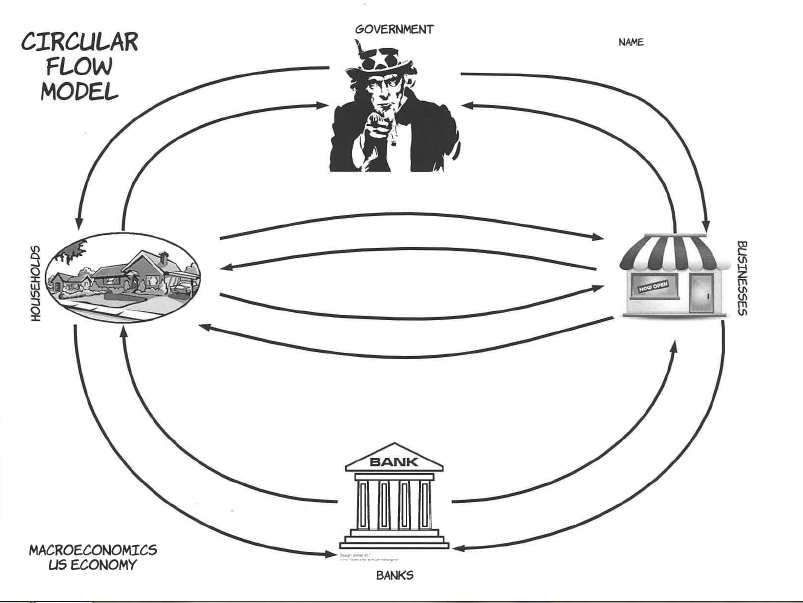

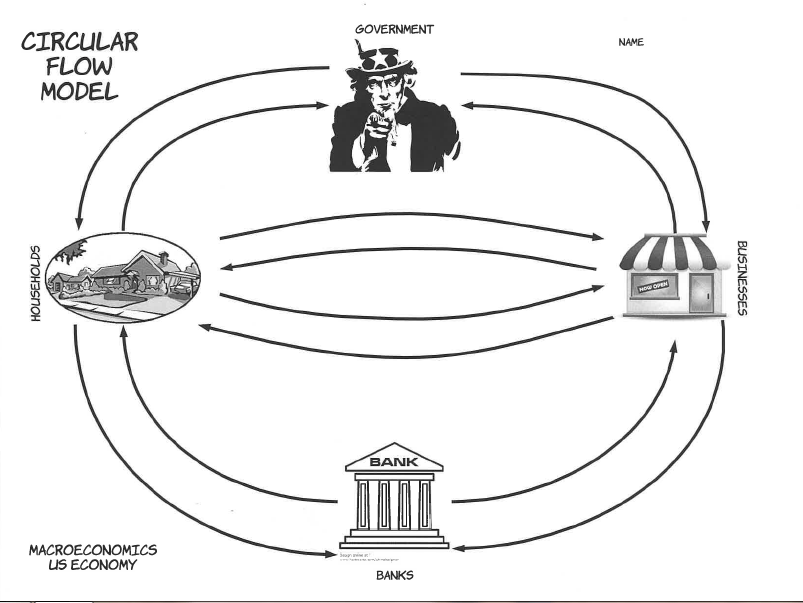

When individuals work for businesses, what resource are they providing?
Capital
Labor
Loans
Raw materials
What are the four main parts of the circular flow diagram?
Product Market, Stock Market, Factor Market, Fish Market
Product Market, House Market, Factor Market, Good Market
Factor Market, Product Market, Households, Firms
Factor Market, households, Stock Market, super market
What is opportunity cost?
the value of the next best option that is not selected when a choice is made.
there is not enough of it.
things people make to earn money.
actions people do to earn money.
Andrea has planned a trip to the beach for her family on Labor Day. Her daughter has been invited to the mountains by a friend. Her daughter decides to go to the beach. What is her opportunity cost?
a trip to the beach
a trip to the mountains
A firm operating at 'X' produces 70 whips and 60 saddles. It changes production to 'Y' producing 20 whips and 90 saddles. The opportunity cost of this production change is
20 whips
30 saddles
50 whips
60 saddles
The production possibility curve shows
alternative combinations of two goods that an economy is capable of producing.
the actual levels of production of two goods that the economy is achieving.
alternative combinations of productive resources that can be used to produce two goods.
the total value of two goods produced in one time period.
If an economy is producing at a point inside its production possibility curve, then
consumption is greater than production.
productive resources are not used to their full potential.
production of capital goods is inadequate.
it cannot benefit by specialisation and trade.
Alex is studying for his math quiz, but his favorite TV show just started. If he studies for the quiz, he will miss out on watching the show. Alex decides not to watch the show and continue studying for the quiz. What is the opportunity cost of his decision?
studying for a quiz
watching TV
eating dinner
taking a nap
Amber was shopping at the mall. She had $80 to spend. She found three items she liked: $75 for a pair of shoes, $70 for a jacket, and $62 for a dress. After shopping for a couple hours, she decided to borrow a pair of shoes from her cousin and to buy the jacket for $70. What was her opportunity cost?
Shoes
Jacket
Dress
Purse
How much of something that is available is ______________.
Ration
Demand
Money
Supply
There are 18 students that want to use blue poster board for their project, but there are only 6 pieces of blue poster board available. We could state that there is a _____________ for blue poster board.
supply
demand
benefit
need
The total utility definition states:
The usefulness, benefit or satisfaction a consumer gains from consuming a product.
The satisfaction gained from consuming a quantity of an economic good, measured in utils.
The added consumer satisfaction from consuming a quantity of a good.
The consumer's satisfaction from consuming a quantity of a good.

You made a good decision if:
Marginal cost is greater then marginal benefit
Marginal cost is less than marginal benefit
Marginal benefit is greater then marginal cost
Marginal benefit is less then marginal cost
What best reflects the goal of a consumer?
To acquire the largest possible quantity of goods.
To acquire the largest possible variety of goods.
To maximize utility.
To save money.


Capital refers to...
The "gifts of nature" or natural resources not created by human effort.
people with all their efforts and abilities
the tools, equipment, and factories used in production of goods and services
individuals who start a new business or bring a product to market.

Entrepreneurs are...
people with all their efforts and abilities
individuals who start a new business or bring a product to market.
The "gifts of nature" or natural resources not created by human effort.
the tools, equipment, and factories used in production of goods and services

A bulldozer is an example of...
Land
Labor
Entrepreneurs
Capital

