wayground logo

Free Printable Worksheets

Font size

S
M
L
XL
Worksheets

7th Science Cumulative Review

Total questions: 75

Worksheet time: 1hrs 4mins

Name
Class
Date
1.
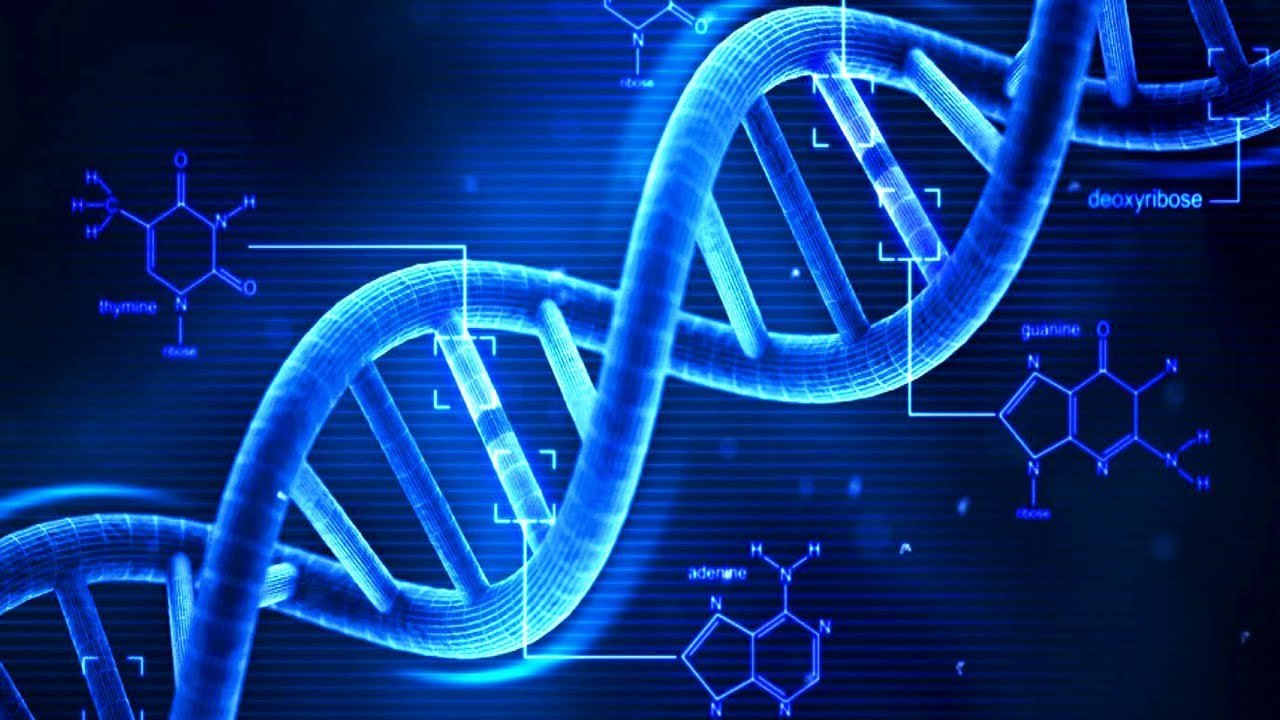
What part of the chromosome codes for traits?
a)
Genes
b)
Deoxyribonucleic Acid
c)
Chromosomes
d)
Nucleus
2.
The condensed or packaged form of DNA is called
a)
An allele
b)
A gene
c)
A chromosome
d)
A phenotype
3.
When comparing the offspring of sexually and asexually reproducing organisms, we would expect the genetic material (DNA) of the sexually reproducing organism to -
a)
Contain fewer mutations
b)
Be lesser in quantity
c)
Be simpler overall
d)
Show more variation
4.
What are some of the facts about sexual reproduction?
a)
Takes two mates to reproduce and takes a longer time to reproduce
b)
Takes one mate to reproduce and takes a shorter amount of time to reproduce
c)
Takes two mates to reproduce and takes a shorter amount of time to reproduce
d)
Takes one mate to reproduce and takes a shorter amount of time to reproduce
5.
What is an advantage of sexual reproduction?
a)
Allows genetic variation
b)
Only needs one parent
c)
Happens very quickly
d)
Offspring are exact copies of parent
6.
The offspring from asexually reproduced organisms are
a)
Different than their parents
b)
Identical to parents
c)
Like a combination from both parents
d)
A different species
7.
What are some of the facts about asexual reproduction?
a)
Takes only one mate to reproduce and takes a longer time to reproduce
b)
Takes a shorter amount of time to reproduce and it takes two mates to reproduce
c)
Reproduces diverse offspring and takes a longer time to reproduce
d)
Takes only one mate to reproduce and takes a shorter time to reproduce
8.
What is a gene?
a)
An entire chromosome that  codes for a trait
b)
a piece of clothing
c)
a piece of a DNA on chromosome that codes for a trait
d)
Chemical messengers in your brain that code for a trait
9.
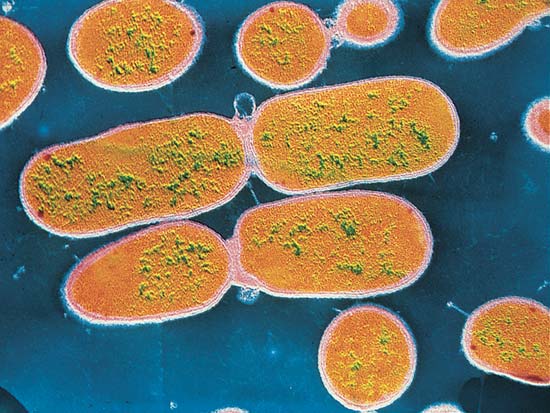
Sexual or asexual reproduction?
a)
Asexual
b)
Sexual
10.
Sexual or asexual reproduction?
a)
Sexual
b)
Asexual
11.

Cells with a nucleus to contain their DNA.

a)

prokaryotic cells

b)

eukaryotic cells

12.
____ is when members of a species that are best suited for their environment survive and reproduce at a higher rate than other members of the species.
a)
Natural selection
b)
Artificial selection
c)
Speciation
d)
Adaptation
13.
Charles Darwin noticed that birds of the Galapagos Islands were very similar in size and shape but their beaks were very different. What is the explanation for birds having different beaks? 
a)
Gathering food
b)
Building nests
c)
Fighting
d)
Scaring predators
14.
Which is an example of SELECTIVE BREEDING ?
 (also called artificial selection) 
a)
A giraffe’s long neck
b)
Training a horse to run faster
c)
Clipping a horse’s tail so it is not too long
d)
Crossing a labrador retriever with a poodle
15.
Why are advantageous traits more likely to be passed onto offspring?
a)
Because they are more likely to survive and reproduce
b)
Because they come from dominant alleles
c)
Because they come from recessive alleles
d)
Because the trait is an acquired phenotype
16.
Almost all adaptations started off as
a)
Selective breeding
b)
Physiological
c)
Structural
d)
A mutation
17.
Which system uses hormones to regulate body activities?
a)
Integumentary
b)
Excretory
c)
Endocrine
d)
Nervous
18.
This system carries oxygen, nutrients and waste around the body.
a)
Integumentary
b)
Excretory
c)
Respiratory
d)
Circulatory
19.
I bring oxygen into the body and remove carbon dioxide.
a)
Respiratory System
b)
Skeletal System
c)
Endocrine System
d)
Excretory System
20.

I eliminate waste and extra water from the blood in the form of urine.

a)

Reproductive System

b)

Muscular System

c)

Nervous System

d)

Excretory System

21.
The illustration provided shows a river and four cities on that river. When the water from the river was sampled at location X, it was determined to be polluted with various chemicals. What would be the most likely source for this pollution?
a)
City 1 and City 2
b)
City 2 and City 3
c)
City 3 and City 4
d)
City 1 and City 4
22.

Pituitary and thyroid gland are included in this system.

a)

nervous

b)

endocrine

c)

skeletal

d)

muscular

23.
This system fights pathogens (germs) and produces and stores white blood cells.
a)
immune
b)
muscular
c)
endocrine
d)
integumentary
24.
The use of pesticides and fertilizers must be carefully monitored 
because of the effect they can have on the environment. 
Which of the following is a possible negative effect of the use 
of these chemicals on the environment?
a)
Runoff carries these chemicals into lakes and streams.
b)
Theses chemicals cannot be purchased in large bulk.
c)

These chemicals are expensive to produce.
d)
Storage space for these chemicals is limited.
25.

Which of the following is a negative effect of using impervious surfaces like concrete, asphalt, and rooftops?

a)

Increase the amount of runoff

b)

Increase flooding

c)

Replaces native plants

d)

All the above.

26.

Why do planets orbit the Sun?

a)

The Sun is the only celestial object that has a gravitational pull.

b)

The Sun’s chemical composition makes it attract planets.

c)

Only celestial bodies that emit light, like the Sun, can be at the center of an orbit.

d)

The Sun is the most massive object in our solar system, so it exerts the greatest gravitational pull.

27.
This is the location between the inner and outer planets where these objects tend to cluster.
a)
Orion's Belt
b)
Asteroid Belt
c)
Grandpa's Belt
d)
Kuiper Belt
28.
These are the gas planets
a)
Mercury, Venus, Earth, Mars
b)
Inner Planets
c)
Jupiter, Saturn, Uranus, Neptune
d)
Solar System
29.
What conditions would you look for if you were looking for life on moons or other planets besides Earth?
a)
Moderate temperature, ice, and the presence of a gas containing atmosphere.
b)
Cold temerature, liquid water, and the absence of gas containing atmosphere.
c)
Moderate temperature, liquid water, and presence of a gas containing atmosphere.
d)
Hot temperature, liquid water, and the absence of gas containing atmosphere.
30.

Which of the following shows the levels of organization in order from simple to complex?

a)

1. Cell

2. Tissue

3. Organ

4. Organ System

5. Organism

b)

1. Cell

2. Tissue

3. Organelle

4. Organ

5. Organ System

c)

1. Tissue

2. Organelle

3. Cell

4. Organ

5. Organism

d)

1. Organ

2. Tissue

3. Cell

4. Organism

5. Organ System

31.

What kind of plate boundary is this?

a)

Convergent

b)

Divergent

c)

Transform

32.

What is the significance of the Mid Atlantic Ridge in plate tectonics?

a)

It is a divergent boundary where new oceanic crust is formed.

b)

It is a convergent boundary where two plates collide.

c)

It is a subduction zone where one plate is forced beneath another plate.

d)

It is a transform boundary where two plates slide past each other.

33.
How many Chlorine are in MgCl2?
a)
2
b)
1
c)
3
34.

What do all of the planets after Earth have in common?

a)

asteroids orbiting

b)

same atmosphere composition

c)

same length of day

d)

moons

35.
Objects made of ice, gas and dust and orbit our sun are called:
a)
Asteroids
b)
Comets
c)
Meteroids
d)
Meteors
36.

Subduction occurs...

a)

when two oceanic plates pull apart.

b)

along a transform boundary in the ocean.

c)

when two continental plates converge.

d)

when an oceanic plate and a continental plate converge.

37.

How many nitrogen atoms in NH4NO3?

a)

1

b)

2

c)

3

d)

5

38.
How many total atoms are in the compound C2H8O ?
a)
11
b)
2
c)
8
d)
1
39.

The North American plate and Pacific plates meet at the San Andres Fault in California causing frequent earthquakes. This fault is located at a _____ boundary.

a)

Ridge

b)

Divergent

c)

Convergent

d)

Transform

40.

Which TWO landforms occur when a continental plate and an oceanic plate hit each other?

a)

Volcanoes on land and Volcanic Islands

b)

Volcanoes on land and Deep Sea Trench

c)

Volcanoes on land and Mountains

d)

Rift Valley and Mid Ocean Ridge

41.

How do most mountains form?

a)

Continents collide and fold up on each other

b)

Earth is shrinking and the crust wrinkles up

c)

Ocean plates diverge and fold up on each other

d)

Gravity from the moon pulls sections of the Earth up

42.

What kind of landform is created when a continent starts to get torn apart?

a)

Volcanic Island

b)

Deep Sea Trench

c)

Mid-ocean Ridge

d)

Rift Valley

e)

Mountains

43.

Study this diagram carefully, noticing the direction of the arrows.The green bars are tectonic plates.What will happen at the place where the star is drawn on this diagram?

a)

The plates will slide past each other (causing a major earthquake)

b)

The plates will hit each other (one will subduct)

c)

The plates will diverge (spread apart)

44.

This scientist was the first to develop the idea of continental drift.

a)

Wegener

b)

Einstein

c)

Copernicus

d)

Hawking

45.
a)

Conduction

b)

Convection

c)

Radiation

46.
a)

Conduction

b)

Convection

c)

Radiation

47.
a)

Conduction

b)

Convection

c)

Radiation

48.

If two samples have particles with different kinetic energies, what does this difference tell you about the samples' temperatures?

a)

The sample with higher kinetic energy has a higher temperature

b)

The sample with lower kinetic energy has a higher temperature

c)

Both samples have the same temperature

d)

Temperature is unrelated to kinetic energy

49.

Imagine Sample X and Sample Y both contain the same substance. The particles in Sample X are moving faster than those in Sample Y. What does this imply about the temperature of Sample X?

a)

Sample X has a lower temperature than Sample Y

b)

Sample X and Y have the same temperature

c)

Sample X has a higher temperature than Sample Y

d)

The temperatures cannot be compared

50.

What conclusion can be made with the diagram?

a)

An example of balanced forces

b)

An example of unbalanced forces

c)

The bigger person with the red shirt will win

d)

The person with the green shirt will in the tug of war

51.

What is the Net Force acting on the box in this picture?

a)

30 N to the Right

b)

30 N to the Left

c)

70 N to the Right

d)

70 N to the Left

52.
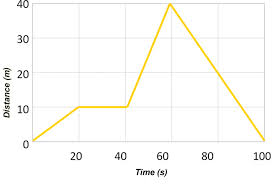
How long did it take this object to travel back to its reference/starting point?
a)
20 s
b)
30 s
c)
60 s
d)
100 s
53.
At 60 seconds, how far had this object traveled? 
a)
0 m
b)
10 m
c)
20 m
d)
40 m
54.
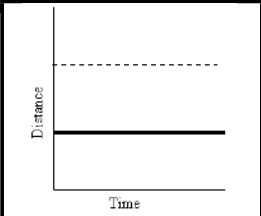
What does this graph represent?
a)
Constant speed
b)
Acceleration
c)
Not moving
55.

Segment A-B The bus is _________________.

a)

at rest

b)

returning (to original position)

c)

moving forward

56.

Which of the following is a chemical change?

a)

Mixing two clear liquids and forming a blue liquid

b)

Mixing a clear liquid and white solid and getting a clear liquid

c)

Mixing a clear liquid and a dark purple solid and getting a light purple liquid

d)

Mixing a clear liquid with a white solid and getting a cloudy white liquid

57.

Which of the following is true

a)

Dissolving candy is a physical change because a new substance is NOT formed, this can be reversed.

b)

Dissolving candy is a physical change because the color changed

c)

Dissolving is a chemical change because its irreversible

58.

All of the following are evidence of a chemical change EXCEPT:

a)

a strong odor that wasn't present initially

b)

a change in size

c)

a solid is formed from 2 liquids

d)

a change in color

59.

What is the average speed of the Worm's Journey?

a)

2.25 meters/minute

b)

2 meters/minute

c)

1 meter/minute

60.

How many sulfur atoms are present in Al2(SO4)3

a)

1

b)

2

c)

3

d)

4

61.

How many atoms of carbon are in this compound?

H2C3O4N5

a)

2

b)

3

c)

4

d)

5

62.
Because of inertia, a moving object will keep ________.
a)
at rest
b)
moving
c)
in one spot
d)
inertia 
63.
Because of inertia, a resting object will remain at ________.
a)
rest
b)
a constant speed
c)
school
d)
inertia 
64.
Heat transfer occurs
a)
in many directions
b)
both from warm objects to colder ones and from cold objects to warmer ones.
c)
only from warm objects to colder ones.
d)
only from cold objects to warmer ones.
65.

Elements

a)

are made of two or more types of atoms bonded together

b)

are made of one type of atom

c)

are made of two or more types of molecules

d)

are always individual atoms

66.

Which of the following are examples of ELEMENTS? Choose all that are correct.

a)

Oxygen (O)

b)

Water

(H2O)

c)

Flourine

(F)

d)

Lemonade

e)

Sulfur Dioxide (SO2)

67.

Compounds

a)

are made of two or more types of atoms chemically bonded together

b)

are made of one type of atom

c)

are found on the periodic table

d)

can be separated into their individual parts through physical means

68.

Which of the following are examples of compounds? Check all that apply.

a)

Salt

(NaCl)

b)

Oxygen

(O)

c)

Sugar

(C6H12O6)

d)

Carbon Dioxide

(CO2)

69.

When writing an organism's scientific name, what is the correct order?

a)

Genus first, species second

b)

Species first, genus second

c)

Domain first, species second

d)

Species first, kingdom second

70.

Which of the following does NOT belong in the domain Eukarya?

a)

Bacteria

b)

Animals

c)

Plants

d)

Fungi

71.

Which of the following domains contain organisms that have nucleus and other membrane bound organelles?

a)

Bacteria

b)

Archae

c)

Eukarya

d)

Domain

72.
The 8 levels of classification, most broad to most specific.
a)
Domain, Genus, Family, Order, Class, Phylum, Kingdom, Species
b)
Domain, Species, Kingdom, Genus, Phylum, Family, Class, Order
c)
Domain, Kingdom, Phylum, Class, Order, Family, Genus, Species
d)
Order, Kingdom, Species, Domain, Phylum, Family, Class, Genus
73.
The skin is the major organ in which system?
a)
Integumentary
b)
Muscular
c)
Endocrine
d)
Excretory
74.
In the energy pyramid here, which organisms have the most energy available?
a)
Producers
b)
Carnivores
c)
Herbivores
d)
Top Predator
75.

If there is 1000 Kcal available in the producers in trophic level 1, how much energy is available in the herbivores in trophic level 2?

a)

10Kcal

b)

100Kcal

c)

1Kcal

d)

1000Kcal