wayground logo

Free Printable Worksheets

NEW

Font size

S
M
L
XL
Worksheets

CFE 8th Grade - Earth and Space

Total questions: 25

Worksheet time: 16mins

Name
Class
Date
1.
What causes the day and night cycle on Earth?
a)
Rotation of the Sun
b)
Revolution of the Earth
c)
Gravitational pull from the moon
d)
Rotation of the Earth
2.
In Which position would the Southern Hemisphere experience winter?
a)
Position A
b)
Position B
c)
Position C
d)
Position D
3.
In which position would the Northern Hemisphere be experiencing spring?
a)
Position A
b)
Position B
c)
Position C
d)
Position D
4.
What phase is illustrated here?
a)
1st Quarter
b)
Waning gibbous
c)
Waxing crescent
d)
New moon
5.
Which of the following has the BIGGEST impact on the Earth's tides?
a)
The sun
b)
Earth's rotation
c)
Earth's revolution
d)
The moon
6.
How many tides does a location experience each day?
a)
1
b)
2
c)
4
d)
8
7.

Which term describes when the moon is less illuminated each night?

a)

waxing

b)

waning

c)

wandering

d)

whining

8.

The H-R diagram classifies stars based on what factors?

a)

Temperature and luminosity

b)

Number of planets

c)

What constellation they're in

d)

Temperature and fusion

9.

Our sun is what kind of star?

a)

Blue giant

b)

Red giant

c)

Main sequence

d)

White dwarf

10.

Compared to a red giant star, a blue supergiant is...

a)

Hotter and brighter

b)

Hotter and not as bright

c)

Colder and brighter

d)

Colder and not as bright

11.

Compared to a white dwarf, a red supergiant is...

a)

Hotter and brighter

b)

Hotter and not as bright

c)

Colder and brighter

d)

Colder and not as bright

12.

Our sun is yellow. A star colder than our sun would be...

a)

Red

b)

Yellow

c)

White

d)

Blue

13.

Stars that are brighter are usually...

a)

Hotter

b)

Bigger

c)

More massive

d)

Smaller

14.
In the diagram given, what happens as we move to the left?
a)
Stars Get Larger
b)
Stars get Colder
c)
Stars get hotter
15.
Look at the H-R diagram. Which star is
sort of cool, dim (not too much light), and red?
a)
Betelguse
b)
Sirius B
c)
Procyon B
d)
Barnard's star
16.
Which star has the lowest temperature?
a)
A
b)
B
c)
C
d)
D
17.

Use the Hertzsprung-Russell Diagram to answer the following question. Epsilon Eridani is a _____

a)

Hot and Bright Star

b)

Cool and Bright Star

c)

Hot and Dim Star

d)

Cool and Dim Star

18.
What is a difference between spring and neap tides?
a)
Spring tides occur when the earth and sun are IN LINE with the new or full moon. 
b)
Spring tides occur when moon in 3rd or 1st quarter phases
c)
Spring tides are LOWER than neap tides
d)
Spring tides occur in Spring and neap tides can occur in any season
19.
What type of tide would this arrangement of earth-moon-sun create?
a)
full moon tide
b)
new moon tide
c)
neap tide
d)
spring tide
20.
Which season is taking place in the Northern Hemisphere in Position 1?
a)
Winter
b)
Spring
c)
Summer
d)
Fall
21.
What are the reasons for the season?
a)
Earth's tilt & rotation
b)
Earth's tilt & revolution
c)
Earth's rotation & size
d)
Earth's tilt & resolution
22.
What effect does the tilt of the earth have?
a)
It changes the angle that the sun strikes the earth in different land areas
b)
It causes the earth to be farther away from the sun at different times of the year
c)
When the earth is tilted away from the sun we have night
d)
When the earth is tilted away from the sun we have day
23.
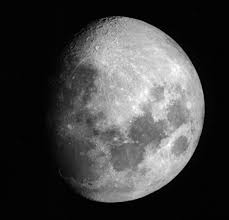
Name the moon phase
a)
waning crescent
b)
waxing crescent
c)
waning gibbous
d)
waxing gibbous
24.
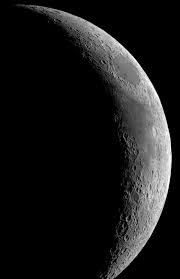
Name the moon phase
a)
waning crescent
b)
waxing crescent
c)
waning gibbous
d)
waxing gibbous
25.

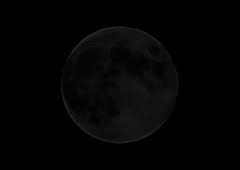
Name the moon phase

a)

First Quarter

b)

Third Quarter

c)

New Moon

d)

Full Moon