
Font size
 Worksheets
Plates, Space, and Cells! CA5 Review
Total questions: 32
Worksheet time: 31mins
Which planet is the most massive (biggest), and which planet is the smallest?
Saturn and Earth
Jupiter and Mercury
Mars and Neptune
Pluto and the Sun
Which mineral causes Mars' surface to be red?
iron oxide (rust)
lead paint
silver necklace
gold rings
What is the phrase to help you remember the order of the planets?
Your sad dad tried to sell us napkins
My sister just served us hamburgers
My very excellent mother just served us nachos
Myself is excellent and I ate pizza
What is the order of the planets starting with the one closest to the sun? Type your answer
Why do all the planets orbit around the sun, and why do Jupiter's moons revolve around it?
Gravitational pull causes smaller planetary objects to orbit around larger planetary objects
Magnetism in metal planets causes rotation
It is just magic and happens all the time
Space is unknown and scientists do not know why
The _______ is the smallest structural and functional unit of a living thing. (this will be matching on the test)
cell
metabolism
nutrition
defense
Which choice is NOT part of the cell theory.
All organisms are composed of cells.
Cells are the basic unit of life.
All cells come from previous cells.
Cells are always the same size and shape.

What type of cell is labeled as X?
It has a nucleus, so it is Eukaryotic
It does not have a nucleus so it is Prokaryotic

What type of cell is labeled Y?
It has a nucleus, so it is Eukaryotic
It does not have a nucleus, so it is Prokaryotic
True or False. Prokaryotic cells DO NOT have a nucleus.
True
False
True or False? Eukaryotic cells HAVE a nucleus
True
False
Who was the first man to walk on the moon?
Elon Musk
Tesla
Neil Armstrong
John Cena
Protects the body, regulates body temperature
Integumentary
Nervous
Skeletal
Muscular
Carries oxygen and nutrients to all parts of the body.
Integumentary
Nervous
Circulatory
Respiratory
Allows movement in the body
Integumentary
Nervous
Skeletal
Muscular
Supports and provides structure for the body
Skeletal
Muscular
Circulatory
Respiratory
Supplies blood with oxygen and rids the body of carbon dioxide
Integumentary
Nervous
Circulatory
Respiratory
Main Organs: Skin
Integumentary
Nervous
Skeletal
Muscular
Main Organs: Heart and blood vessels
Integumentary
Nervous
Circulatory
Respiratory
Main Organs: Muscles
Integumentary
Nervous
Skeletal
Muscular
Main Organs: Brains, spinal cord, nerves
Integumentary
Nervous
Circulatory
Respiratory
Main Organs: Lungs
Integumentary
Nervous
Circulatory
Respiratory
Which instrument is credited for helping scientists develop cell theory?


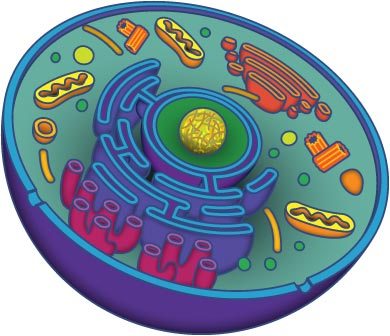
All living things are made up of...
cells
tissues
organ
organ systems
What is the basic structural and functional unit of all living things?
atom
cell
bacteria
animalcules
All cells -----
come from other dead cells
come from other living cells
crystallize out of the air
Which organelle is the site of photosynthesis?
Cell Wall
Chloroplasts
Cytoplasm
Cell Membrane
Which organelle produces proteins?
Ribosomes
Lysosomes
Nucleus
Vacuoles
Which cell parts are not present in animal cells?
cell membrane & cytoplasm
nucleus & chloroplasts
cell wall & chloroplasts
ribosomes & mitochondria
Which organelle is the location of DNA (genetic material)?
mitochondria
ribosomes
nucleus
Endoplasmic Reticulum
Which organelle is controls the activities of the cell?
nucleus
mitochondria
cell membrane
cytoplasm
Which part of the cell provides structural support?
Cell Membrane
Cell Wall
Cytoplasm
Nucleus

