Wayground logo

Free Printable Worksheets

Font size

S
M
L
XL
Worksheets

2021 Final Exam Review Part 1

Total questions: 30

Worksheet time: 1hrs 16mins

Name
Class
Date
1.

Change over time is...

a)

Genetics

b)

Evolution

c)

Ecology

d)

Biology

2.

The hardened remains of a living thing that died long ago.

a)

fossil

b)

extinct

c)

endangered

d)

minerals

3.

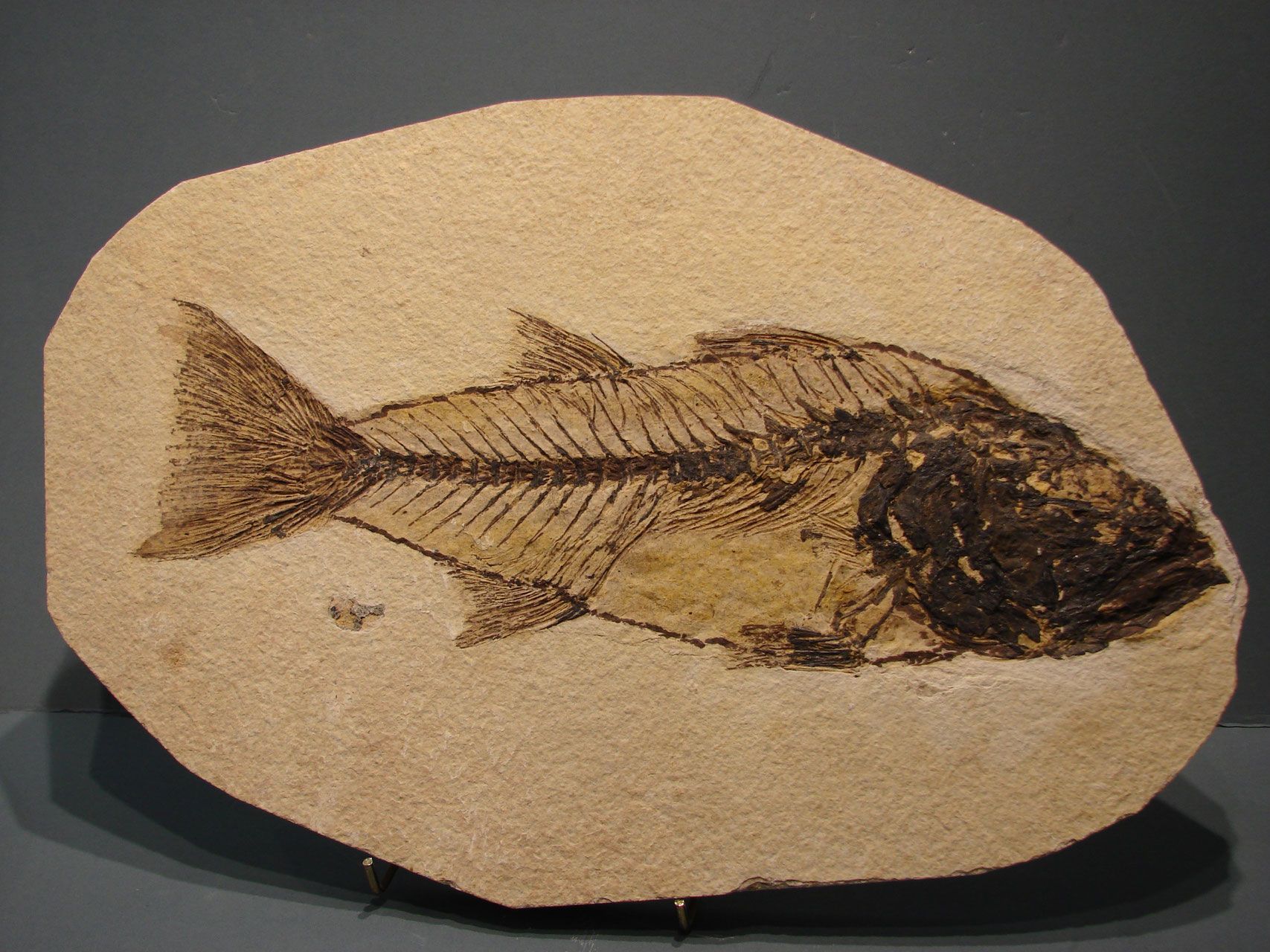
If a scientist found a fish fossil in the desert, what can they infer?

a)

An animal ate the fish.

b)

The water covered the area long ago.

c)

Today's fish looks the same

d)

The fish is endangered.

4.

Alfred Wegener thought South America and Africa have similar coastlines because...

a)

the mesosaurus fossils were found on both continents

b)

He noticed that similar rocks were found on both continents

c)

he thought that the continents used be be joined together

d)

Pangaea was 250 million years ago

5.

What was Pangaea?

a)

It was a supercontinent, made of all of the landmasses on Earth.

b)

It was 2 separate landmasses, one on the Northern Hemisphere and one on the Southern Hemisphere.

c)

It was a supercontinent made of 3 landmasses

d)

It was the name of an ancient organism

6.
Where did Charles Darwin travel to?
a)
Australia
b)
Barbados
c)
Galapagos 
d)
Trinidad
7.
What animals did Charles Darwin study when at the Galapagos Islands?
a)
Giraffes
b)
Seagulls
c)
Seals
d)
Finches
8.
For Darwin, how have animals and plants survived?
a)
Through luck
b)
Through natural selection
c)
Through careful management
d)
Through choice
9.
What is survival of the fittest?
a)
It is where the fittest die out and therefore reproduce and pass on their genes
b)
It is where the fittest die out and therefore can't reproduce and pass on their genes
c)
It is where the fittest don't die out and therefore can't reproduce and pass on their genes
d)
It is where the fittest don't die out and therefore reproduce and pass on their genes
10.
What is natural selection?
a)
Your natural fate is decided from birth
b)
Nature actively chooses who surivives
c)
Those best suited to demands of environment surivie
d)
The weakest of a species surivie
11.
what did Charles Darwin observe in finch populations of the Galapagos Islands off the coast of South America?
a)
different species on different islands
b)
all species on one of the islands
c)
identical species on all the islands
d)
the same species as North America
12.
Genetic variation can arise from a random change in the DNA of a gene.  The change is called a(n)
a)
mutation
b)
gene flow
c)
gene pool
d)
allele
13.
The disappearance of a species.
a)
Evolution
b)
Extinction
c)
Migration
d)
Mutation
14.
The variety of living things on Earth is called:
a)
Life
b)
Biodiversity
c)
Similarity
d)
Genetics
15.
Over time, adaptions can lead populations to experience 
a)
environmental changes
b)
genetic changes
c)
geological changes
d)
extinction
16.
Darwin theorized that individuals having an advantage due to their traits or abilities will be more likely to survive and reproduce.  This theory is known as
a)
evolution
b)
speciation
c)
adaptation
d)
natural selection
17.
To put organisms into groups based upon a criteria
a)
classify
b)
group
c)
vertebrates
d)
invertebrates
18.
The correct order of classification from the BROADEST group to the most narrow is:
a)
Species, Genus, Family, Order, Class, Phylum, Kingdom
b)
Kingdom, Phylum, Class, Family, Order, Genus, Species
c)
Kingdom, Family, Order, Phylum, Class, Genus, Species
d)
Kingdom, Phylum, Class, Order, Family, Genus, Species
19.
An organism that has cells that lack a nucleus are called:
a)
Eukaryote
b)
Heterotroph
c)
Prokaryote
d)
Autotroph
20.
An organism that gets its food by consuming other organisms is known as a:
a)
heterotroph
b)
autotroph
c)
prokaryote
d)
eukaryote
21.
Which characteristics best describes the Plant Kingdom?
a)
unicellular; eukaryote; autotroph
b)
multicellular, prokaryote, autotroph
c)
multicellular, eukaryote, autotroph
d)
unicellular, prokaryote, heterotroph
22.
Which characteristics best describes the Animal Kingdom?
a)
unicellular, eukaryote, autotroph
b)
multicellular, prokaryote, heterotroph
c)
multicellular, eukaryote, autotroph
d)
multicellular, eukaryote, heterotroph
23.
The 2-part naming system developed by Linneus is known as:
a)
dichotomous key
b)
taxonomy
c)
binomial nomenclature
d)
classification
24.
A flash flood carried a raft of Amazon ants away from their original population. There is enough distance between the two groups, that they will never meet in nature again. What type of reproductive barrier is this?
a)
behavioral isolation
b)
temporal isolation 
c)
gametic isolation
d)
geographic isolation 
25.
The term for the formation of new and distinct species over the course of evolution is...
a)
speciation
b)
biological species concept
c)
reproductive barrier
d)
natural selection
26.
What is a species? 
a)
A group of organisms that can mate with each other and produce fertile offspring. 
b)
A group of organisms that can mate and produce offspring even if those offspring are infertile.
c)
A group of organisms that genetically are very different from each other. 
d)
Indivual organisms that live in the same environment. 
27.

You are researching reptiles and encounter two garter snakes on a hike. Both snakes are brown and white, but their patterns are slightly different. You bring them back to the lab for further study. What is the BEST way to determine if these two are the same species?

a)

Their appearance - if they look similar, they must be the same species

b)

Their adaptations - if they have the same traits, they must be the same species

c)

A breeding experiment - if they are able to produce offspring, they must be the same species

d)

DNA testing - if their DNA/genes are the same, they must be the same species

28.

When the Grand Canyon in Arizona formed, two populations of one squirrel species were separated by the giant canyon. This is an example of _____________.

a)

Temporal isolation

b)

Behavioral isolation

c)

Geographic isolation

29.
Which Hardy-Weinberg equation represents the genotype frequencies in a population?
a)
p + q = 1
b)
p2 + 2pq + q2 = 1
c)
p2 + pq2 + q2 = 1
d)
p + 2pq + q3 = 1
30.
Which Hardy-Weinberg factor represents the frequency of heterozygous individuals in a population?
a)
p2
b)
2pq
c)
q2
d)
p2 + 2pq